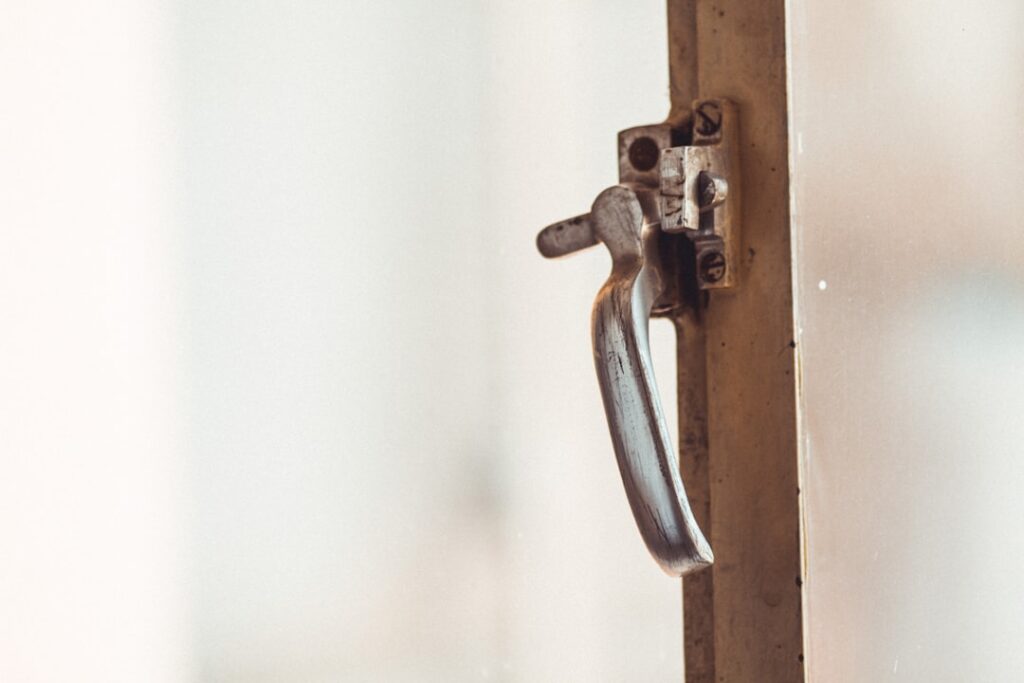
The handle on a screen or storm door is the part that fails first — the thumb latch cracks, the mortise mechanism wears out, or the whole thing rattles loose. A screen door handle replacement is one of the easiest repairs in the house: two screws, a five-dollar to thirty-dollar part, and about fifteen minutes. The only thing that trips people up is buying a handle that matches the existing hole spacing.
This guide shows you how to measure what you have, choose a replacement that drops in without drilling new holes, and set it so the latch actually catches the strike.
Why Screen Door Handles Fail
- UV and cold: Cheap pot-metal and plastic latches get brittle and snap, especially the thumb lever.
- Slamming: A door with no closer or a broken closer bangs shut and shocks the latch mechanism.
- Worn strike alignment: The door sags over time and the latch stops lining up, so people yank harder and break parts.
- Loose mounting screws: Vibration backs the screws out and the handle wobbles until the mechanism fails.
Identify Your Handle Type
Storm and screen door handles come in a few common configurations:
- Surface-mount pull with thumb latch: The most common. An outside pull with a thumb lever, an inside pull, and a latch that hooks a strike on the jamb.
- Mortise latch set: The latch mechanism sits inside a pocket mortised into the door edge; the handles bolt to it. More secure, slightly more involved.
- Simple pull only: No latch, just a grab handle plus a separate closer and catch.
Most residential storm doors from the last 30 years use a surface-mount thumb-latch set, and “universal” replacements are built specifically to fit them.
The Critical Measurement: Hole Spacing
Before you buy anything, measure the center-to-center distance between the two mounting screw holes on your existing handle. Common spacings:
- Standard residential: 4-3/8 inches (the most common by far).
- Wider commercial/older: 5-1/2 inches.
- Some storm doors: 3-3/8 inches.
Many universal handle sets ship with slotted mounting holes that adjust across a range, so a set listed as fitting 4-3/8 to 5-1/2 inches will cover most doors. Also note the door thickness — screen doors are thin, typically 1 to 1-1/4 inches, and the through-bolts must be short enough. And check the latch height: measure from the mounting holes down to the latch tongue so the new mechanism lines up with your existing strike.
Costs
- Universal surface-mount handle set: $12–$30.
- Mortise latch set: $25–$60.
- Keyed storm-door handle (with deadbolt): $30–$80.
- Matching black or bronze designer set: $35–$70.
Buy a color that matches your door frame and your entry hardware — a black door wants a black handle.
Tools You Need
- Phillips and flathead screwdrivers
- Tape measure
- The replacement handle set
- A drill only if you must enlarge or add a hole (usually not)
- Painter’s tape to hold parts while you align them
Step-by-Step Replacement
- Remove the old handle. Back out the two through-bolts on the interior handle. The exterior and interior halves separate; pull both off.
- Remove the old latch. If it is a surface latch, unscrew it from the door edge. If mortise, slide the mechanism out of its pocket.
- Check the strike. Look at the strike plate or catch on the jamb. If it is worn or the wrong style for your new set, plan to swap it too — most kits include one.
- Dry-fit the new handle. Hold the exterior half over the existing holes. If it lines up, good. If the slots need adjusting, loosen and slide the plate.
- Set the exterior half with its through-bolts poking to the inside.
- Attach the interior half and thread the through-bolts. Do not fully tighten yet.
- Install the new latch on the door edge (or in the mortise), aligned with the thumb lever so pressing the thumb piece retracts the latch.
- Test the action. Press the thumb latch — the tongue should pull back smoothly. Release — it should spring out.
- Align and mount the strike on the jamb so the latch catches when the door closes. Adjust its position until the door latches without slamming or leaving a gap.
- Tighten everything and re-test.
Matching the New Handle to Your Door
Beyond hole spacing, three details decide whether a “universal” set truly fits. First, the latch style: some doors use a surface-mounted latch screwed to the door edge, others use a mortise latch tucked into a pocket; a surface-mount replacement will not seat correctly in a mortise cut, and vice versa. Second, the handing: most storm-door handles are reversible, but confirm the thumb latch and the strike hook can be flipped to match your hinge side. Third, the backset and latch projection — how far the tongue sticks out — must reach your existing jamb strike. Take a clear photo of the old handle, both faces, before you remove it, and bring the actual part to the store if you can. A five-dollar wrong guess costs you a second trip.
Keyed vs. Non-Keyed Sets
Decide up front whether you want the storm door to lock. A basic thumb-latch set only holds the door shut against wind and casual pushes. A keyed set adds a mortise deadbolt with a key outside and a thumb-turn inside, letting you lock the storm door independently of the main entry — handy when you want to leave the front door open for airflow behind a locked screen. Keyed sets cost $30 to $80 and mortise into the door edge, so they take a bit more work than a surface swap. On a lightweight aluminum door the security is modest, but the convenience of a separately lockable outer door is real. Match the key to a spare you keep inside so you are never locked out of your own storm door.
Reinforcing a Weak Mounting
Storm and screen doors are thin, often 1 to 1-1/4 inches, and the aluminum stile the handle bolts through can be hollow. If the old handle wobbled because the screw holes wallowed out, do not just crank the new screws tighter — you will strip them again. Instead, add a thin backing plate or a metal spacer behind the interior handle so the through-bolts clamp against solid material, or step up one screw size if the holes have already enlarged. A dab of thread-locker on the through-bolts keeps them from vibrating loose each time the door swings. Getting a rock-solid mount is what makes the difference between a handle that lasts a decade and one you are back replacing next season.
Fixing Latch Alignment
The number one complaint after a handle swap is that the door will not latch. That is almost always a strike-alignment issue, not a bad handle:
- Close the door and note where the latch tongue hits the strike. If it lands high or low, move the strike.
- Slotted strikes let you nudge it 1/8 inch at a time — loosen, shift, re-test.
- If the door has sagged, tighten the hinge-side Z-bar screws or shim the top hinge before chasing the strike.
Adding Security
If you want more than a thumb latch, buy a handle set with an integrated keyed deadbolt. These mortise into the door edge and throw a bolt into a reinforced strike. On a lightweight aluminum screen door the security gain is modest, but it does stop casual entry and lets you lock the storm door independently of the main door.
Preventing the Next Break
- Install or repair the pneumatic closer so the door stops slamming — slamming is what kills latches.
- Set the closer’s hold-open washer to keep the door from wind-whipping.
- Add a wind chain to limit over-swing.
- Re-check the mounting screws once a season; a drop of thread-locker keeps them from vibrating loose.
A screen door handle replacement is a fifteen-minute job that most homeowners can do with one screwdriver. The whole trick is measuring your existing hole spacing and latch height before you buy, then setting the strike so the latch catches cleanly. Match the finish to your door, fix the closer while you are at it, and the new handle will outlast the last one.