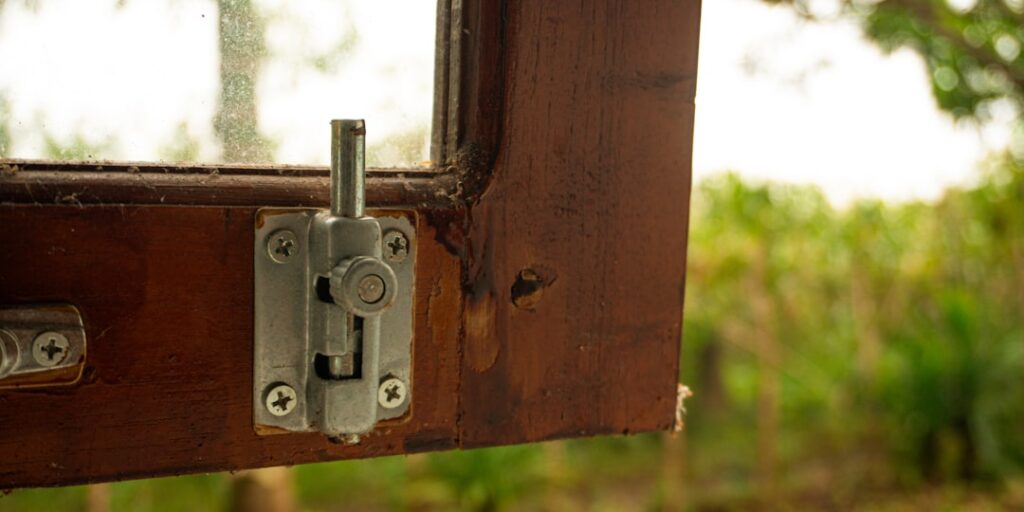
A screen door latch seems trivial until it stops catching and the door bangs in every breeze, or won’t open when your hands are full. It’s a small, cheap part — usually $10 to $40 — but there’s more variety and adjustment involved than most people expect. Whether your latch has failed, misaligned, or you just want a nicer handle, this guide covers the types, the common failures, how to fix them, and how to pick and install a replacement that actually fits.
- How a Screen Door Latch Works
- Common Types of Screen Door Latches
- Why Your Screen Door Latch Won’t Catch
- Fixing an Existing Latch
- Measuring for a Replacement Latch
- Replacing a Screen Door Latch Step by Step
- Upgrading Your Hardware
- Keeping It Working
- Dealing With Wind and Slamming Doors
- Choosing a Handle Finish and Style
- Frequently Asked Questions
How a Screen Door Latch Works
Most screen and storm door latches use a mortise-style mechanism: an interior latch bar or tongue that extends from the door edge into a strike on the frame. A thumb-press or lever on the exterior pull retracts the latch so the door opens; a spring pushes it back out to catch when the door closes. Some combine the latch with a lock and a squeeze-handle. The whole assembly is lightweight aluminum or zinc because screen doors don’t need — or want — heavy hardware.
Understanding this helps diagnose problems: nearly every latch failure is either a worn/broken spring, a bent tongue, or a strike that no longer lines up.
Common Types of Screen Door Latches
- Mortise latch with pull handle: The most common on aluminum storm doors — a squeeze or thumb-lever pull on the outside, a lever inside, and a mortise latch body set into the door edge.
- Surface-mounted latch: A simpler latch that screws onto the face of the door rather than into the edge; common on wood screen doors.
- Hook-and-eye: The old-school basic — a hook that drops into an eye screw. Cheap, but not secure and prone to bouncing loose.
- Slide bolt / barrel bolt: A manual sliding bolt, often added for extra hold or nighttime security.
- Keyed mortise lock set: A handle set with a deadbolt or key cylinder for storm doors that need real locking.
Why Your Screen Door Latch Won’t Catch
Nine times out of ten, a latch that won’t hold comes down to one of these:
- Misaligned strike: The door has sagged or the frame shifted, so the latch tongue no longer lines up with the strike hole. Most common cause.
- Worn or broken spring: The internal spring that pushes the tongue out has weakened, so it doesn’t extend fully.
- Bent or gummed-up tongue: Dirt, paint, or a bent latch bar keeps it from moving freely.
- Loose mounting screws: A wobbly handle assembly changes the tongue’s position.
- Closer tension: A pneumatic closer set too weak lets the door drift shut without enough force to snap the latch home.
Fixing an Existing Latch
Before buying new hardware, try these fixes — they solve most problems in minutes:
- Adjust the strike: Loosen the strike plate screws and shift it up, down, or over to meet the tongue. Many strikes have slotted holes for exactly this. If it’s off by a lot, the door may need a hinge shim or the frame may need attention.
- Tighten everything: Snug the handle and strike screws; a loose assembly throws off alignment.
- Lubricate: A shot of dry silicone or graphite (not oil, which attracts grit) frees a sticky tongue.
- Adjust the closer: Turn the closer’s tension screw so the door shuts firmly enough to latch.
- Check the sweep and hinges: A sagging door drops the latch out of line — tighten hinge screws or add longer ones.
Measuring for a Replacement Latch
If the latch itself is broken, replacement is easy — but measure carefully so the new one fits the existing holes. Storm door manufacturers use fairly standard spacing, but confirm these dimensions:
- Screw hole spacing (center-to-center): The vertical distance between the two mounting screws — commonly 3-3/8 inches or 4-1/2 inches on storm doors.
- Bore/prep style: Whether the door is prepped for a mortise latch or surface mount.
- Door thickness: Most storm doors are 1 to 1-1/4 inch thick; latches are made to match.
- Handing: Some handle sets are reversible; others are left- or right-hand specific.
Brands like Wright Products, Ideal Security, and Prime-Line make universal replacement latches designed to cover the most common hole patterns, which takes the guesswork out.
Replacing a Screen Door Latch Step by Step
Swapping a mortise handle-and-latch set is a 20-minute job with a screwdriver:
- Unscrew and remove the interior handle/lever half.
- Pull the exterior pull half out, freeing the connecting spindle and the mortise latch.
- Slide the new latch body into the edge mortise.
- Insert the exterior pull so its spindle engages the latch.
- Attach the interior lever and drive the mounting screws.
- Test the action, then adjust or replace the strike on the frame to match.
For a surface-mounted latch on a wood door, it’s even simpler — just unscrew the old one and screw the new one in the same footprint, then position the strike.
Upgrading Your Hardware
Since you’re already in there, consider an upgrade. A keyed mortise handle set adds a deadbolt so your storm door genuinely locks, useful for ventilating securely on a nice day. Match the finish to your entry door hardware — brushed nickel, oil-rubbed bronze, or black — for a cohesive look. Squeeze-style pulls are easier than thumb-levers for kids and anyone with limited grip strength. And if wind is your nemesis, add a barrel bolt near the base for a second point of hold.
Keeping It Working
A screen door latch lasts years with almost no care, but a little maintenance prevents the annoyances. Lubricate the moving parts once a season with dry silicone, keep the strike screws snug, and adjust the pneumatic closer as the seasons change door swelling. If the door starts sagging, address the hinges early before the latch alignment drifts. Get those basics right and your latch will click home cleanly every time — no more banging doors or fumbling with an armful of groceries on the porch.
Dealing With Wind and Slamming Doors
Wind is the number-one enemy of screen and storm doors, and it does more than just annoy you — a gust catching an unlatched door can tear the closer out of the frame or bend the door itself. Three defenses help. First, install (or repair) the pneumatic closer’s wind chain or safety cable, which stops the door from flinging fully open. Second, add a second closer near the top or bottom for a large door — one closer often isn’t enough to overcome a strong breeze and drive the latch home. Third, a barrel bolt or hook-and-eye near the base gives you a manual hold on breezy days. If your latch keeps failing to catch specifically when it’s windy, the real fix is usually more closer tension so the door shuts with enough force.
Choosing a Handle Finish and Style
Since you’re replacing hardware anyway, coordinate the look. Screen and storm door latches come in finishes like white, black, brushed nickel, aluminum, and oil-rubbed bronze — match your entry door’s hardware for a pulled-together porch. Beyond looks, weigh ergonomics: squeeze-style pulls are easier for kids and anyone with weak grip than thumb-press levers, and a larger paddle is friendlier when your hands are full. If security matters — you like to leave the main door open for ventilation — step up to a keyed mortise handle set with a deadbolt so the storm door genuinely locks.
Frequently Asked Questions
Why won’t my screen door latch stay closed?
Usually a misaligned strike from a sagging door or shifted frame, a worn latch spring, or a closer set too weak to shut the door firmly. Start by adjusting the strike plate and tightening the closer before replacing the latch.
Are replacement latches universal?
Many are designed to fit the most common storm-door hole patterns (3-3/8 or 4-1/2 inch screw spacing), but measure your existing screw spacing and door thickness first. Brands like Wright Products and Prime-Line make near-universal replacements.
Can I add a lock to my screen door?
Yes. A keyed mortise handle set with a deadbolt replaces a basic latch and lets you lock the storm door while ventilating with the main door open.