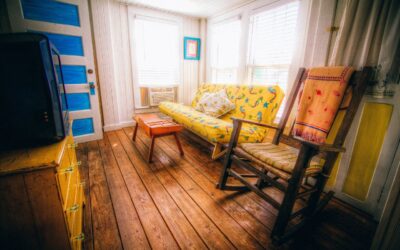
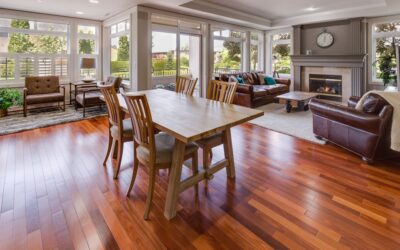
Pull back the wall-to-wall carpet in a 1920s bungalow and there’s a reasonable chance you’ll find original quarter-sawn oak still worth refinishing. Heritage flooring — the floors that go in a Victorian, Craftsman, Colonial, or mid-century home and look right to anyone who knows the period — is one of the few remodeling categories where authenticity adds resale value. Get it wrong and the house feels staged. Get it right and the floors do half the design work.
Matching the Period
The first decision is what era the house belongs to. Pre-1900 homes typically had wide-plank pine, fir, or chestnut at 6 to 10 inches wide, sometimes painted, sometimes left raw. Victorian and Edwardian homes (1880-1910) shifted to narrower oak strips, often quarter-sawn for the figured grain, plus parquet in formal rooms. Craftsman and Foursquare homes (1900-1930) used 2 1/4-inch oak strips with tight tongue-and-groove. Mid-century ranches (1945-1965) brought back wider planks plus block parquet and red oak in family rooms.
Match the era and you’re rewarded with consistency. Drop wide-plank engineered into a Craftsman bungalow and the proportions fight the trim, the doors, and the cabinetry every day.
Reclaimed Hardwood — The Gold Standard
True reclaimed wood from torn-down barns, factories, and warehouses is the most period-correct material for any pre-1960 home. Companies like Carlisle Wide Plank Floors, Olde Wood Ltd, and Mountain Lumber Company sell heart pine, chestnut, and old-growth oak with the original patina, nail holes, and saw marks intact. Expect $14 to $28 per sq ft for material plus $4 to $7 for installation.
The cost is offset by the look — old-growth tight grain that’s nearly impossible to fake — and by carbon math (a reclaimed plank avoids both new logging and landfill disposal). Specify the species and grade carefully; “reclaimed barnwood” can mean anything from genuine hand-hewn beams to factory-distressed new stock.
Wide-Plank Pine
For Colonial, farmhouse, and Federal-style homes, wide-plank Eastern white pine in 8 to 12-inch widths is the period-correct choice. Carlisle, Hull Forest Products, and small Northeast mills sell new pine in heritage widths starting at $9 per sq ft. Pine is soft — a 1F or 2 on the Janka scale — so expect dents and patina to develop within a year. That’s the look you’re paying for.
Finish with a hand-rubbed oil or wax (Tried & True, Osmo Polyx) rather than polyurethane. Oil finishes age into a deepening glow that matches original heart pine. Polyurethane on pine looks plastic and dates the project immediately.
Parquet
Herringbone, chevron, and basketweave parquet were standard in Victorian and Edwardian formal rooms. New parquet panels sell for $6 to $14 per sq ft (Lauzon Pinnacle, Mirage Sweet Memories, custom mills). For a true heritage look, source 9-inch and 12-inch herringbone laid at 45 degrees to the longest wall, not the more modern straight-set blocks.
Restoration is sometimes possible. If existing parquet has water damage limited to a few squares, a hardwood specialist can lift and replace individual blocks. Budget $30 to $60 per square repaired, or $8 to $14 per sq ft for full sand-and-finish on intact original parquet.
Encaustic Tile
For Victorian foyers, fireplaces, and conservatories, encaustic cement tile is the period material. Granada Tile, Cement Tile Shop, and Villa Lagoon sell 8×8-inch handmade tiles starting at $10 per sq ft. Pattern-rich foyers in 1880s row houses originally used the same construction.
Encaustic isn’t fired ceramic — it’s pigmented Portland cement pressed in molds and cured. Sealing is mandatory before grouting, and resealing every 2 to 3 years is the norm. Done right, encaustic gives a 100-year-old foyer back its original presence.
Salvage Yards and Restoration Networks
For reclaimed material at the lowest prices, work with regional architectural salvage yards. Building REsources (San Francisco), Big Reuse (Brooklyn), Olde Good Things (Pennsylvania), and Architectural Heritage (Birmingham, AL) sell reclaimed boards, parquet, and tiles at $6 to $12 per sq ft — half what specialty mills charge. Stock is unpredictable and you usually can’t return cut material, so plan for a 15 percent overage.
The Old House Journal forums and the National Trust for Historic Preservation list specialists in most regions. Heritage flooring is a craft trade — finding the right installer matters as much as the material.
Common Mistakes
The biggest mistake is mixing eras. Wide-plank reclaimed in one room, narrow new oak in the next, and tile in the foyer reads as a series of remodels rather than a coherent house. Pick one period thread and run it through every public room.
The second mistake is over-finishing. Sanding original quarter-sawn oak to 220 grit and coating with three coats of high-gloss polyurethane erases 80 years of patina in an afternoon. Use 80-100-120 grit, water-pop the surface, and apply a satin or matte penetrating finish. Period-correct floors should look like they’ve been there forever, not like they were installed last week.
Prefer to explore on your own?
See how new flooring looks in your actual room in seconds — free, no signup.
Try the free Floor Studio →