
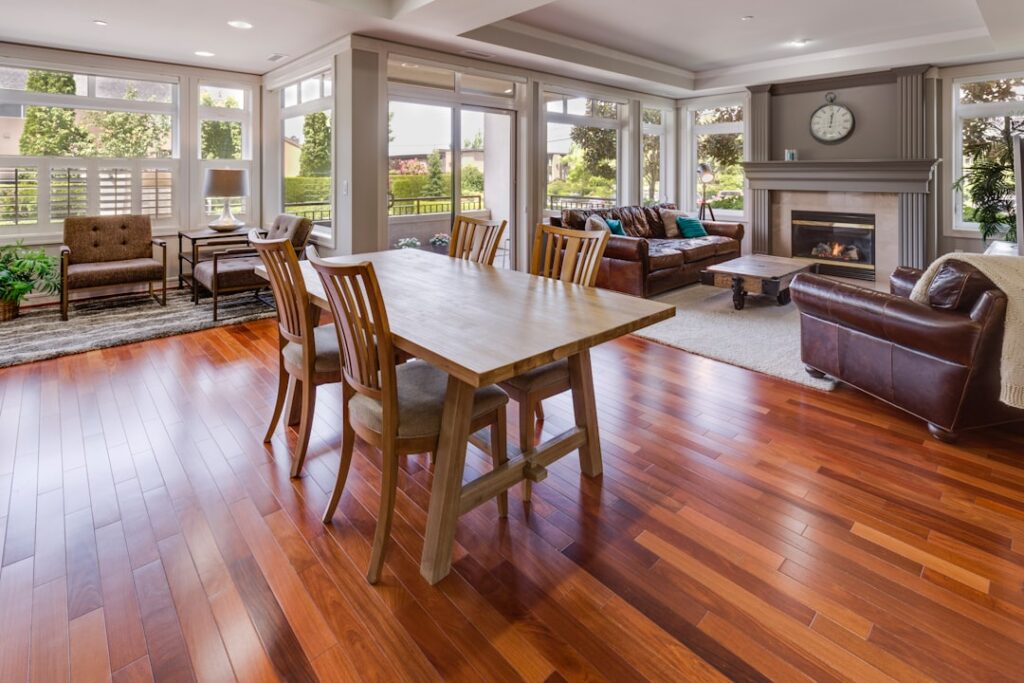
Few flooring names get reused as widely as this one, which is the first thing a shopper needs to understand. Heritage oak flooring is not a single product or a protected species; it is a décor and color name applied across solid hardwood, engineered wood, laminate, and luxury vinyl plank by many different manufacturers. The look it describes is consistent, though: a warm, golden-to-amber oak with pronounced grain, knots, and the lived-in character that suggests reclaimed or aged timber. Because the name travels across so many product types, the smart approach is to focus on the construction and finish you are actually buying, not just the appealing label on the box.
What “Heritage Oak” Refers To
Heritage Oak is a style and color rather than a wood grade you can look up in a standards book. In hardwood, it usually points to a rustic or character-grade oak with visible knots, mineral streaks, and color variation plank to plank. In laminate and LVP, it is a printed décor designed to mimic that same aged, golden oak appearance over a synthetic core. Two products both called Heritage Oak can therefore be completely different floors: one a genuine sawn oak board, the other a high-resolution photographic layer on vinyl. Always read the spec sheet for the core material before you fall for the name.
The Look and Why It Sells
The appeal is warmth and a sense of age. Heritage oak décors lean into honey and caramel undertones, embossed grain texture, and the irregular character marks that white oak and European oak develop over time. That pairs naturally with farmhouse, traditional, and transitional interiors, and the mid-tone color hides crumbs and minor scuffs better than either very pale or very dark floors. It is a forgiving, broadly likable look, which is precisely why so many brands adopt the name.
Pros of Heritage Oak Flooring
Because the term spans several constructions, the advantages depend on what you choose, but the shared strengths are real.
- Versatile color: warm mid-tone oak suits most cabinetry, wall colors, and furniture without clashing.
- Hides wear: grain texture and color variation camouflage dust, scratches, and foot traffic.
- Range of budgets: available as premium engineered oak down to affordable laminate, so the look fits many price points.
- Real oak durability: when the product is genuine oak, you get a hard, refinishable, long-lived floor.
Cons and Things to Watch
The biggest risk is assuming the name guarantees quality. A laminate Heritage Oak and a solid Heritage Oak share nothing but a marketing label, and their lifespans, repairability, and water tolerance differ enormously. Character-grade oak also means knots and filler, which some buyers love and others find busy, so look at a large sample or a full board rather than a two-inch chip. Color is another trap: photos vary by screen and lighting, and “heritage oak” from two brands can read noticeably different in tone. Finally, if the product is laminate or vinyl, it cannot be sanded and refinished the way real wood can.
How to Verify Before You Buy
Treat the name as a starting point and confirm the substance with the dealer.
- Confirm the construction: solid oak, engineered oak, laminate, or LVP. This single fact drives durability, water resistance, and refinishing.
- Check the wear layer or top oak thickness: on engineered wood, a 2 mm or thicker top layer can be refinished; on LVP, a 20-mil wear layer suits busy households.
- Get a large sample: view several planks together under your own lighting to judge true color and how much character grain is present.
- Read the warranty and AC rating: for laminate, an AC4 or AC5 rating signals it can handle real traffic.
- Ask about the exact SKU: note the brand and product number so you can match it later if you need extra boxes.
Installation and Care
Installation depends entirely on the construction you select. Solid Heritage Oak is typically nailed or glued to a wood subfloor and needs days of acclimation. Engineered versions can often float, glue, or nail down, including over concrete with the right underlayment. Laminate and LVP usually click together as a floating floor over a flat substrate, which makes them the easier DIY route. For maintenance, oak in any form wants a dry-vacuum or microfiber routine plus a manufacturer-approved cleaner; avoid standing water on real wood and steer clear of steam mops, which can damage finishes and warp planks.
Heritage Oak Across Different Products
Because the same name covers very different floors, it helps to know what to expect from each construction so the label does not mislead you.
- Solid Heritage Oak hardwood: a single piece of oak top to bottom, sandable many times, the longest-lived option and the best for adding home value, but the priciest and least tolerant of moisture and concrete subfloors.
- Engineered Heritage Oak: a real oak wear layer over a plywood or HDF core, more stable across humidity swings, installable over concrete, and refinishable if the top layer is thick enough. A strong all-around choice.
- Laminate Heritage Oak: a printed oak décor under a clear wear layer on an HDF core. Affordable and scratch-resistant, but not waterproof and not refinishable; quality tracks with the AC rating.
- Vinyl (LVP) Heritage Oak: a printed décor on a waterproof rigid or flexible core, the best pick for kitchens, baths, and basements where water is a concern, with durability set by the wear-layer mil rating.
Two boxes both labeled Heritage Oak can therefore cost wildly different amounts and behave nothing alike, which is exactly why the construction, not the name, should drive your decision.
Pairing and Design Tips
Heritage oak’s warm mid-tone is one of the easiest floor colors to decorate around, but a few choices make it sing. White, cream, and soft sage walls let the golden oak read crisp and inviting, while warmer greige walls lean cozy and traditional. The grain and character marks pair naturally with farmhouse, rustic, and transitional styles, and the floor flatters both painted and natural-wood cabinetry. To keep the look current rather than dated, balance the warmth with some cooler or neutral accents, and choose a matte or low-sheen finish, which suits the aged, lived-in character far better than a high gloss. In open-plan homes, running the same heritage oak continuously through connected rooms makes the space feel larger and more cohesive.
Is Heritage Oak Right for You
If you want a warm, character-rich oak look that flatters most rooms and forgives daily life, heritage oak flooring is a strong, safe choice, provided you buy the construction that matches your needs. Pick genuine engineered or solid oak when you want decades of refinishable wear and you accept the cost and care. Choose a quality laminate or LVP version when budget, water resistance, or a quick floating install matter more. Verify the spec sheet with the dealer, view a generous sample in your own light, and you will get a floor that lives up to the name rather than just borrowing it.
Prefer to explore on your own?
See how new flooring looks in your actual room in seconds — free, no signup.
Try the free Floor Studio →

