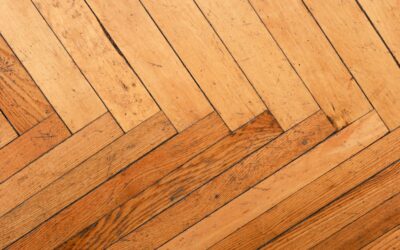
Walk into a restored townhouse or a well-designed boutique hotel and there is a good chance the floor is doing half the work of the room. Herringbone oak parquet flooring is the pattern responsible more often than not: short rectangular oak blocks laid at 90 degrees to form that endlessly recognizable zigzag. It is timeless, it flatters almost any interior style, and it turns a plain material into a statement. This guide covers the design decisions, block dimensions, patterns, and real costs so you can plan a herringbone floor with confidence.
- What Herringbone Parquet Actually Is
- Herringbone vs. Chevron: Know the Difference
- Block Sizes and How They Change the Room
- Design Options: Borders, Grades, and Finishes
- What Herringbone Oak Parquet Costs
- Installation Notes
- Care and Longevity
- Which Rooms Suit Herringbone Best
- Is Herringbone Oak Parquet Worth It?
What Herringbone Parquet Actually Is
Herringbone is a laying pattern, not a product. Individual oak blocks, each a simple rectangle, are set so the end of one board meets the side of the next at a right angle, producing a broken zigzag that resembles the bones of a fish, hence the name. The blocks are typically twice as long as they are wide (a 2:1 ratio), which is what makes the geometry lock together cleanly. Oak is the traditional and still dominant species because its tight grain, warm color, and hardness (around 1,120 to 1,335 lbf depending on European or American white oak) suit both the look and the wear a patterned floor takes.
You will see two constructions on the market: solid oak blocks and engineered oak blocks with a real oak wear layer over a plywood or HDF core. Engineered has largely taken over for new installs because it is more stable across seasons and works over radiant heat and concrete, while solid remains popular for traditional restorations.
Herringbone vs. Chevron: Know the Difference
Buyers constantly confuse these two, and the distinction changes the whole look.
- Herringbone: Rectangular blocks with square-cut ends, staggered so each block meets the side of the next. The join creates a stepped, broken zigzag.
- Chevron: Blocks cut at an angle (usually 45 or 60 degrees) on the ends so they meet point-to-point, forming continuous, unbroken V-shaped rows.
Chevron is more formal and French; herringbone is more classic and versatile. Chevron also costs more because the angled end cuts create waste and demand precise milling. If you love the look but want the friendlier price, herringbone is the practical pick.
Block Sizes and How They Change the Room
Block dimensions dramatically affect the scale and feel of the finished floor. Common oak herringbone sizes include:
- Small blocks (roughly 2.75 x 11 in): A tighter, busier pattern that suits smaller rooms, entryways, and traditional interiors.
- Medium blocks (roughly 3.5 x 14 in to 4 x 16 in): The most versatile scale, balanced for average living spaces.
- Large blocks (roughly 5 x 20 in and up): A bold, contemporary look that reads well in open-plan and large rooms but can overwhelm a small one.
A useful rule of thumb: larger rooms can carry larger blocks, while small rooms look best with smaller blocks that keep the pattern in proportion. Thickness runs 3/4 inch for solid blocks and 5/8 to 3/4 inch for engineered, with the engineered wear layer ideally 3 to 6 mm so it can be sanded at least once or twice.
Design Options: Borders, Grades, and Finishes
The base pattern is only the start. A traditional detail is a border, a run of straight boards framing the herringbone field, sometimes with a contrasting inlay line, which visually anchors the pattern and gives a room a finished, custom look. Grade selection matters too: prime oak gives a clean, uniform, formal field, while character or rustic grade brings knots and color variation for a warmer, aged feel.
Finishes follow the same logic as plank oak. Matte and ultra-matte hardwax oils flatter the grain and the geometry; smoked, fumed, and limed finishes lean into the heritage look. Because herringbone catches light at alternating angles across every block, the pattern itself creates subtle shading, so a busy high-gloss finish tends to look restless. Keep the sheen low and let the geometry do the talking.
What Herringbone Oak Parquet Costs
Herringbone runs higher than the same oak in a straight plank because of the extra material precision and the far more labor-intensive install. Realistic 2026 US figures for material:
- Engineered oak herringbone, standard grade: $7 to $14 per sq ft
- Solid oak herringbone blocks: $9 to $16 per sq ft
- Designer finishes, wide blocks, or premium European oak: $15 to $28+ per sq ft
Installation is where herringbone gets expensive: expect $6 to $14 per sq ft in labor because setting the pattern is slow, exacting work that demands an experienced installer and precise dry-layout. Add a border and the labor climbs further. For a 200 sq ft room in mid-grade engineered herringbone, an all-in project commonly runs $4,000 to $7,000. Order 10 to 15 percent overage; patterned layouts generate more offcuts than straight planks.
Installation Notes
Herringbone is not a DIY-friendly first project. The pattern amplifies every error, so a floor that starts even a fraction off square will drift visibly by the far wall. Key points:
- Establish a precise center working line; the pattern is set from the middle out, not from a wall.
- Engineered blocks are usually glued down with a flexible urethane adhesive over a flat, dry, primed subfloor; solid blocks may be glued or secret-nailed.
- Subfloor flatness within 3/16 inch over 10 feet is critical, as high spots telegraph through the pattern.
- Acclimate engineered blocks 3 to 7 days and solid blocks 7 to 14 days in the installed room.
- Leave the required perimeter expansion gap, hidden under baseboard or the border trim.
For radiant heat or a concrete slab, choose engineered blocks and confirm the manufacturer’s temperature limits, typically a surface cap around 81°F.
Care and Longevity
A herringbone oak floor is cared for exactly like any oak: dry sweep or vacuum regularly, clean with a barely damp mop and a pH-neutral hardwood cleaner, and keep steam and vinegar away from the finish. Felt pads under furniture prevent point scratches, and entry mats catch the grit that grinds down any finish. Solid and thick-wear-layer engineered blocks can be sanded and refinished, so a quality herringbone floor is genuinely a multi-decade investment.
Which Rooms Suit Herringbone Best
Herringbone earns its keep in rooms where the floor is meant to be part of the design story. Entryways and foyers make a strong first impression with a tighter herringbone in smaller blocks. Living rooms, dining rooms, and formal studies wear the pattern well at a medium block scale. Open-plan kitchen-and-living spaces can carry larger blocks, and the pattern helps a big room feel considered rather than empty. Engineered herringbone even works in kitchens and, with a suitable moisture barrier, over concrete on the ground floor.
Direction is a design lever worth planning. Running the main spine of the herringbone parallel to the longest wall stretches a room visually, while running it toward a focal point like a fireplace or a bay window draws the eye there. In a hallway, aligning the pattern down the length of the run guides movement naturally. Because these choices are permanent once the blocks are glued, mock the layout on paper or with a dry run before committing.
Is Herringbone Oak Parquet Worth It?
For homeowners who want a floor that elevates the entire room and reads as considered and high-end, herringbone oak parquet flooring is one of the best-value design upgrades available, provided you budget for the skilled installation it requires. Choose engineered blocks for stability and radiant-heat rooms, solid for traditional restorations, and match your block size to your room scale. Keep the finish matte, buy your overage, and hire an installer who can show you finished herringbone work. Done right, it is the kind of floor people notice the moment they walk in.
Prefer to explore on your own?
See how new flooring looks in your actual room in seconds — free, no signup.
Try the free Floor Studio →