Of all the accent materials I install, hexagon glass tile is the one that most reliably makes a homeowner stop and say “wow” when the lights come on. The six-sided geometry gives a wall rhythm and movement, and the glass itself adds a luminous depth that catches and bounces light in a way ceramic never quite manages. Put those two things together and you get a surface that feels custom and jewel-like without a custom price tag.
Part of our Tile & Grout guide — explore the full guide →
I have set hex glass on kitchen backsplashes, shower niches, powder-room feature walls, and pool waterlines. It is a rewarding material to work with, but glass has its own quirks that trip up people used to standard tile. Here is everything you need to know before you buy and install.
Why Choose Hexagon Glass Tile
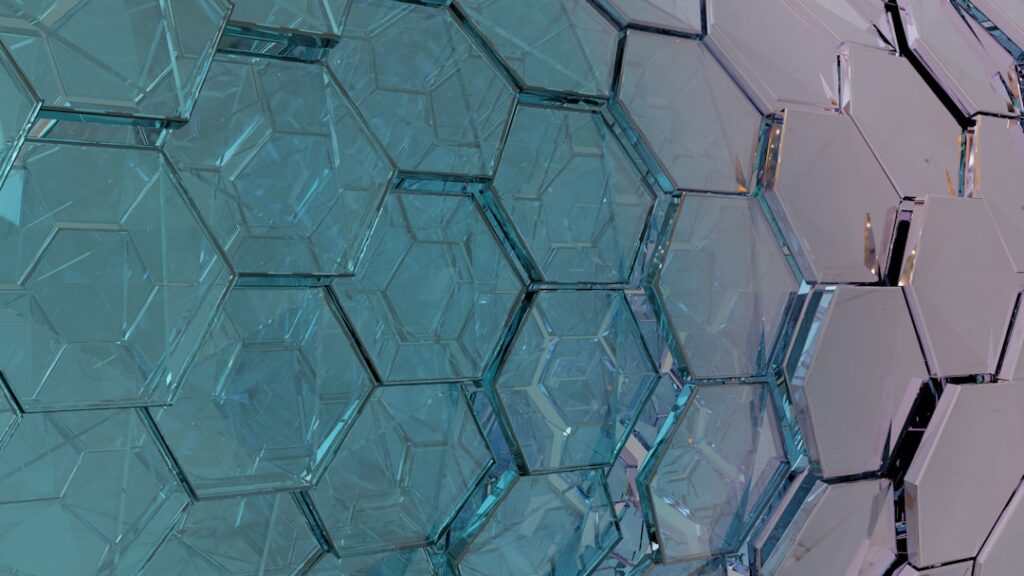
The honeycomb shape has been a design favorite for over a century, and glass modernizes it. Because glass is translucent or semi-translucent, light penetrates the surface and reflects off the back coating, giving each hexagon a glowing quality. The result is a wall with real dimension, especially under directional lighting.
Glass is also nonporous, which makes it naturally stain-resistant and easy to clean, an obvious advantage behind a stove or in a shower. And hex glass comes in an enormous color range, from crisp whites and soft neutrals to bold jewel tones and iridescent finishes that shift color as you move.
Common Sizes and Formats
Hexagon glass tile comes in several scales, and the size you pick sets the whole mood of the room.
- Mini hex (about 1 inch): Usually mesh-mounted on 12-inch sheets. Great for shower floors and detailed mosaic looks with lots of grout lines for grip.
- Standard hex (2 to 3 inches): The most versatile size for backsplashes and feature walls, balancing pattern and simplicity.
- Large hex (4 inches and up): A bold, contemporary statement with fewer grout lines. Often sold as individual tiles rather than sheets.
Most residential hex glass ships pre-mounted on flexible mesh or paper-faced sheets, which speeds installation and keeps the spacing consistent. That mesh backing is a big reason DIYers can tackle a hex backsplash in a weekend.
Colors and Finishes
The finish drives the personality of hexagon glass tile as much as the color does. Glossy glass maximizes reflection and reads bright and clean. Frosted or matte glass softens the light for a more muted, contemporary feel. Iridescent glass adds a pearlescent shimmer that shifts between hues. Textured or “cracked ice” glass introduces sparkle and depth.
Popular Color Directions
- White and soft gray hex for timeless, light-reflecting backsplashes
- Sea glass greens and blues for coastal or spa bathrooms
- Deep navy or emerald for a moody, luxe feature wall
- Iridescent mother-of-pearl tones for a glamorous powder room
- Mixed-tone blends that combine several shades in one sheet
What Hexagon Glass Tile Costs
Glass carries a premium over basic ceramic, and hex mosaics add a bit more for the shaping. Material pricing generally falls in these ranges.
- Basic mesh-mounted hex glass mosaic: $8 to $15 per square foot
- Mid-range and iridescent finishes: $15 to $28 per square foot
- Premium artisan or hand-cut glass: $28 to $45 per square foot
Installation labor for glass mosaic runs higher than field tile, typically $12 to $20 per square foot, because setting glass correctly requires more prep and care. For a 30-square-foot kitchen backsplash, budget roughly $700 to $1,300 installed. Add for a specialty sealer only if you choose a natural-stone blend; pure glass does not need sealing, though the grout does.
How to Install Hexagon Glass Tile
Glass is unforgiving of shortcuts because it is transparent. Everything behind it can show through, so the setting bed has to be flawless. Here is the process I follow.
- Prep a smooth, clean, flat substrate. Any trowel ridges, notes, or pencil marks can ghost through translucent glass, so I skim-coat and let it dry.
- Use a white, glass-rated thinset. This is critical. Standard gray thinset shows through glass and muddies the color. A premium white polymer-modified mortar formulated for glass gives true color and strong bond.
- Comb with a fine notch trowel, typically 3/16-inch V-notch, then flatten the ridges with the flat side so no lines telegraph through.
- Press the mesh sheets firmly with a grout float and a beating block to ensure full contact and a flat plane between sheets.
- Check alignment constantly. Hex sheets can drift; keep the honeycomb pattern flowing seamlessly from sheet to sheet.
- Let it cure at least 24 hours before grouting, longer in cool conditions, since glass does not absorb moisture and slows mortar cure.
Cutting Glass Hex Tile
Glass chips and cracks if you rush the cut. Use a wet saw with a glass or continuous-rim diamond blade, feed slowly, and keep water flowing to cool the cut. For small nips, a good pair of wheeled mosaic nippers handles individual hexagons. Always wear eye protection with glass.
Grouting and Finishing
For hex glass I usually recommend an unsanded grout or a high-performance epoxy grout. Sanded grout can scratch glossy glass faces, so if joints are narrow, unsanded is safer. Epoxy grout is my top pick for showers and backsplashes because it is stain-proof, waterproof, and never needs sealing, though it sets fast and demands quick, careful cleanup. Grout in small sections, wipe diagonally so you do not pull grout out of the joints, and buff off haze with a dry microfiber cloth before it dries.
Care and Maintenance
This is where glass earns its keep. Because it is nonporous, hexagon glass tile wipes clean with a soft cloth and a pH-neutral or glass cleaner. It resists stains, mildew, and moisture, making it ideal behind cooktops and in wet areas. Avoid abrasive pads and gritty scrubs that can scratch the surface. If you used cement grout rather than epoxy, seal the grout lines to keep them from discoloring, and re-seal every year or so in a shower.
Design Ideas and Pairings
Hex glass is a natural focal point, so I plan the rest of the room around it. Behind a range, a field of white or soft-gray hex glass with a slim floating shelf lets the tile sparkle without clutter. In a full-height backsplash that runs to the underside of upper cabinets, the honeycomb pattern adds vertical interest that a plain grid cannot.
In bathrooms, I often use hexagon glass tile as a shower niche liner, framing it with a simple metal trim so the little jewel-box interior glows against a calmer surrounding tile. A single accent band of iridescent hex at wainscot height dresses up an otherwise plain wall. And a mini-hex shower floor in a sea-glass tone reads as spa-like while the many grout lines quietly deliver the traction you need underfoot.
Smart Pairings
- White hex glass with warm wood shelving for a bright, organic kitchen
- Sea-glass hex with matte-white subway field tile in a coastal bath
- Navy or emerald hex accent band against light stone for contrast
- Iridescent hex behind a vanity mirror to bounce light around a small room
Common Mistakes to Avoid
The number-one error with glass mosaic is using gray thinset. It shows straight through the tile and turns a bright color muddy and dull, and once it cures there is no fixing it short of tearing the wall down. Always use a white, glass-rated setting mortar.
The second mistake is a wavy or ridged setting bed. Because glass is translucent, every trowel line, thumbprint, and pencil mark can ghost through the finished surface. Skim and flatten the mortar before setting. Homeowners also tend to under-order; hex sheets generate more waste than you expect at edges and around outlets, so buy 15 percent extra. Finally, resist sanded grout on glossy glass unless the manufacturer approves it, because the sand can leave fine scratches that catch the light and never buff out.
Final Thoughts on Hexagon Glass Tile
For a surface that combines geometric interest with luminous depth, hexagon glass tile is hard to beat. It brings light and personality to backsplashes, showers, and feature walls, resists stains, and cleans up in seconds. Just respect what glass demands: a flat substrate, white thinset, a fine-notch trowel, and patient grouting. Get those fundamentals right and your hexagon glass tile will glow beautifully for as long as you own the home.
Prefer to explore on your own?
See how new flooring looks in your actual room in seconds — free, no signup.
Try the free Floor Studio →