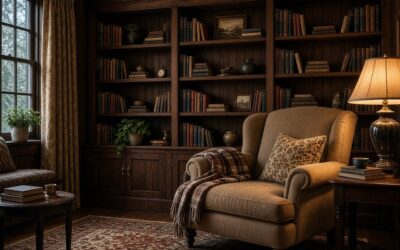
You do not need a mansion or a separate wing to build a home library worth spending time in. A spare bedroom, an underused hallway, or even a deep closet can become a functional reading space with the right shelving, lighting, and layout choices. The key is designing around your actual collection size and reading habits rather than copying a Pinterest board that looks great but wastes space.
Choose the Right Room
A dedicated library works best in a quiet area away from the kitchen and main living spaces. Spare bedrooms, finished attics, and bonus rooms above garages are popular choices. If a full room is not available, consider converting a wide hallway, the space under a staircase, or one wall of a home office.
Avoid rooms with excessive direct sunlight. UV exposure fades book spines and dries out leather bindings. East-facing rooms get gentle morning light, which is ideal. South and west-facing rooms need UV-filtering window film or blackout curtains to protect the collection.
Built-In vs. Freestanding Shelves
Built-in bookshelves maximize every inch of wall space and add permanent value to your home. A custom built-in using 3/4-inch plywood or MDF runs $150 to $400 per linear foot installed, depending on finish and complexity. Floor-to-ceiling built-ins in a 12×12-foot room typically cost $3,000 to $8,000 total.
Freestanding bookcases offer flexibility. Basic flat-pack bookcases remain the budget workhorse at $70 to $100 per unit, and three of them cover about 9 feet of wall. For a more substantial look, solid wood bookcases from furniture retailers run $500 to $1,500 each. Anchor all freestanding units to the wall with anti-tip brackets, especially in earthquake-prone areas or homes with children.
Shelf Spacing and Depth
- Standard paperbacks: 8 to 9 inches between shelves, 8 inches deep
- Hardcovers: 10 to 12 inches between shelves, 10 inches deep
- Art and coffee table books: 14 to 16 inches between shelves, 12 inches deep
- Adjustable shelves: Install shelf pin holes every 1.25 inches for maximum flexibility
Library Ladder Options
Shelves above 7 feet need a ladder for access. Rolling library ladders mounted on a rail system run $300 to $1,200 depending on material and length. Rolling ladder hardware kits start at around $150, and you supply the ladder. A simple library step stool for shelves up to 9 feet costs $80 to $200 and folds flat when not in use.
Lighting That Protects and Highlights
Overhead recessed lighting works but can create glare on glossy book covers. A better approach is layered lighting: ambient overhead fixtures on a dimmer, LED strip lights inside shelf units for accent illumination, and a dedicated reading lamp beside the chair.
For reading, aim for 40 to 50 foot-candles at the page. A 60-watt equivalent LED floor lamp positioned over the shoulder delivers that. Avoid halogen bulbs near bookshelves because they generate significant heat. LED puck lights inside glass-front cabinets highlight special editions without UV risk.
Comfortable Seating
A home library without a good reading chair is just storage. Invest in one quality chair rather than cramming in multiple mediocre seats. A leather or upholstered club chair with a high back and padded arms costs $500 to $1,500 and lasts decades. Add an ottoman for leg support and a small side table for coffee and reading glasses.
Window seats with built-in storage below are another excellent option. A 4-foot custom window seat runs $800 to $2,000 installed and provides hidden storage for blankets or overflow books. Add a 3-inch foam cushion covered in durable linen or canvas.
Organization Systems
Arrange books in whatever system you will actually maintain. Popular methods include:
- Genre/category: fiction, nonfiction, biography, reference. Easiest to maintain.
- Alphabetical by author: works well for collections over 500 books.
- Color-coded: visually striking but impractical for finding specific titles quickly.
- Dewey Decimal or Library of Congress: overkill for most home collections but satisfying for bibliophiles with 1,000+ volumes.
Leave about 20% of shelf space empty for growth. Packing shelves to capacity makes it impossible to add new acquisitions and creates a cluttered look.
Climate Control and Book Preservation
Books thrive at 60 to 70 degrees Fahrenheit with 30% to 50% relative humidity. High humidity encourages mold and foxing (brown spots on pages). Low humidity cracks leather and warps covers. A small dehumidifier in the room handles moisture issues in basements and coastal climates. In dry climates, a humidifier set to 40% keeps paper supple.
Keep books upright and supported on both sides to prevent leaning, which warps spines over time. Store oversized books flat in stacks of no more than three to avoid crushing the bottom volumes.
Budget-Friendly Home Library Ideas
Building a home library does not require a major renovation. Mount floating shelves at $15 to $30 each for an instant display wall. Use cube storage units as modular bookshelves. Repurpose an armoire or entertainment center with interior shelves. Thrift stores and estate sales are treasure troves for solid wood bookcases at 20% of retail price. With a comfortable chair, good lighting, and a few hundred linear inches of shelving, you have everything you need.
Creating a Cosy Reading Room: Light, Comfort and Quiet
A cosy reading room is less about the number of books and more about how the space feels after an hour in the chair. Warm light, soft surfaces, safe shelving and a quieter sound profile make the difference between a room you pass through and one you settle into.
Warm, Layered Lighting
Choose LED bulbs with a warm color temperature, around 2700K to 3000K, for a relaxed glow that still lets you read comfortably. Put the overhead fixture on a dimmer, then add a floor or table lamp positioned slightly behind and to the side of the reading chair so light falls on the page without glare. LEDs run cool, which matters in a room full of fabric, paper and upholstery. Avoid halogen and other hot bulbs near curtains, throws or lampshades that sit close to the bulb, and use lamps with shades rated for the wattage you install. Plug lamps directly into wall outlets where possible, and route cords along walls rather than across walkways.
Seating and Soft Layers
Pick one chair that supports your back and arms for long sessions, then add a footrest and a small table within easy reach. A loveseat or window seat works for curling up with a blanket. Rugs soften the room both visually and acoustically, especially over hard flooring. Put a non-slip rug pad under every rug, sized slightly smaller than the rug so the edges lie flat, and tape or trim any curled corners so they do not catch a foot.
Anchored Bookshelves
Loaded bookcases are heavy and top-heavy, and they can tip if a child climbs them or someone pulls on a high shelf. Anchor every freestanding unit to wall studs with anti-tip straps or brackets, using screws long enough to bite into the framing. Load heavier volumes on the lower shelves to keep the center of gravity low. If you use a step stool or rolling ladder, keep it in good repair and never stand on the shelves themselves.
Quieting the Room
Books already absorb sound well, so a full wall of shelving helps. Add heavy curtains, upholstered furniture and a thick rug to cut echo on hard surfaces. Weatherstripping and a door sweep on the room door block hallway noise, and a solid-core door does better than a hollow one. Fabric wall panels or a cork board behind a desk can absorb more sound if the room still feels lively. For outside noise, inserts or heavier window treatments reduce traffic sound without a renovation.
Small Touches That Add Warmth
A throw blanket, a side table with a coaster, a small plant that tolerates indirect light and a basket for current reads keep the room inviting. Use flameless candles near paper.