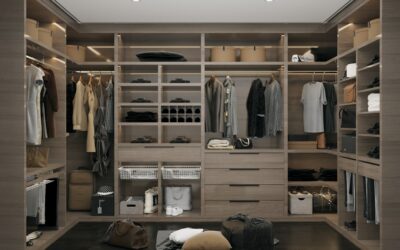
The biggest mistake people make with a compact closet is treating it like a small version of a big one, when the real goal is to use vertical space the average closet completely ignores. The smartest small walk in closet organization ideas reclaim the dead zones above your head and below your hanging clothes, turning a cramped 5-by-6 space into a boutique-style room that holds twice what you thought possible. With the right system and a few clever tricks, even the tiniest walk-in can feel spacious, look tidy, and make getting dressed a genuine pleasure rather than a daily dig.
- Start by Using Vertical Space
- Choose the Right Storage System
- Smart Layout for Tight Spaces
- Maximize Shoe and Accessory Storage
- Add Drawers and Hidden Storage
- Lighting and Mirrors Make It Feel Bigger
- Keep It Organized Long-Term
- Measure Before You Buy Anything
- Budget-Friendly Products Worth Buying
- Bringing It All Together
Start by Using Vertical Space
Most closets waste the top 18 inches and the floor beneath hanging garments. Reclaiming that space is the single highest-impact move you can make. Install a second hanging rod beneath your existing one for shirts, folded pants, and skirts, instantly doubling your hanging capacity in that section. Add shelving that runs all the way to the ceiling, and store off-season or rarely used items in labeled bins up high.
Think in three zones from floor to ceiling: everyday items at eye and hand level, frequently used pieces in the middle, and seasonal or occasional items up top and near the floor. A slim rolling step stool tucked into a corner makes those high shelves usable without cluttering the space.
Choose the Right Storage System
The system you install determines how much you can fit and how good it looks. You have three main routes at very different price points:
- Wire or ventilated shelving: The most affordable at $50 to $200, easy to install and good airflow, though it can look utilitarian.
- Modular closet kits: Systems from brands like ClosetMaid or IKEA’s PAX run $200 to $800 and offer adjustable rods, shelves, and drawers you configure yourself.
- Custom built-ins: Professionally designed systems cost $1,000 to $3,000-plus but maximize every inch with tailored dimensions and premium finishes.
For most small walk-ins, a modular kit hits the sweet spot of flexibility and price, letting you mix hanging, shelving, and drawers to match your wardrobe exactly.
Smart Layout for Tight Spaces
In a narrow walk-in, a single-wall or L-shaped layout keeps the center aisle clear, while a U-shaped design squeezes maximum storage from a slightly wider room. Aim to keep at least 24 inches of clear floor in the center so two people are not required to shuffle sideways. Corners are notoriously wasted; use corner shelving or angled rods so nothing goes dead in those spots.
Position your most-used items in the prime real estate between knee and eye height. Reserve the awkward corners and highest shelves for shoes, bags, and things you reach for less often. If the closet has a door that swings inward, consider swapping it for a sliding or pocket door, or removing it entirely with a curtain, to free up the floor space the swing steals.
Maximize Shoe and Accessory Storage
Shoes and accessories devour space if left loose, so give them dedicated homes. Angled shoe shelves, a slim shoe cabinet, or clear stackable boxes keep pairs visible and off the floor. For a small closet, a hanging shoe organizer on the back of the door reclaims otherwise useless space and holds a dozen pairs.
Accessories benefit from small-scale solutions: hooks or a pegboard for hats and bags, a drawer with felt-lined dividers for watches and jewelry, and slim tiered hangers for scarves and belts. Valet rods that pull out and retract give you a spot to plan outfits without permanently occupying rail space. The goal is a specific place for every category so nothing piles up.
Add Drawers and Hidden Storage
Folded items and undergarments live best in drawers, and a small bank of drawers built into the closet system eliminates the need for a separate dresser, freeing up bedroom space. If a full drawer unit will not fit, canvas bins on shelves work almost as well, keeping folded clothes contained and dust-free while pulling out like drawers.
Look for hidden opportunities too. The space under a bottom shelf can hold rolling bins, the back of the door can carry an over-the-door organizer, and a narrow gap between the wall and the shelving can house a pull-out tie or belt rack. In a small closet, every inch of overlooked space is an opportunity.
Lighting and Mirrors Make It Feel Bigger
Good lighting transforms a dim closet from a cave into a boutique. Battery-powered LED puck lights or a motion-activated strip cost $15 to $40 and let you actually see dark colors and coordinate outfits. Warm-white light around 3000K flatters clothing colors better than harsh cool light.
A full-length mirror on the wall or back of the door does double duty, letting you check outfits and visually expanding the space by reflecting light. In a small closet, these two touches, lighting and a mirror, punch far above their cost in making the room feel larger and more luxurious.
Keep It Organized Long-Term
A perfectly organized closet drifts back to chaos without a maintenance habit. Adopt a simple rule like removing one item for every new one you bring in, and do a seasonal edit twice a year, moving off-season clothes to high shelves or bins and donating anything unworn in twelve months. Group like with like, hanging by category and color, so gaps are obvious and putting things away is intuitive.
Use consistent, matching hangers, which alone makes a closet look dramatically neater and saves rod space compared with bulky mismatched ones. Slim velvet hangers are a favorite because they grip clothes and take up half the width of plastic ones, letting you fit more on every rod.
Build in a daily reset habit too, since small consistent effort beats occasional overhauls. Take thirty seconds each evening to return stray items to their homes, and keep a donation bin or bag in the closet so anything you try on and reject can go straight in rather than back onto a shelf. When every category has a designated spot and putting things away is faster than leaving them out, the closet largely maintains itself, and you avoid the slow creep of clutter that eventually swallows a small space.
Measure Before You Buy Anything
The fastest way to waste money on a closet is buying a system before you measure, then finding it does not fit. Start by sketching the closet with exact width, depth, and height of every wall, and note the location of the door swing, any light fixture, and outlets. Measure the depth you have for shelving, since anything less than 14 inches struggles to hold folded sweaters, and standard hanging needs about 24 inches of clearance in front of the rod.
Then inventory your wardrobe realistically. Count how many long-hanging items like dresses and coats you own versus short-hanging shirts and pants, and how many shelves and drawers you truly need. This tells you the ratio of hanging to shelving to plan for. People consistently install too much long-hang space and too little double-hang and shelving, wasting the vertical volume a small closet cannot spare. Matching the system to your actual clothes, measured and counted, guarantees every inch earns its place.
Budget-Friendly Products Worth Buying
A handful of inexpensive products deliver outsized results in a small walk-in. Slim velvet hangers, at around $20 for a pack of 50, instantly reclaim rod space and make the closet look uniform and tidy. Clear acrylic or canvas drawer dividers, a few dollars each, keep small items sorted and visible. Stackable clear shoe boxes protect pairs and let you use vertical shelf space efficiently.
Tension rods add hidden hanging spots in awkward gaps, and adhesive LED strip or puck lights transform visibility for under $30. A hanging shelf organizer that clips onto a rod creates instant cubbies for folded items without any drilling. None of these require a contractor, and together they can be assembled for well under $150, proving that a boutique-feeling closet is more about smart, targeted purchases than a big renovation budget. Add them gradually and evaluate what your space actually needs before buying more.
Bringing It All Together
A small walk-in closet does not have to feel cramped or chaotic. The best small walk in closet organization ideas all come back to the same principles: use vertical space to the ceiling, choose a storage system that matches your wardrobe, give every category a dedicated spot, and add lighting and a mirror to make the room feel larger. Start with a double hanging rod and a modular kit, edit ruthlessly, and switch to slim matching hangers, and you will be amazed how much a tiny closet can hold. Done right, even a modest walk-in becomes an efficient, attractive space that makes every morning easier.