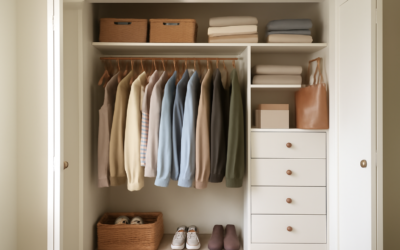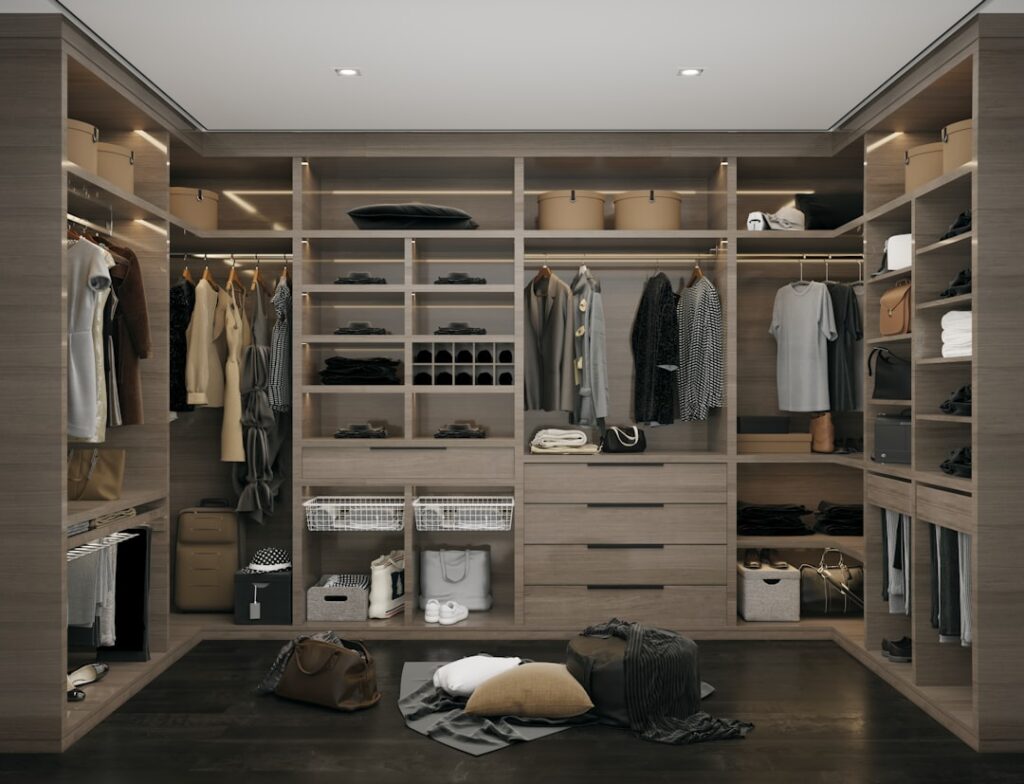
A walk-in closet feels like a luxury, but a small one can quickly become a cramped, cluttered mess if it isn’t planned well. The right small walk in closet organizer turns even a 5-by-6-foot space into an efficient, boutique-style storage area where everything has a home and nothing gets buried. The trick is thinking vertically, using every wall, and matching the layout to your actual wardrobe. This guide covers layouts, components, systems, and smart tricks to squeeze the most storage out of a tight walk-in.
- Start by Measuring and Taking Inventory
- Choose the Right Layout
- Maximize Vertical Space with Double Hanging
- Add Shelving and Cubbies
- Include a Dresser or Drawer Tower
- Systems: Wire, Wood, or Custom
- Smart Space-Saving Accessories
- Lighting Makes It Feel Bigger
- What It Costs
- Organizing Shoes in a Small Closet
- Storing Accessories and Small Items
- Making the Most of Corners
- Adding a Mirror and Dressing Space
- Editing Your Wardrobe First
- Common Small-Closet Mistakes
- Final Thoughts
Start by Measuring and Taking Inventory
Before buying anything, measure the closet and assess what you own:
- Record the exact width, depth, and height of every wall.
- Note the door swing and any obstructions like light switches or vents.
- Count your long-hang items (dresses, coats), short-hang items (shirts, pants), folded items, and shoes.
This inventory drives the whole design. A closet full of dresses needs long-hang space; a closet of folded sweaters needs shelving. Design for what you actually have.
Choose the Right Layout
Small walk-ins usually fit one of three layouts based on the shape:
- Single-wall (I-shaped): everything on one wall, leaving the opposite side open for dressing. Simple and walkable.
- Two-wall (L-shaped): storage wraps two adjacent walls, doubling capacity while keeping a clear path.
- U-shaped: storage on three walls for maximum capacity, best when the closet is at least 6 to 7 feet wide so you can still turn around.
Leave at least 24 to 36 inches of clear floor in the center so you can move and dress comfortably.
Maximize Vertical Space with Double Hanging
The biggest space gain in a small closet comes from double-hang zones:
- Install two rods stacked vertically for shirts, blouses, and folded pants — this doubles hanging capacity in that section.
- Place the lower rod about 40 inches off the floor and the upper rod about 80 inches up.
- Reserve a single long-hang section (about 68 inches of clearance) for dresses and coats.
Mixing double-hang and single-hang zones is the number-one way to fit more clothes in less space.
Add Shelving and Cubbies
Shelves handle everything that doesn’t hang well:
- Adjustable shelves above the top rod use the dead space near the ceiling for out-of-season storage.
- A stack of cubbies or shelves holds folded sweaters, jeans, and handbags.
- Shoe shelves — angled or flat — keep footwear visible and off the floor.
Adjustable shelving lets you reconfigure as your wardrobe changes, which matters in a small space where every inch counts.
Include a Dresser or Drawer Tower
Built-in drawers eliminate the need for a separate dresser in the bedroom:
- A drawer tower in the corner or under a hanging section stores socks, underwear, and folded items.
- Shallow drawers work well for jewelry and accessories.
- Soft-close drawers feel upscale and last longer.
Consolidating clothing storage into the closet frees floor space in the bedroom itself.
Systems: Wire, Wood, or Custom
You have three main routes to build your organizer, at very different price points:
- Wire systems (like ventilated coated-wire shelving) are the most affordable, easy to install, and good for renters or tight budgets.
- Modular wood or laminate kits from home centers offer a more finished, furniture-like look and adjustable towers.
- Custom closet systems from a designer maximize every inch and add features like pull-out valets, but cost the most.
Track-mounted adjustable systems are a favorite because they let you move shelves and rods later without new holes.
Smart Space-Saving Accessories
Little add-ons punch above their weight in a small closet:
- Slim velvet hangers free up several inches of rod space compared to bulky plastic ones.
- Double-hook and cascading hangers stack items vertically.
- Pull-out belt and tie racks corral accessories in a few inches.
- Over-the-door and back-of-door organizers use otherwise wasted surfaces.
- Clear bins with labels on high shelves keep seldom-used items accessible.
Lighting Makes It Feel Bigger
Good light transforms a cramped closet:
- Add LED strip lighting under shelves or along the top of hanging sections.
- Battery or motion-activated puck lights work where wiring isn’t practical.
- Bright, even light lets you see colors accurately and makes the space feel open.
What It Costs
Budgets vary widely by material:
- DIY wire shelving kit: roughly $100 to $400 for a small closet.
- Modular wood or laminate system: about $500 to $1,500.
- Custom professionally installed system: $1,500 to $5,000-plus.
Many homeowners get excellent results by mixing an affordable adjustable kit with a few smart accessories.
Organizing Shoes in a Small Closet
Shoes are one of the biggest space challenges in a compact walk-in. Keep them off the floor and organized:
- Angled shoe shelves display footwear at a glance and use less depth than flat shelves.
- Cubbies keep pairs separated and tidy.
- Over-the-door shoe organizers reclaim the back of the door for flats and sandals.
- Clear boxes stack seldom-worn or seasonal shoes on high shelves.
- A single dedicated shoe section keeps them from spreading across the floor.
Getting shoes off the floor instantly opens up the walkway and makes the whole closet feel larger.
Storing Accessories and Small Items
Belts, ties, scarves, jewelry, and bags need homes too, and they’re easy to lose in a small space:
- Use pull-out or hanging racks for belts and ties in just a few inches of space.
- Hang scarves on a multi-loop hanger or slim hooks.
- Store jewelry in a shallow drawer with dividers or a wall-mounted organizer.
- Give handbags their own shelf, using dividers or bins to keep them upright.
Corralling small items prevents the clutter that makes a compact closet feel chaotic.
Making the Most of Corners
Corners are often wasted space in an L- or U-shaped closet. Put them to work:
- Use corner shelving units that wrap the angle.
- Reserve the deep corner for long-hang items or a hamper.
- Add a lazy-Susan or pull-out for shoes or accessories in awkward corners.
- Avoid letting two rods collide in a corner — leave clearance so garments don’t crush together.
Thoughtful corner solutions can add meaningful storage that would otherwise go unused.
Adding a Mirror and Dressing Space
Even a small walk-in benefits from a full-length mirror mounted on an end wall or the back of the door. It lets you dress in the closet and makes the space feel larger and brighter by reflecting light. If room allows, a slim bench or ottoman gives you a spot to sit while putting on shoes and doubles as storage. Keeping a clear central area, even just two feet, makes the closet function as a true dressing room rather than a cramped storage box.
Editing Your Wardrobe First
The best organizing trick costs nothing: get rid of what you don’t wear. Before installing any system, pull everything out and sort ruthlessly. Donate or sell items you haven’t worn in a year, and toss anything damaged beyond repair. A small closet works far better when it holds only clothes you actually use. This edit also reveals how much hanging, folding, and shoe storage you truly need, which lets you design the system around reality rather than clutter. Make this seasonal editing a habit, and your closet will never overflow again.
Common Small-Closet Mistakes
Avoid these pitfalls:
- Using a single hang rod everywhere and wasting the space below.
- Ignoring the top 18 inches near the ceiling.
- Piling shoes on the floor where they block the walkway.
- Overstuffing rods so nothing is visible or accessible.
- Keeping items you never wear — edit first, then organize.
Final Thoughts
A well-designed small walk in closet organizer proves that square footage matters less than smart planning. Measure carefully, take honest inventory of what you own, and build around double-hang zones, adjustable shelving, and a compact drawer tower. Keep at least two feet of clear floor in the center, use slim hangers and door organizers to reclaim wasted inches, and add LED lighting to make the space feel open and boutique-like. Whether you go with a budget wire kit or a custom build, thoughtful zoning turns a tight walk-in into one of the most functional and satisfying spaces in your home.