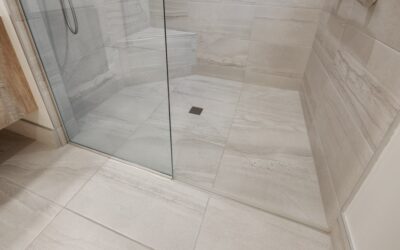
Walk into a tile shower built in California, Arizona or Nevada over the last several decades and there is a good chance a layer of hot asphalt sits hidden under the mortar bed. A hot mop shower pan is a waterproof basin built on site by mopping molten asphalt over layers of roofing felt, forming a continuous, bonded tub that holds water until it drains. It is fast, proven and still widely used in parts of the West, but it is specialist work done only by trained crews.
Part of our Bathroom Remodeling & Flooring guide — explore the full guide →
Hot mop waterproofing sits in the same position in a shower as a sheet vinyl liner: under the mortar bed, protecting the subfloor and framing. The difference is how it is made. Instead of folding and fastening a single plastic sheet, the installer builds up several plies of felt and hot asphalt that fuse into one continuous membrane with no seams or folded corners.
- How a Hot Mop Shower Pan Is Built
- Safety: Why Hot Mopping Is a Job for Trained Pros
- Cost of Hot Mop Waterproofing
- Code Acceptance and Inspections
- Flood Testing the Pan
- Hot Mop vs Sheet Liners vs Surface Membranes
- Mold and Moisture: What Goes Wrong
- Troubleshooting Signs of a Failed Pan
- When to Call a Licensed Professional
- Frequently Asked Questions
Knowing how the method works, what it costs and how it stacks up against PVC or CPE liners and modern surface membranes helps you talk to contractors, read bids and decide what belongs under your tile.
How a Hot Mop Shower Pan Is Built
The process is simple to describe and difficult to do well. It relies on heat, speed and experience, which is why it is performed by dedicated hot mop contractors rather than general tile setters or homeowners.
- Pre-slope: The framing or slab gets a sloped base, traditionally a sand and cement mortar bed pitched about 1/4 inch per foot toward the drain, so any water that reaches the membrane moves to the drain instead of pooling.
- Blocking and prep: Wood blocking is added between studs at the base of the walls, and the curb and drain area are prepared. A clamping-ring drain base is installed by the plumber so the membrane can be sealed to it.
- Felt and asphalt plies: The crew lays roofing felt over the pre-slope and up the walls, typically 6 inches or more higher than the curb, then mops molten asphalt over each layer. Two or three plies of felt are common, each fully saturated and bonded.
- Drain connection: The membrane is carried over the drain flange and sealed, and the clamping ring locks the layers in place so water that reaches the membrane exits through the drain’s weep holes.
- Cool down and test: The asphalt cools and hardens within a short time, and the pan is flood tested before any mortar bed or tile goes on.
After the flood test passes, a protective layer and the final mortar bed are installed over the pan, and tile is set on top. The hot mop layer never sees daily water directly. It is the backup that catches whatever seeps through grout and mortar.
Safety: Why Hot Mopping Is a Job for Trained Pros
This is not a do-it-yourself technique, and it should not be attempted by a homeowner. Molten asphalt is heated to several hundred degrees in a kettle, carried in buckets and applied by mop in a confined bathroom. It presents serious burn and fire hazards.
- Burn risk: Hot asphalt sticks to skin and keeps burning. Crews wear heat-resistant gloves, long sleeves, boots and eye protection and know how to handle spills.
- Fire risk: Kettles, open flames or heaters and flammable materials must be managed carefully. Professional crews keep fire extinguishers on hand and set the kettle outdoors, away from the house, whenever possible.
- Fumes: Asphalt fumes are irritating and strong. The bathroom needs cross ventilation and exhaust during and after the work, and occupants, children and pets should stay out of the area until the smell has cleared.
- Licensing and insurance: Hire a licensed, insured contractor who does hot mop work regularly. Ask how they handle kettle placement, fire protection and cleanup.
If you are planning your own shower build, the practical DIY path is a sheet liner, a foam pan kit or a liquid or sheet surface membrane. Leave hot mopping to the specialists.
Cost of Hot Mop Waterproofing
In markets where hot mop crews are common, pricing is often competitive with other methods because the work goes quickly. As a general range, a standard shower pan might run a few hundred dollars up to roughly $800 to $1,000 for the hot mop work alone, with larger showers, benches, multiple niches or difficult access pushing it higher. That figure usually excludes the pre-slope, drain, mortar bed and tile.
Outside the West, availability becomes the main problem. Many regions have few or no hot mop contractors, so pricing can be much higher or the option may not exist locally. In those areas, sheet liners and surface membranes are the default. Get two or three written bids and confirm exactly what each includes: pre-slope, drain, flood test and any repairs if the test fails.
Code Acceptance and Inspections
Hot mop pans have a long track record and are accepted by many local building departments, especially in Western states where the method is standard practice. Plumbing and building codes generally require that a shower pan be watertight, slope to the drain, extend higher than the curb and pass a water test before being covered.
Acceptance and inspection steps vary by jurisdiction. Some areas require the shower pan inspection to be done before the mortar bed goes in, and the flood test is often witnessed by an inspector. A shower remodel commonly requires a permit, particularly when the drain is moved or replaced. Check with your local building department, and have a licensed plumber install or modify the drain and handle any drain relocation.
Flood Testing the Pan
A flood test is the proof that the waterproofing works. Whatever method you choose, it should be tested before tile is installed, because fixing a leak after tile is far more expensive.
- Plug the drain with a test plug or inflatable test ball, sealing under the weep holes.
- Fill the pan with water to about 1 to 2 inches deep at the drain, staying under the top of the curb.
- Mark the water line with tape or a grease pencil.
- Leave the water in place for at least 24 hours. Some inspectors require a specific duration, so follow local rules.
- Check the water line and inspect the ceiling underneath, adjoining walls and crawlspace for moisture.
- If the level holds and nothing is wet, drain the pan and proceed. If it drops, locate and repair the leak and test again.
Evaporation can lower the water a hair over a day, especially in dry climates. A measurable drop with dampness nearby, however, means a leak that must be found before moving on.
Hot Mop vs Sheet Liners vs Surface Membranes
Every shower needs a waterproof layer, but the location and material differ. Here is how the main systems compare.
| Method | Where It Sits | Main Strength | Main Drawback |
|---|---|---|---|
| Hot mop asphalt | Under the mortar bed | Continuous, bonded, fast | Specialist crew, fumes, regional |
| PVC or CPE liner | Under the mortar bed | Widely available, DIY-friendly | Folded corners, puncture risk |
| Surface membrane | Directly under tile | Keeps mortar dry, thinner build | Detailing must be precise |
| Foam pan system | Replaces pre-slope and mortar bed | Pre-sloped, light, quick | Higher material cost |
PVC and CPE Shower Pan Liners
A traditional shower pan liner is a flexible PVC or CPE sheet laid over the pre-slope, folded at the corners, carried up the walls and clamped at the drain. It is the most common alternative to hot mop and the one many DIYers use. Corners must be folded rather than cut, and the liner must not be nailed low on the wall, where a puncture could leak. It performs well when installed carefully and is available everywhere.
Surface-Applied Membranes
Liquid-applied and sheet-bonded membranes go on top of the mortar bed or backer board, right under the thinset and tile. Because the waterproofing is at the surface, the mortar bed stays dry, which reduces the chance of trapped moisture and the musty smell that can develop in saturated mortar. These systems are also well suited to curbless and low-profile showers.
Foam Pan and Board Systems
Pre-sloped foam trays and foam boards replace the mortar pre-slope with lightweight panels. They are typically paired with a sheet or liquid membrane and a matching drain. Installation is faster, and the pitch is built in, though materials cost more than a traditional mortar bed.
Mold and Moisture: What Goes Wrong
Every traditional pan, hot mop included, allows the mortar bed on top to get damp. That is by design, because water passes through grout to the pan and exits the drain weep holes. Trouble starts when those weep holes clog with mortar or debris. Water then sits in the mortar bed, grout stays dark and wet, efflorescence appears and a mildew smell can develop.
- Protect weep holes with pea gravel or a weep hole protector before placing the mortar bed.
- Confirm the pre-slope under the pan so water never pools on the membrane.
- Seal and maintain grout, and run the bathroom exhaust fan during and at least 20 minutes after showers.
- Fix moisture problems at the source before replacing tile. If you find mold covering more than roughly 10 square feet, bring in a professional remediation company.
Troubleshooting Signs of a Failed Pan
- Stains or bubbling paint on the ceiling underneath: Could be the pan, the drain connection or a supply line. Have a plumber diagnose it.
- Grout stays dark long after showers: Often clogged weep holes or a flat spot in the pre-slope.
- Loose or cracked floor tiles: May indicate a saturated or failing mortar bed.
- Persistent musty odor: Suggests trapped water. A moisture meter or an inspection opening can confirm.
Repairs usually mean removing the floor tile and mortar bed down to the pan. Patching a hot mop pan is possible for an experienced hot mop crew, but a full rebuild is often the more reliable fix for an old pan.
When to Call a Licensed Professional
Hot mop work itself should always be done by a licensed, insured hot mop contractor. Drain installation, replacement or relocation belongs with a licensed plumber, and permits are commonly required when a shower is rebuilt. If you are unsure which system your existing shower has (a hot mop pan, a sheet liner or a surface membrane), a tile contractor can usually tell from the drain type, the curb build and the age of the home. Ask any contractor to walk you through the flood test and how they protect the drain weep holes. That conversation tells you a lot about the quality of the work you will get.
Frequently Asked Questions
Is a hot mop shower pan better than a vinyl liner?
Both work when installed correctly. Hot mop creates a continuous, fully bonded membrane with no folded corners, while a vinyl liner is easier to find and install. The quality of the installation matters more than the method.
How long does a hot mop shower pan last?
A well-built hot mop pan can last several decades. Most failures come from clogged weep holes, punctures during later work or problems at the drain connection rather than the asphalt itself.
Can I hot mop a shower myself?
No. Hot mopping involves molten asphalt, kettles and heavy fumes, which creates serious burn and fire hazards. It should be done only by trained, licensed crews. DIYers should use a sheet liner, foam pan or surface membrane instead.
Does a hot mop shower smell?
Asphalt fumes are strong during installation and for a short time afterward. Good ventilation clears them. Once covered by the mortar bed and tile, a properly cured pan should not produce a lasting odor.
Why is hot mop waterproofing mostly used in the West?
The method became standard practice in Western states, where many trained hot mop crews operate. In other regions few contractors offer it, so sheet liners and surface membranes are more common.