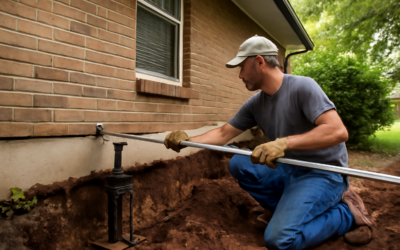
Finding a crack in the foundation of a house tends to trigger two bad reactions: panic, or ignoring it for years. Neither helps. House foundation repair goes best when you treat it as a decision process: document what you see, get an independent diagnosis from a structural engineer, and only then invite licensed contractors to bid on a defined scope of work.
Most hairline cracks in poured concrete are shrinkage cracks and cosmetic. Cracks that are wide, growing, stair-stepped in block walls, or paired with sticking doors and sloping floors point to movement that needs a professional. The engineer’s report is the dividing line, because it tells you what is actually wrong and what fix is appropriate, before anyone with something to sell gets involved.
- House Foundation Repair Starts With Documentation
- Cosmetic or Structural? Reading the Warning Signs
- Step 1: Hire an Independent Structural Engineer
- Step 2: Fix the Water Problem First
- Step 3: Get at Least Three Bids From Licensed Contractors
- Step 4: Compare Warranties Carefully
- Step 5: Sign a Clear Contract and Pull Permits
- Troubleshooting and Common Pitfalls
- What It Usually Costs
- When to Call a Licensed Professional
- Frequently Asked Questions
This plan walks through each step, from your first inspection to comparing warranties and signing a contract.
House Foundation Repair Starts With Documentation
Before you call anyone, build a record. Good notes make the engineer’s visit more productive and help you tell whether a crack is active. Every successful house foundation repair project starts with evidence, not guesses.
Tools for Documenting
- A phone camera and a tape measure or ruler for scale
- A crack width gauge or a simple card of known thickness
- A pencil or marker to date the ends of each crack
- A laser level or a long level to check floors for slope
- A notebook or spreadsheet to log readings over time
- Walk the exterior and interior. Photograph every crack with a ruler beside it.
- Mark each crack’s ends with a pencil line and the date. If a crack grows past the mark over weeks or months, it is active.
- Note door and window behavior: sticking, gaps at the top corner of a frame, or latches that no longer line up.
- Check floors. A laser level makes it easy to shoot a line across a room and measure how far the floor drops from one side to the other. Record readings in several rooms.
- Look outside for drainage problems: downspouts dumping at the foundation, soil sloping toward the house, standing water or large trees close to the walls.
Cosmetic or Structural? Reading the Warning Signs
Only an engineer can confirm the cause, but these patterns help you decide how urgent the call is.
Usually Cosmetic
- Thin vertical hairline cracks in poured concrete walls that are not widening
- Small corner cracks in a basement slab
- Minor drywall cracks at door corners that appear and disappear seasonally
Signs of Structural Damage
- Cracks wider than about a quarter inch, or cracks that keep growing
- Horizontal cracks or inward bowing in basement walls, which suggest soil pressure
- Stair-step cracks through block or brick mortar joints
- One side of a crack offset from the other
- Doors and windows sticking across one side of the house, noticeable floor slope or gaps between walls and ceilings
- Water entering through cracks, especially with efflorescence or rust staining
If you see bowing walls, rapid crack growth or doors that suddenly will not close, schedule an engineer promptly and avoid storing heavy items against the affected wall.
Step 1: Hire an Independent Structural Engineer
Many repair companies offer free inspections, but their inspector often works for the company that will sell you the fix. A licensed structural engineer charges a fee (commonly in the hundreds of dollars for a residential evaluation, more for detailed plans) and has no stake in which method you choose.
Expect the engineer to measure floor elevations, inspect cracks, look at drainage, soil and grading, and ask about the home’s age and history. The written report should cover:
- The likely cause (settlement, expansive clay, poor drainage, hydrostatic pressure, frost heave or original construction issues)
- Whether the damage is active or historic
- The recommended repair scope, such as piers, wall bracing, drainage correction or monitoring
- Any need for stamped repair drawings to support a permit
That report becomes your bid specification. Every contractor prices the same scope, which makes bids comparable.
Step 2: Fix the Water Problem First
A large share of foundation trouble is water-related. Before or alongside structural work, extend downspouts several feet from the foundation, regrade soil so it slopes away from the house, clean gutters and address plumbing leaks under slabs. In expansive clay regions, keeping soil moisture consistent matters. Skipping drainage work often means paying for repairs twice.
Step 3: Get at Least Three Bids From Licensed Contractors
Send the engineer’s report to at least three licensed foundation contractors. Structural foundation repair should only be done by a licensed contractor with experience in the specific method recommended. Ask each one for:
- Proof of license and insurance, including general liability and workers’ compensation
- A written scope that matches the engineer’s report item by item
- The number, type and placement of piers or braces, and the target depth or load criteria
- Who pulls the permit, and whether the engineer will inspect the finished work
- Excavation, landscaping restoration and interior patching: included or extra
- Payment schedule, with a meaningful amount held until final sign-off
Be cautious of any bid that ignores the engineer’s scope, pressures you with a same-day discount, or asks for most of the money up front.
Step 4: Compare Warranties Carefully
Foundation warranties vary widely. Some are lifetime warranties that transfer to the next owner, others cover only the specific piers installed, and some expire after a set number of years. Read what is covered: product failure, further settlement at the repaired area, or the whole structure. Check whether the warranty requires you to maintain drainage and whether a transfer fee applies. A transferable warranty from an established company can help at resale.
Step 5: Sign a Clear Contract and Pull Permits
The final contract should reference the engineer’s report and drawings, list materials and quantities, describe how unforeseen conditions are priced, include a timeline, and state who restores landscaping and finishes. Structural work generally needs a building permit; confirm it is issued before work begins. Excavation near the house means utilities must be marked, so the contractor should call 811 before digging. Ask for a post-repair letter from the engineer confirming the work meets the design.
Troubleshooting and Common Pitfalls
- Cracks reappear after patching: patching treats symptoms. If movement continues, the cause has not been addressed.
- Floors still slope after lifting: some settlement cannot be fully recovered without damaging finishes. Ask the engineer what lift target is realistic.
- New drywall cracks after repair: minor cracks can appear as the house adjusts. Document and report them under warranty.
- DIY jacking: never try to lift a house or brace a bowing wall yourself. Uncontrolled lifting can crack slabs, break pipes and cause collapse.
What It Usually Costs
Costs to fix a house foundation depend on the method, soil, access and region, so treat these as broad ranges only. Minor crack sealing may cost a few hundred to around a thousand dollars. Drainage corrections often run from several hundred to a few thousand. Wall bracing or anchoring commonly lands in the several-thousand-dollar range. Pier-based stabilization frequently runs from several thousand to tens of thousands of dollars depending on the number of piers. Add the engineer’s fee, permits and landscaping restoration. Bids based on the same engineered scope give you the clearest comparison.
When to Call a Licensed Professional
Call a licensed structural engineer for any crack wider than a hairline, horizontal or stair-step cracking, bowing walls, sloping floors or doors that suddenly stick. All structural repair work belongs to a licensed foundation contractor, with permits as required locally. If repairs affect plumbing, gas lines or electrical service, those trades must be licensed as well.
Frequently Asked Questions
Is a crack in the foundation of a house always serious?
No. Thin vertical hairline cracks in poured concrete are often shrinkage cracks. Cracks that are wide, horizontal, stair-stepped, offset or growing deserve a structural engineer’s evaluation.
Should I use a free inspection from a repair company?
It can be useful as a second opinion, but an independent structural engineer has no financial stake in the repair method. Get the engineer’s report first and use it as the scope for bids.
How do I know if a foundation crack is getting worse?
Mark each end of the crack with a pencil line and a date, and measure its width. Check every few weeks. Growth past the marks means the crack is active.
Can I fix my house foundation myself?
You can handle drainage improvements like downspout extensions and grading. Structural repairs such as piers, wall bracing or lifting should only be done by a licensed contractor under an engineer’s design.
Does foundation repair need a permit?
Structural foundation work usually requires a building permit, and many jurisdictions want engineered drawings. Your contractor should pull the permit and schedule inspections.