If a delivery driver or an ambulance crew cannot read your address from the street, your house number is not doing its job. A well-chosen house number plaque solves that with digits large enough to see from the road, a background that contrasts sharply with the numbers and a spot where shrubs and shadows will not hide it. The right plaque depends on three decisions: material, size and where you mount it.
For most homes, a cast aluminum plaque with digits 4 to 6 inches tall, mounted near the front door or on a post by the driveway, is the practical sweet spot. Stone and brass look beautiful but come with trade-offs in weight, cost and upkeep. Here is how to choose.
Choosing a House Number Plaque That Works
Before looking at styles, stand at the curb and look at your house. Ask where a stranger would naturally look for a number, what might block that spot and how the light falls at night. A house number plaque needs to be:
- Readable from the street: Digits sized to the viewing distance, with strong contrast between the numbers and background.
- Visible day and night: Near a light source, or reflective, or both.
- Durable: Rated for outdoor exposure so it does not fade, rust or crack.
- Compliant: Many towns and fire districts require numbers of a minimum size facing the street. Check your local rules before ordering.
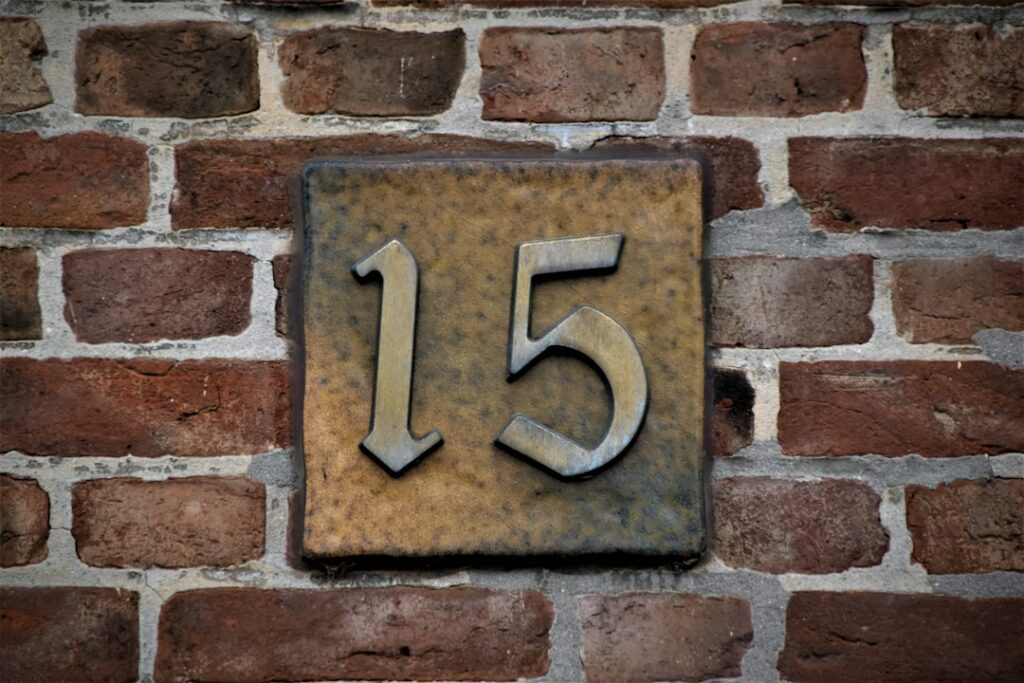
Contrast matters more than style. Light digits on a dark background, or dark digits on a light background, read far better than bronze on brown brick. Avoid script fonts for the numbers themselves; clean block digits are easiest to read at a glance.
Plaque Materials Compared
Custom address plaques come in a wide range of materials. Each has a different look and maintenance profile.
| Material | Strengths | Watch Outs |
|---|---|---|
| Cast aluminum | Light, rustproof, crisp raised digits, many colors | Powder coat can chalk after many years of sun |
| Brass or bronze | Classic, heavy, long-lasting | Tarnishes unless sealed; lower contrast on some siding |
| Stainless or powder-coated steel | Modern cut-out looks, strong | Cheap steel can rust at cut edges |
| Stone or slate | Natural, fits landscapes, very durable | Heavy, needs solid mounting, engraved digits can be low contrast |
| Wood | Warm, easy to customize | Needs refinishing every year or two outdoors |
| Acrylic or composite | Inexpensive, lightweight, modern | Can yellow or crack in harsh sun |
Metal Address Plaques
Cast aluminum is the workhorse of metal address signs. The digits are cast in relief, then the face is painted so numbers and border stand out in a contrasting color. Modern address plaques in black powder-coated steel with laser-cut digits pair well with farmhouse and contemporary exteriors, especially when mounted with standoffs so the numbers cast a shadow. Bronze and brass address plaques suit traditional homes; ask for a clear protective coat if you want to keep the bright finish.
Stone and Wood Address Markers
A stone address marker set at the end of the driveway works well for rural homes and for houses set far back from the road. Look for deeply engraved digits filled with contrasting paint. Wood address signs give a handmade look but need more care. Use a rot-resistant species, seal all sides and cut faces, and plan on recoating regularly.
What Size Numbers Do You Need?
A common rule of thumb is about 1 inch of digit height for every 10 feet of viewing distance, with a practical floor of 4 inches. Many local codes set a minimum of 4 inches for homes, and some require larger digits for houses set well back from the road. Use this as a quick guide:
- House 25 to 50 feet from the street: 4 to 5 inch digits
- House 50 to 100 feet from the street: 6 inch digits or larger
- House more than 100 feet back, or hidden by trees: add a yard or driveway marker with 4 to 6 inch digits near the road
Stroke width matters too. Thin, delicate numbers disappear at distance even when they are tall. When you shop for a house number plate, compare the thickness of the digits, not only the height.
Horizontal vs Vertical Layouts
A vertical address plaque stacks the numbers top to bottom and fits narrow spaces such as door trim, porch columns or a lamp post. Horizontal plaques read faster and suit wider walls and mailbox sides. If you choose vertical, keep the address short or confirm each digit is still large enough, since stacked layouts often shrink the numbers.
Where to Mount a House Number Plaque
There are three common mounting locations, and many homes benefit from more than one.
Wall or Porch Mounting
Mount the plaque beside the front door or on the wall facing the street, ideally 5 to 6 feet off the ground, where a porch light washes over it. Keep it clear of shrubs, awnings and storm doors that can block it when open. On a house set close to the road, this location alone is usually enough.
Mailbox Address Plaque
A mailbox number plaque mounts on the post or the side of the box and puts your address right at the road where drivers look. It is an easy win for homes set far back. Choose a plaque that mounts to the post rather than the box door, and follow any local postal guidance about numbers on the box itself.
Yard Stakes and Driveway Markers
Address plaques for yard mounting come on metal stakes or short posts. Place them near the driveway entrance, angled toward oncoming traffic, and trim nearby plants so grass and flowers do not creep over the numbers. In snow country, mount them high enough to clear typical snow piles.
How to Install an Address Plaque
You will need a drill, the correct bit for your wall type, a level, a pencil, a tape measure and the fasteners that match your siding. Most plaques include hardware for wood; masonry needs sleeve anchors or masonry screws.
- Test the location. Tape the plaque in place, walk to the street and confirm it is visible from both directions and at night.
- Mark the holes. Hold the plaque level and mark through the mounting holes, or use the paper template if one is included.
- Drill carefully. On vinyl siding, drill slightly oversized holes and use a mounting block so you do not pin the siding tight. On brick, drill into the brick face or mortar joint with a masonry bit, following the anchor maker’s size.
- Seal the penetrations. Dab exterior sealant into holes on wood or fiber cement siding to keep water out.
- Fasten and level. Drive the screws snug but not so tight that you crack stone or warp thin metal.
- Check at night. If the numbers are hard to see, add a small light or reflective digits.
For a stone marker or post-mounted plaque by the road, call 811 a few business days before digging so buried utility lines can be marked. Set posts in concrete deeper than the frost line in cold regions so they do not heave. If you want a lit plaque that connects to household wiring, have a licensed electrician do the connection; solar-lit plaques are a simple alternative.
Troubleshooting Common Problems
- Numbers hard to read at night: Move the plaque into the porch light, add a small downlight or choose reflective digits.
- Fading or chalky paint: Clean, lightly scuff and repaint the background with exterior enamel, then clear coat.
- Tarnished brass: Polish and apply a clear exterior lacquer, or embrace the patina and accept lower contrast.
- Loose on vinyl siding: Install a mounting block so the plaque has a solid, flat surface.
- Rust streaks: Replace plain steel screws with stainless fasteners.
What an Address Plaque Costs
Simple stock plaques in aluminum or composite usually run from under $50 to around $100. Custom cast aluminum and powder-coated steel designs typically land between roughly $75 and a few hundred dollars depending on size and finish. Solid bronze, engraved stone and lighted plaques can cost several hundred dollars or more, plus the cost of a post or footing for yard installation.
When to Call a Pro
Most plaque installs are an easy DIY project. Call a handyman or mason if you need to mount a heavy stone marker, drill into old or fragile masonry, or set a post in hard or rocky soil. Any lighted plaque that connects to household wiring should be installed by a licensed electrician.
Frequently Asked Questions
How big should house numbers be?
Most homes need digits at least 4 inches tall, and larger numbers for houses set well back from the street. A rough guide is 1 inch of height for every 10 feet of viewing distance. Check your local code for the required minimum.
What is the most durable house number plaque material?
Cast aluminum and stone are the most durable for most climates. Aluminum will not rust and holds paint well, while engraved stone lasts for decades with little care.
Can I put my address plaque on the mailbox?
Yes. A mailbox address plaque on the post or side of the box is very effective for homes set far back from the road. Keeping numbers on the house too helps visitors once they pull in.
How do I mount a plaque on brick?
Use a masonry bit and sleeve anchors or masonry screws. Drilling into the mortar joint is easier and simpler to patch later, but the brick face gives a stronger hold for heavy plaques.
Should house numbers be lit?
Lighting helps emergency responders find you at night. Mount the plaque in the path of a porch light, choose reflective digits or use a solar-lit plaque.