A modern US home contains between 1,500 and 3,500 feet of copper wire threaded through walls, ceilings, and attics, feeding roughly 100 individual outlets, switches, and fixtures. When the house wiring works, you never think about it. When it fails, the consequences range from nuisance breaker trips to serious fire hazards. Understanding how residential electrical systems are organized, what the code requires, and which tasks are safe for a homeowner versus a licensed electrician protects your family and your investment.
- How a Residential Electrical System Is Organized
- Common Circuit Types in a Modern Home
- Wire Sizes and What They Carry
- Romex, Conduit, and Cable Types
- Grounding and Bonding Basics
- AFCI and GFCI Protection
- What Homeowners Can Safely DIY
- When to Hire a Licensed Electrician
- Permits and Inspections
- Upgrading Older Wiring
How a Residential Electrical System Is Organized
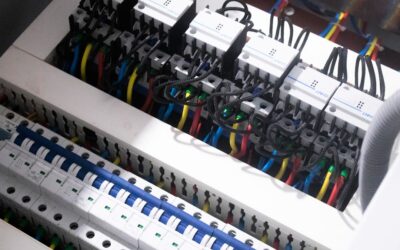
Power enters the house from the utility’s service drop or underground lateral at 120/240 volts. It passes through a meter, then a main disconnect, and into the main breaker panel. From the panel, individual branch circuits feed outlets, lights, and appliances throughout the house.
A typical 200 amp service can support 20-40 individual circuits depending on panel size. Each circuit has its own breaker sized for the wire gauge and the expected load. This compartmentalization is what prevents a single short circuit from taking down the entire house and what allows you to work on one area safely while the rest of the home stays powered.
Common Circuit Types in a Modern Home
Every house has a predictable set of circuits dictated by NEC requirements and practical need.
- 15 amp general lighting and outlets: Bedrooms, living rooms, hallways. 14 AWG copper
- 20 amp small-appliance circuits: Kitchen counters, laundry, bathroom. 12 AWG copper
- 20 amp dedicated appliance circuits: Refrigerator, dishwasher, disposal, microwave
- 30 amp 240-volt circuits: Electric dryer. 10 AWG copper
- 40-50 amp 240-volt circuits: Electric range, water heater, large AC. 8 or 6 AWG
- 60 amp 240-volt circuits: EV chargers, sub-panels for additions. 6 AWG copper
- Furnace and HVAC dedicated circuits: Sized to equipment nameplate
Code requires minimum quantities: at least two 20 amp kitchen counter circuits, one 20 amp laundry circuit, one 20 amp bathroom circuit, and arc-fault (AFCI) protection on most bedroom and living area circuits.
Wire Sizes and What They Carry
Wire gauge determines how much current a circuit can deliver without overheating. The smaller the AWG number, the thicker the wire and the higher the amp rating.
- 14 AWG: 15 amp circuits
- 12 AWG: 20 amp circuits
- 10 AWG: 30 amp circuits
- 8 AWG: 40 amp circuits
- 6 AWG: 55-65 amp circuits
- 4 AWG: 85-95 amp circuits
- 2 AWG: 115-130 amp circuits
- 2/0 AWG: 175-200 amp service entrance
Wire gauge must match the breaker size. Oversizing the breaker for the wire is the single most dangerous mistake in house wiring because the breaker will not trip before the wire overheats. Undersizing the breaker is safe but causes nuisance trips.
Romex, Conduit, and Cable Types
Residential wiring uses a few standard cable types, each suited to a specific location.
NM-B cable (commonly called Romex) is the white, yellow, or orange sheathed cable used inside walls in dry locations. The color indicates gauge: white is 14 AWG, yellow is 12 AWG, orange is 10 AWG. UF cable is rated for direct burial and damp locations. MC cable (metal-clad) uses a spiral metal jacket and is required in some commercial applications and high-load residential runs. Conduit (EMT, PVC, or flexible metal) is used in exposed locations like garages, basements, and exterior runs.
Grounding and Bonding Basics
Grounding provides a safe path for fault current to return to the utility and trip the breaker. Every modern circuit includes a bare copper or green-insulated ground wire in addition to the hot and neutral. The grounds terminate at the main panel and bond to the neutral bar and to the grounding electrode system (usually a ground rod or a connection to the cold water pipe).
Bonding refers to tying metal objects together so they share the same electrical potential. Gas lines, metal water pipes, and metal ductwork all need to be bonded to the grounding system. A failure in any of these bonds can create a shock hazard that is invisible until someone touches two different metal objects at the same time.
AFCI and GFCI Protection
Two special breakers and outlets protect against specific hazards that standard breakers cannot detect.
GFCI (Ground Fault Circuit Interrupter) detects small current leaks to ground, typically 4-6 milliamps, and trips in under a tenth of a second. Required in bathrooms, kitchens near water, garages, outdoor outlets, basements, and within 6 feet of any sink. GFCI outlets cost $15-25 and last about 10 years before needing replacement.
AFCI (Arc Fault Circuit Interrupter) detects the unique electrical signature of a dangerous arc, such as a loose connection or a damaged wire. Required in bedrooms since 2008 and expanded to most living areas in newer code cycles. AFCI breakers run $40-60 each.
What Homeowners Can Safely DIY
With a voltage tester, a screwdriver, and basic wire stripping skills, most homeowners can safely handle a set of common tasks.
- Replace a light fixture with identical wire colors
- Replace an outlet or switch with a same-type device
- Install a ceiling fan using an existing fan-rated box
- Upgrade a standard outlet to GFCI protection
- Install a smart switch compatible with the existing wiring
- Replace a thermostat with a WiFi version
Every one of these starts with turning off the breaker, verifying zero voltage with a tester, and understanding which wires connect where. Take a photo of the existing connections before disconnecting anything; reversing hot and neutral is the most common DIY mistake.
When to Hire a Licensed Electrician
Some tasks are beyond DIY scope, both for safety and for insurance purposes. Work inside the main panel, new circuit additions, service upgrades, and anything requiring a permit should go to a licensed professional.
Signs the job exceeds DIY skills: aluminum wiring (common in 1965-1975 homes), knob-and-tube wiring (pre-1950), ungrounded two-prong outlets throughout, flickering lights or buzzing outlets, breakers that trip repeatedly, burning smells from outlets. Any of these indicate system-wide issues that need professional diagnosis.
Permits and Inspections
Most jurisdictions require permits for new circuits, service upgrades, panel changes, and any work involving structural changes. Like-for-like replacements (outlet swaps, fixture changes) generally do not require permits. Permits cost $50-200 and include a rough-in inspection and a final inspection.
Skipping permits creates long-term liability. Unpermitted electrical work can void homeowner insurance claims and must often be disclosed during a home sale, which can delay or kill a deal. Pay the permit fee, pass the inspections, and sleep easier.
Upgrading Older Wiring
Homes built before 1965 often have mixed wiring eras. Original knob-and-tube, mid-century two-wire Romex without ground, 1960s aluminum branch circuits, and modern grounded NM-B can all coexist in the same house. Full rewire projects run $8,000-25,000 depending on size, access, and finishes.
Partial upgrades focus on the highest-risk areas first: panel replacement, kitchen and bathroom circuits, any aluminum branch circuits. Proper house wiring is not optional infrastructure; it is the system that quietly enables every other convenience in the home. Understand it, respect it, and know where the limits of DIY safety lie.