Ask three roofers for a bid and you can easily get numbers spanning $12,000 to $28,000 for the same house, which leaves most homeowners wondering who is lying. Usually nobody is. How much does a new roof cost depends on a stack of variables, material, roof size and steepness, tear-off, decking condition, flashing scope, and your zip code, and different bids simply make different assumptions about each one. In 2026, the national average for an asphalt shingle replacement sits around $10,000 to $16,000, while metal, tile, and slate can run two to five times that. This guide breaks the number apart so you can read any quote line by line and know exactly where your money goes.
Part of our Roofing guide — explore the full guide →
- The Quick Answer by Material
- Cost by House Size
- Where the Money Actually Goes
- The Multipliers: Pitch, Complexity, Height, and Access
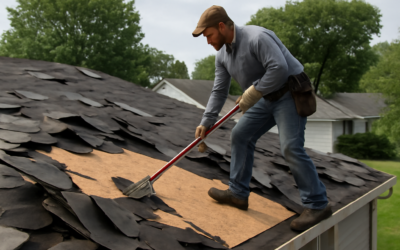
- Tear-Off, Decking, and the Other Line Items
- Regional Differences and Timing
- Insurance, Financing, and Payback
- Ways to Legitimately Lower the Bill
- How to Get an Honest Number for Your House
The Quick Answer by Material
Roofers price in “squares” (100 square feet), but per-square-foot installed numbers are easier to compare. These 2026 ranges include tear-off of one layer, underlayment, standard flashing, and labor:
- 3-tab asphalt shingles: $4.00 to $5.50 per sq ft — fading from the market, 15-20 year life
- Architectural asphalt shingles: $4.50 to $8.00 per sq ft — the default American roof
- Premium/designer shingles: $8.00 to $12.00 per sq ft
- Exposed-fastener metal panels: $6.00 to $10.00 per sq ft
- Standing seam metal: $10.00 to $16.00 per sq ft
- Stone-coated steel shingles: $9.00 to $14.00 per sq ft
- Concrete tile: $10.00 to $18.00 per sq ft
- Clay tile: $12.00 to $25.00 per sq ft
- Natural slate: $18.00 to $35.00 per sq ft
- Wood shakes: $8.00 to $14.00 per sq ft
Multiply by your roof area, not your floor area. Roof area runs 1.1 to 1.6 times the footprint depending on pitch and overhangs, so a 2,000 square foot single-story ranch typically carries 2,200 to 2,600 square feet of roof.
Cost by House Size
Using architectural shingles at a mid-range $6 per square foot installed, here is what typical homes pay:
- 1,000 sq ft house (~1,300 sq ft roof): $6,000 to $9,000
- 1,500 sq ft house (~1,900 sq ft roof): $9,000 to $13,000
- 2,000 sq ft house (~2,500 sq ft roof): $11,000 to $17,000
- 2,500 sq ft house (~3,100 sq ft roof): $14,000 to $21,000
- 3,000 sq ft house (~3,700 sq ft roof): $17,000 to $26,000
Swap in standing seam metal and roughly double each range; swap in slate and triple it. Two-story homes often cost slightly less per square of roof than sprawling ranches of equal floor area because the roof footprint is smaller, though steepness and access can claw that back.
Where the Money Actually Goes
On a typical $14,000 asphalt job, labor takes about 60 percent and materials about 40 percent. The materials line splits further: shingles are only about half of it, with underlayment, ice and water shield, starter strips, ridge caps, drip edge, flashing, pipe boots, vents, and roughly 320 nails per square making up the rest. That is why a “cheap shingle” saves less than people expect, since downgrading the shingle touches maybe 20 percent of the total bill. It is also why bids differ: one contractor includes new step flashing, kick-out flashing, and ridge venting while another silently reuses the old metal, and the second bid looks $1,500 cheaper on paper.
The Multipliers: Pitch, Complexity, Height, and Access
Two houses with identical square footage can be priced 40 percent apart on geometry alone. Roofs steeper than 6:12 slow crews and require more safety rigging; beyond 9:12, expect a 15 to 30 percent labor premium because nothing can be staged on the slope. Complexity costs similarly: every valley, hip, dormer, skylight, and chimney adds flashing labor and cut waste, so a cut-up roof runs 10 to 15 percent more material than a clean gable. Height matters (a third story adds staging and hoisting time), and so does access; a house where the dump trailer cannot get near the eaves means every torn-off shingle travels by wheelbarrow, and you pay for those hours.
Tear-Off, Decking, and the Other Line Items
Tear-off of one shingle layer is usually built into quotes at $1.00 to $2.00 per square foot including disposal; a second layer adds another $0.75 to $1.50. Decking repair is the classic surprise: rotten plywood replacement runs $70 to $120 per 4×8 sheet, and a fair contract locks that unit price in writing before tear-off. Other add-ons you may see, legitimately:
- Ice and water shield upgrades: $50 to $80 per roll installed, code-required at eaves in freezing climates
- Ridge vent installation: $300 to $650 for a typical ridge
- Chimney reflashing: $300 to $800
- Skylight replacement: $900 to $2,500 each — always replace them during a re-roof, never after
- Gutter replacement: $6 to $14 per linear foot if bundled with the roof
- Permit fees: $150 to $600 depending on municipality
Regional Differences and Timing
Labor rates swing the same roof by thousands between markets. The Southeast and rural Midwest sit at the low end; the Northeast, West Coast metros, and mountain resort towns run 20 to 40 percent above national averages. Codes add real cost regionally too, hurricane nailing patterns and secondary water barriers in Florida, ice barrier requirements across the snow belt, Class A fire assemblies in wildfire zones. Timing is a quieter lever: late fall and winter scheduling in moderate climates often earns 5 to 10 percent off because crews are hungry, while post-hailstorm months are the most expensive and scam-rich time to sign anything. If a storm chaser offers to “waive your deductible,” walk away; that is insurance fraud in most states.
Insurance, Financing, and Payback
If wind or hail killed the roof, homeowners insurance may cover replacement minus your deductible, and wind/hail deductibles are increasingly percentage-based, 1 to 2 percent of dwelling coverage, so know that number before assuming a claim is worthwhile. Document damage with dated photos and get your own contractor’s assessment alongside the adjuster’s. For out-of-pocket jobs, contractors push financing at 8 to 15 percent APR; a home equity line is usually cheaper. On the value side, a new roof recovers roughly 55 to 65 percent of its cost at resale but, more importantly, unsticks sales, since lenders and buyers routinely balk at roofs with under five years of life left. Metal roofs in hail states frequently earn 5 to 35 percent insurance premium discounts, which quietly improves their long-run math.
Ways to Legitimately Lower the Bill
Some savings are real and some are traps, so know the difference. The legitimate levers: schedule in the contractor’s slow season, since a crew with an empty week in November will sharpen a pencil that a June crew will not; simplify your selections, because a mid-tier architectural shingle from a major brand performs within a few percent of the designer line at 30 percent less; bundle work, as gutters, skylights, and ventilation done during the re-roof cost meaningfully less than as separate projects; and handle small logistics yourself, like tarping your own landscaping or hauling away a light second layer, if the contractor will credit it. Doing tear-off yourself rarely pencils out once dumpster fees and schedule risk are counted.
The traps: layover roofing (installing new shingles over old) saves $1,000 to $2,000 today, but it hides deck problems, shortens the new roof’s life through heat buildup, voids some warranties, and doubles the tear-off cost next time. Similarly, quotes that hit a low number by reusing flashing, skipping ice barrier, or thinning out ventilation are deferring cost, not removing it. A fair rule: cut finish, never cut the water management layers.
How to Get an Honest Number for Your House
Measure your roof from satellite imagery or let each bidder do it, then collect three itemized quotes that each specify: shingle brand and line, underlayment type, ice barrier extent, flashing scope (new vs. reused), ventilation work, decking unit price, tear-off layers, and warranty terms. Discard any bid that is a single lump-sum sentence. Comparing at that level, the mystery usually evaporates: the $28,000 bid included new flashing, ridge venting, and a 25-year workmanship warranty from a certified installer, and the $12,000 bid included none of it. Pay for the roof system, not the shingle color, and your cost per year of service, the only number that really matters, will land exactly where it should.