
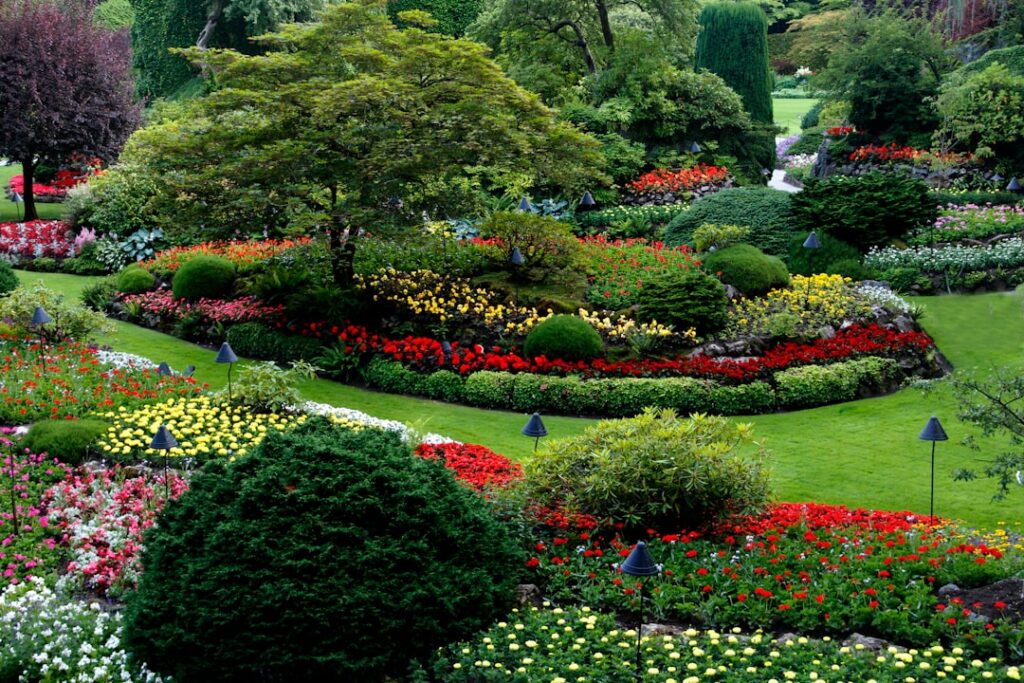
Ask three contractors to landscape the same yard and you might get quotes ranging from $3,000 to $30,000 — which is exactly why the question frustrates homeowners. How much does landscaping cost depends less on your lot size than on what you actually build into it: a few flower beds and fresh mulch land in the low thousands, while a full makeover with a patio, retaining wall, irrigation, and mature plantings runs into five figures fast. Understanding the individual line items lets you build a realistic budget and spot which quotes are fair. Here are the real 2026 numbers, broken down by project so you know where the money goes.
- The Big-Picture Ranges
- How Landscapers Price the Work
- Softscaping Costs: Plants, Sod, and Beds
- Hardscaping Costs: Patios, Walls, and Walkways
- Systems: Irrigation, Lighting, and Drainage
- What Drives Your Price Up or Down
- Sample Project Budgets
- Ongoing Maintenance Costs
- Does Landscaping Add Home Value?
- How to Save Without Cutting Corners
The Big-Picture Ranges
Most homeowners spend somewhere between $4,000 and $20,000 on a meaningful landscaping project, with the national average landing around $8,000 to $15,000 for a typical yard refresh. Simple work sits well below that; a full custom design with hardscaping and mature trees can climb past $40,000.
A useful rule of thumb from the industry: budget roughly 5 to 10 percent of your home’s value for total landscaping. On a $400,000 home, that suggests $20,000 to $40,000 for a complete, high-quality outdoor build over time — though you rarely spend it all at once, and phasing the work is common and smart.
How Landscapers Price the Work
Understanding the pricing model helps you read a quote. Landscapers charge in a few ways, and most projects blend them.
- Hourly labor: commonly $50 to $100 per worker-hour, more in high-cost metros
- Per square foot: typical for sod, patios, and planting beds — a clean way to compare bids
- Flat project bids: a single number for a defined scope, best for big jobs
- Design fees: $50 to $150 per hour, or a flat $500 to $3,000-plus for a full landscape design plan
Labor usually accounts for the majority of any landscaping bill — often 60 to 80 percent — which is why materials alone never tell the whole story.
Softscaping Costs: Plants, Sod, and Beds
Softscaping is the living material — grass, plants, trees, and soil. It is generally the more affordable half of landscaping and where DIY can save the most.
Lawn and Sod
New sod runs about $1 to $2 per square foot installed, so a 2,000-square-foot lawn lands around $2,000 to $4,000. Grass seed is far cheaper at $0.10 to $0.20 per square foot but takes a full season to establish. Hydroseeding splits the difference at roughly $0.15 to $0.40 per square foot.
Plants and Trees
- Shrubs: $25 to $80 each installed, depending on size
- Perennials and flowers: $10 to $30 per plant installed
- Small trees: $150 to $500 installed
- Large mature trees: $500 to $3,000-plus, since size and equipment drive the cost
Mulch and Soil
Mulch costs $30 to $60 per cubic yard delivered, plus labor to spread it, or roughly $75 to $150 per yard installed. A typical mulch refresh across a home’s beds runs $300 to $800.
Hardscaping Costs: Patios, Walls, and Walkways
Hardscaping — the non-living structures — is where budgets balloon, because it involves excavation, base prep, material, and skilled labor. It also adds the most usable value and visual impact.
- Paver patio: $15 to $30 per square foot installed — a 300-square-foot patio runs $4,500 to $9,000
- Concrete patio: $8 to $18 per square foot, cheaper than pavers but less flexible to repair
- Retaining wall: $25 to $60 per square foot of wall face, higher for engineered or tall walls
- Walkways: $10 to $25 per square foot depending on material
- Wood or composite deck: $25 to $50 per square foot installed
Retaining walls carry hidden costs. Anything over about 4 feet tall usually requires engineering and permits, and proper drainage behind the wall is non-negotiable — skipping it is why cheap walls bulge and fail within a few years.
Systems: Irrigation, Lighting, and Drainage
The infrastructure that keeps a landscape healthy and usable adds real cost but pays back in convenience and plant survival. An in-ground sprinkler system runs $2,500 to $5,000 for an average yard, driven by the number of zones and the digging involved. Low-voltage landscape lighting costs $100 to $300 per fixture installed, so a modest set of eight to ten path and accent lights lands around $2,000 to $4,000.
Drainage solutions like French drains or regrading run $1,500 to $5,000-plus but prevent the water damage that destroys both plantings and foundations. If your yard has standing-water problems, this is not optional spending.
What Drives Your Price Up or Down
Two identical-looking projects can differ by thousands based on factors you may not think about at first. Site access is a big one — a backyard reachable only through a narrow gate means everything moves by wheelbarrow, adding labor hours. Slope and grading complicate every task and often require retaining structures.
- Yard size and complexity — bigger and more detailed costs more, obviously
- Material grade — natural stone costs far more than concrete pavers
- Existing conditions — removing old concrete, dead trees, or debris adds demolition and haul-away fees
- Regional labor rates — coastal metros run well above rural areas
- Permits — walls, decks, and drainage work may require them
Sample Project Budgets
To make it concrete, here are three realistic 2026 scenarios for an average suburban lot.
- Basic refresh (mulch, a few shrubs, cleanup, fresh edging): $2,000 to $5,000
- Mid-range makeover (new sod section, planting beds, a small paver patio, lighting): $10,000 to $20,000
- Full custom landscape (design, large patio, retaining wall, irrigation, mature trees, lighting): $30,000 to $60,000-plus
Ongoing Maintenance Costs
The install price is only half the story, because a landscape is a living thing that needs upkeep. Budgeting for maintenance up front prevents the disappointment of a beautiful yard that deteriorates because nobody planned for its care. Ongoing costs vary with how much you do yourself versus hire out.
- Basic lawn service: $30 to $80 per visit for mowing, or $100 to $250 per month seasonally
- Full-service maintenance (mowing, trimming, bed care, fertilizing): $150 to $500-plus per month
- Seasonal cleanups (spring and fall): $200 to $600 each
- Mulch refresh: $300 to $800 annually to keep beds looking fresh
- Irrigation upkeep and winterizing: $75 to $200 per service
Design choices affect these numbers heavily. Native and drought-tolerant plantings, larger mulched beds, and hardscaping all reduce long-term maintenance compared to sprawling lawns and thirsty ornamentals. Spending a little more up front on a low-maintenance design often saves real money over the years.
Does Landscaping Add Home Value?
Landscaping is one of the few home improvements that reliably returns much of its cost, which reframes how much landscaping costs from an expense into an investment. Quality, well-maintained landscaping consistently ranks among the top factors in curb appeal, and curb appeal drives both buyer interest and sale price.
Industry estimates commonly put the return on thoughtful landscaping at a significant share of the investment, and a mature, healthy yard can meaningfully speed a sale. Not all spending returns equally, though. Broadly appealing, low-maintenance improvements — healthy lawns, clean planting beds, a functional patio, mature shade trees — tend to add the most value, while highly personalized or high-maintenance features appeal to fewer buyers. If resale is a consideration, favor timeless, tidy, and low-upkeep choices over elaborate custom features that the next owner may not want to maintain.
How to Save Without Cutting Corners
You can trim the number intelligently. Phase the project over two or three seasons, tackling hardscaping first and adding plantings later. Do the softscaping yourself — spreading mulch, planting shrubs, and seeding a lawn are all reasonable DIY jobs — and hire out the skilled hardscaping and irrigation. Buy smaller plants that fill in over a couple of years rather than paying a premium for instant maturity.
Get at least three itemized quotes and compare line by line, not just the bottom number. When you know that how much landscaping costs comes down to specific, priceable pieces, you can build the yard you want at a pace your budget can handle — and recognize a fair bid the moment you see one.


