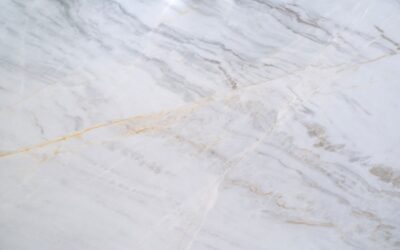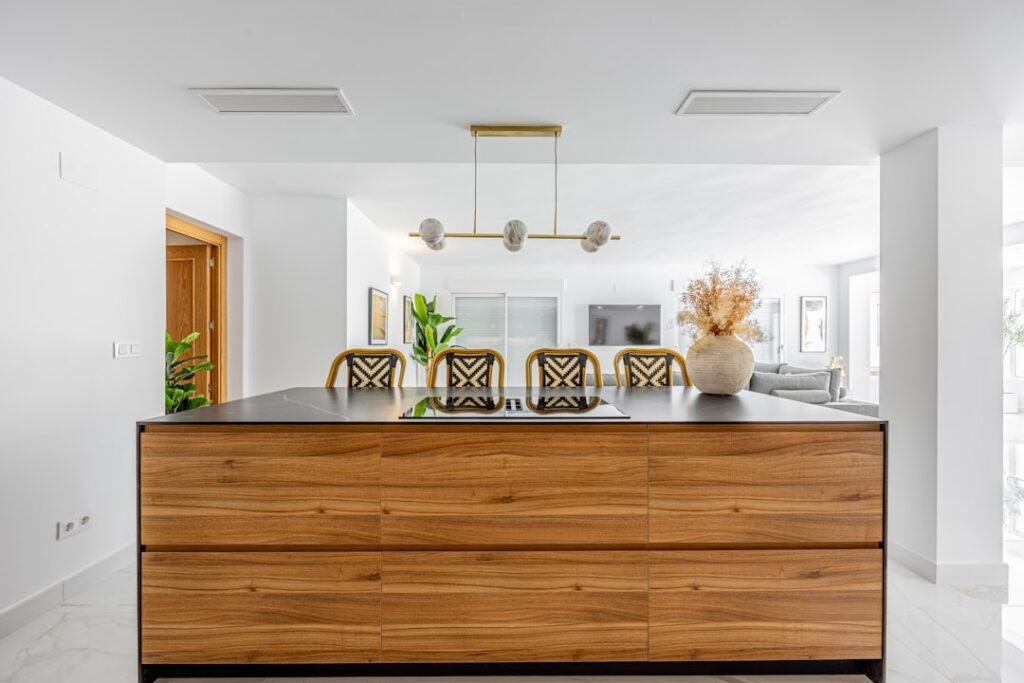
Walk into any stone yard and you will see slabs labeled $9 per square foot sitting next to slabs marked $185 per square foot, both called “marble.” The honest answer to how much does marble cost is that you are paying for three things at once: the rock itself, the labor to fabricate and install it, and the finish that decides how it ages. Skip any one of those numbers and the quote you build at home will not match the invoice. I have priced enough kitchens to know where homeowners get burned.
Part of our Countertops guide — explore the full guide →
The Quick Number Most People Want
For a standard kitchen with about 50 square feet of countertop, expect $4,000 to $8,500 installed using a mid-tier Carrara or Calacatta. That works out to $80 to $170 per square foot all-in. Smaller jobs cost more per foot because templating and delivery do not shrink with the slab.
Tile-format marble for floors and showers runs cheaper at $7 to $25 per square foot for the material, plus $9 to $14 per square foot for installation. A 60 sq ft master bath floor lands near $1,400 to $2,300 with thinset, grout, and labor included.
What Drives the Price of a Slab
Origin and rarity move the needle the most. Italian Calacatta Gold from the Apuan Alps regularly clears $150 per square foot at the slab broker before fabrication. Domestic Vermont Danby sits closer to $60 per square foot. Greek Thassos, Turkish Mugla White, and Spanish Crema Marfil fall in the $35 to $90 band depending on the year and the lot.
Veining matters as much as origin. A bookmatched pair of slabs with a single dramatic vein running through both pieces commands a 25 to 40 percent premium over a standard cut from the same block. If you want that look, ask your fabricator to pull two consecutive slabs and tag them before the truck leaves the yard.
Fabrication and Edge Profiles
Templating, cutting, polishing, and seaming usually run $35 to $55 per square foot on top of the slab cost. That includes a standard eased or beveled edge. Upgrade to a mitered waterfall edge or an ogee profile and the labor jumps to $65 to $90 per square foot because the shop has to bond and refinish a 90 degree joint.
Sink cutouts, faucet holes, and cooktop notches are sometimes bundled and sometimes itemized at $150 to $400 each. Read the line items on a quote carefully, because three a la carte cutouts can add $1,000 you did not budget for.
Marble Floors vs Marble Counters
Square foot for square foot, floor projects look cheaper because tile-format marble is cut from offcuts and smaller blocks. The catch is footprint. A 12 by 14 ft bathroom is 168 sq ft, while a typical kitchen counter run is 45 to 60 sq ft. So the bathroom often costs more in total even at lower per foot pricing.
For floors, honed finishes hold up better than polished. A polished marble floor looks gorgeous on day one and shows every scuff by month six in a high-traffic entry. Honed marble runs the same price but hides wear, so you do not pay for a finish that fights you later.
Installation Labor by Region
Labor swings widely by metro. In rural Tennessee or upstate New York, an experienced installer charges $40 to $50 per square foot for counters. In Manhattan, San Francisco, or Seattle, the same crew bills $75 to $110 per square foot. Get three written quotes before you sign anything, and make sure each includes templating, delivery, install, sealing, and haul-away of the old surface.
Stairs, fireplace surrounds, and curved islands are specialty work. Plan for $90 to $140 per square foot installed for those features. Curved cuts use a waterjet, and waterjet time is billed in 15-minute increments at most shops.
Sealing, Maintenance, and Long-Term Cost
Marble is calcium carbonate, which means lemon juice, red wine, and tomato sauce will etch a polished surface in about 30 seconds. Budget for a quality penetrating sealer like Miracle 511 Impregnator at roughly $40 per quart, and plan to reseal counters every 6 to 12 months. Floors can stretch to 18 months between coats.
Professional restoration honing and resealing for a 50 sq ft kitchen runs $400 to $700 every three to five years. Factor that in when comparing marble to quartz, where the lifetime maintenance bill is essentially zero.
Where to Save Without Looking Cheap
You can keep the marble look while trimming the bill. Use a premium slab on the island where everyone looks, and run a less expensive Carrara or even quartzite on the perimeter. Ask the fabricator about “remnants” — leftover slabs from larger jobs, often priced 30 to 50 percent below new stock. A 30 sq ft bathroom vanity is the perfect remnant project.
Another lever: pick a 2 cm slab with a built-up laminated edge instead of 3 cm stock. Material cost drops about 20 percent, and a properly laminated edge is visually identical from above. So when you ask how much does marble cost for your specific room, give the fabricator the flexibility to suggest these swaps. A good shop will save you money where the camera does not see.
What to Walk Into the Showroom Knowing
Bring exact measurements, a photo of your cabinets, and a target budget per square foot. Ask each yard for the slab number, country of origin, thickness, and finish in writing. Pricing transparency separates the shops worth hiring from the ones that will pad the invoice. Once you compare three quotes line by line, the real number for your project becomes obvious within a few hundred dollars either way.