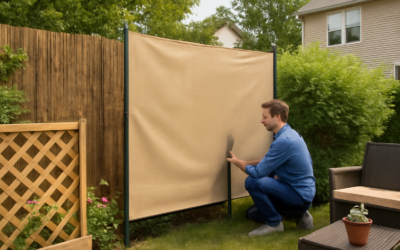
Upper-floor windows are the hardest privacy problem in any home because they sit at eye level with the neighbor’s second story and stay exposed all day. If you’ve been wondering how to block out neighbours view from upstairs without turning your bedroom into a dark cave, you have more options than heavy curtains. I’ll walk you through interior treatments, glass solutions, and outdoor screening so you can pick the right mix for your situation and budget.
Part of our Stairs & Stair Flooring guide — explore the full guide →
- Start by Mapping the Sightlines
- Window Film: The Cheapest Fast Fix
- Frosted and Privacy Glass
- Top-Down Bottom-Up Shades
- Layering Sheers With Blackout
- Exterior Screening Options
- Plant Choices That Reach the Second Story
- Screening a Balcony or Juliet
- Practical Tips That Make the Difference
- Putting It Together
Start by Mapping the Sightlines
Before you buy anything, stand at the neighbor’s window line and look back at your own. Most of the time only the top one-third or bottom one-third of the window is actually exposed, not the whole pane. Knowing exactly which zone leaks privacy lets you treat just that band instead of blacking out the entire window and losing your light and view.
Check the sightline at two times of day. At night, with your interior lights on, even a sheer curtain or a partially open blind will silhouette you clearly, so an upstairs window that feels private at noon can be wide open after dark. Walk outside after sunset and look up at your own lit windows to see exactly what the neighbors see, then plan your treatment around that worst-case view.
Window Film: The Cheapest Fast Fix
Static-cling or adhesive privacy film is the quickest win, usually $1 to $4 per square foot and installable in an afternoon with a spray bottle and a squeegee. Frosted film blocks the view completely while passing soft light. Decorative patterns, rice-paper textures, and gradient films keep the upper sky visible while obscuring the eye-level zone. The big advantage upstairs is that film works around the clock, unlike sheers that fail at night when your lights are on.
If you rent, choose static-cling film since it peels off cleanly. For a permanent solution, a quality adhesive film can last 10 years and also cuts UV by up to 99 percent, which protects your flooring and furniture from fading.
Frosted and Privacy Glass
If you’re already replacing windows or doing a bath remodel, factory-frosted or acid-etched glass is the cleanest permanent answer. Obscure-rated glass comes in privacy levels from 1 (lightly textured) to 5 (fully opaque). Reeded and fluted glass is popular right now and gives a designer look while scrambling the view. It costs more than film up front but never peels, bubbles, or needs replacing.
Top-Down Bottom-Up Shades
This is my favorite single product for upstairs privacy. A top-down bottom-up shade lets you lower the top rail so the shade covers only the bottom of the window. You block the neighbor’s sightline while keeping the upper glass open to sky, daylight, and breeze. Cellular (honeycomb) versions add insulation, trimming heat loss through the glass by 20 to 40 percent. Expect $60 to $200 per window depending on size and whether you go cordless.
Layering Sheers With Blackout
For bedrooms, a two-layer system gives you flexible control. Hang a sheer or privacy-weave curtain on the inner rod for daytime softness, and a blackout panel on the outer rod for night and sleep. Sheer fabric alone won’t hide you after dark once interior lights come on, so the blackout layer matters specifically for upstairs rooms that face a neighbor’s windows. Mount the rod 4 to 6 inches above the frame and extend it 8 to 12 inches past each side so the panels stack off the glass and look intentional.
Quick Interior Layering Checklist
- Privacy sheers for daytime light plus screening
- Blackout or room-darkening panels for nighttime and sleep
- A top-down bottom-up shade if you want to keep the upper view
- Tieback hardware so you can open everything when privacy isn’t needed
Exterior Screening Options
Sometimes the better move is to block the view outside the glass so you keep your windows clear. Outdoor solutions work especially well for upstairs windows that face a yard or shared boundary.
- Pergolas and angled privacy screens: A pergola with slatted side panels or an angled louver screen mounted on the upper exterior wall interrupts the sightline without walling you in.
- Lattice panels: Cedar or vinyl lattice mounted to a frame creates a semi-transparent barrier and a structure for climbing plants.
- Tall trees and hedges: Fast-growing evergreens give year-round screening at the second-story level.
Plant Choices That Reach the Second Story
For living screens that hit upstairs height, pick species that mature tall and stay dense in winter. Emerald Green arborvitae reaches 12 to 14 feet and holds foliage year-round. Italian cypress climbs 30 to 40 feet in a narrow column for tight side yards. Bamboo in a contained planter screens fast but must be a clumping variety or root-barriered to stop it spreading. For a quicker fix, a row of containerized columnar boxwood or a trellis of evergreen clematis softens the view in a single season.
Screening a Balcony or Juliet
Upstairs balconies need their own treatment because the railing leaves you fully exposed. Outdoor roller blinds, marine-grade privacy screens, or bamboo roll-up shades mounted to the balcony frame give instant coverage. Planter boxes of tall grasses or arborvitae along the rail add a green buffer. For a permanent look, frosted acrylic or perforated metal panels clip into the existing railing and survive weather better than fabric.
Practical Tips That Make the Difference
A few habits separate a privacy fix that works from one you fight with every week. Always mount treatments so the operating hardware faces into the room, not toward the glass, so you can adjust them without standing on furniture at an upstairs window. For film, clean the glass with a vinegar-water mix and squeegee out every bubble while the surface is still wet, because trapped air shows badly in afternoon light.
Layer permanence with flexibility. A permanent solution like obscure film or frosted glass handles the eye-level zone 24/7, while an adjustable shade or curtain lets you open the rest of the window when no one is around. That combination keeps daylight and ventilation that a single blackout panel would kill. Finally, coordinate any exterior screening with local rules: many areas cap fence and freestanding screen height around 6 feet in side yards, so a tall tree or a wall-mounted louver panel is often the legal route to second-story coverage.
Putting It Together
Knowing how to block out neighbours view from upstairs comes down to matching the tool to the room. Use film or top-down bottom-up shades where you want to keep your light, layer sheers and blackout in bedrooms, and add a tree, lattice, or balcony screen outside when you’d rather leave the glass clear. In most homes a $100-per-window interior fix plus one evergreen on the property line solves the problem within a single season, and you keep your daylight in the bargain.