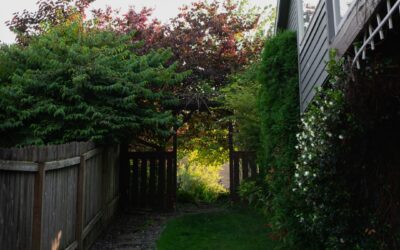
Feeling watched in your own yard is a special kind of frustrating, and the quotes for a tall fence often make it worse. The good news is there are plenty of backyard cheap ways to block neighbors view that cost a fraction of a full fence and, honestly, look better. After years of solving this exact problem for clients on tight budgets, I have learned the fix is almost never fencing the whole yard. It is blocking the one or two sightlines that actually bother you.
This guide covers the most effective low-cost methods, from living screens to DIY panels to clever illusions, with real prices, plant zones, and dimensions so you can pick what fits your budget and your patience.
Pinpoint the Exact Sightline First
The cheapest privacy fix starts with sitting down. Literally. Take a chair to the spot where you feel exposed, your patio, the deck, the fire pit, and look at exactly what you want to hide. Most people discover they only need to block a single window or a 10 foot stretch, not the entire property line.
Here is why that matters for your wallet. Screening a targeted 10 foot section costs one-sixth of what fencing a 60 foot perimeter does. A screen just 6 to 7 feet tall and 8 to 10 feet wide, placed correctly between your seat and the neighbor’s window, erases the problem. Aim the money where the view actually is.
Living Screens on a Shoestring
Plants are the lowest material cost of any privacy method because young plants are cheap. The tradeoff is you wait for them to grow, but a few smart picks fill in surprisingly fast.
Fast-Growing Evergreens
- Arborvitae ‘Green Giant’ (Zones 3-8) adds up to 3 feet a year and forms a solid green wall. Buy small 1 to 2 foot plants at $15 to $30 each rather than mature ones at $120, and space them 5 feet apart.
- Clumping bamboo, Fargesia (Zones 5-9) gives a dense 8 to 12 foot screen without the invasive runners of true bamboo. About $30 to $45 per plant.
- ‘Sky Pencil’ holly (Zones 5-9) stays narrow, under 2 feet wide, perfect for tight side yards.
Even Cheaper: Grasses and Vines
Ornamental grasses are the budget champion for a soft summer screen. Feather reed grass ‘Karl Foerster’ (Zones 4-9) or maiden grass (Zones 5-9) shoot up to 5 to 7 feet by midsummer and cost $12 to $20 per plant. For a fence you already have, plant a fast vine like clematis (Zones 4-9), climbing hydrangea (Zones 4-8), or annual morning glory, seeds for under $5, and let it blanket the barrier in a season or two.
DIY Screens Under $150
When you cannot wait for plants, build a freestanding screen. The cheapest sturdy version uses two 4×4 posts set in concrete with an infill panel between them.
- Set two 4×4 posts 8 feet apart, 2 feet deep in fast-setting concrete. Posts and concrete: about $50.
- Attach a 6 by 8 foot lattice panel ($30 to $45), or staple on rolled reed or bamboo fencing ($20 to $35).
- Total lands between $95 and $130 for a solid, good-looking 8 foot section.
Rolled reed, willow, and bamboo screening deserves a special mention. A 6 by 16 foot roll costs just $25 to $50 and zip-ties directly onto existing chain-link, a railing, or a pergola in an afternoon. It weathers to a warm gray and buys you three to five seasons of privacy for almost nothing.
Cover What You Already Have
If a see-through chain-link fence is the culprit, do not replace it, dress it. Privacy slats woven vertically through the links cost $30 to $60 for a 25 foot run and block 75 to 90 percent of the view instantly. Reed fencing zip-tied to the outside is cheaper still and looks softer.
For a plain but low fence that does not quite hide the neighbor’s second story, add height with a lattice topper. A 2 foot lattice section screwed to the existing posts raises your screen without the cost of a new fence, and a vine trained up it fills the gaps within a season.
Use Umbrellas, Sails, and Overhead Tricks
Sometimes the intrusion comes from above, a neighbor’s upstairs window or a house on a hill. A tall fence does nothing there. Instead, block the downward angle with overhead cover.
- A large offset patio umbrella ($60 to $150) tilts to block a specific upstairs view over your lounge chair.
- A triangular shade sail ($40 to $90) strung between the house and a post creates an instant privacy ceiling and sun protection in one.
- A simple pergola with a few slats or an outdoor curtain panel breaks the sightline from above for a modest lumber cost.
These overhead solutions are often overlooked, but for elevated neighbors they are the only thing that actually works, and they double as sun shade.
Container Screens for Renters
If you rent or cannot dig postholes, go with pots. A row of three 20 inch containers, each holding a columnar evergreen or a tall grass, forms a movable green wall you can take when you leave. ‘Emerald Green’ arborvitae (Zones 3-7) or a clump of feather reed grass works well and costs $15 to $25 per plant plus the pot.
For height without waiting, set a lattice or trellis panel behind a planter box and grow an annual vine up it. Because container soil dries fast in summer, add a single drip emitter on a battery timer or use self-watering pots so you are not hauling a hose out every evening. A cedar planter-with-trellis combo runs $80 to $150, or build one from an 8 foot cedar board and a lattice panel for about $45.
Salvage and Repurpose for Almost Nothing
Some of the best cheap screens cost only your time. Keep an eye on marketplace listings and jobsite dumpsters for:
- Wood pallets stood on end and secured to posts for a rustic slatted wall.
- A 16 foot cattle panel ($30) wired to two posts, with a vine trained through it for a living green screen.
- Salvaged shutters or old doors hinged together into a folding patio screen.
- Corrugated metal roofing framed in 2x4s for a weatherproof modern look at the cost of lumber alone.
Layer Fast and Slow Fixes Together
The best value trick is to combine an instant fix with a growing one. Zip-tie a roll of reed fencing to your fence line today so you have privacy this weekend, then plant clumping bamboo or a fast evergreen right in front of it. In two or three years the living screen takes over and you pull the reed. You get relief immediately and a permanent green wall later, all for a fraction of a fence.
You can do the same with a single hard panel. Build one 8 foot lattice section to block the exact worst window, then flank it with a couple of cheap ornamental grasses to extend and soften the line. Concentrate your money on the one spot that actually bothers you and let inexpensive greenery blur the edges. One well-placed screen beats trying to wall off the whole yard on the same budget every time.
Add Distraction, Not Just a Wall
Privacy is partly psychological. You feel less watched when your eye has somewhere pleasant to land close by. A tall potted plant, a water feature, or a bright flower bed between you and the neighbor draws your attention inward, so you simply stop noticing what is beyond it. This is a designer’s trick that costs almost nothing.
Try placing a large container with a striking plant, a Japanese maple (Zones 5-8) or a tall grass, at the near edge of your seating area. Hang string lights overhead in the evening. Add a small fountain whose sound masks neighbor noise. None of these physically block the view, but together they change where your attention goes, and a yard that feels like its own world feels private even when it is not fully enclosed.
Install It So It Lasts
Whatever method you choose, the posts are the make-or-break. Any tall screen catches wind like a sail, so set posts at least 2 feet deep, or one-third of their height, in concrete, and below the frost line in cold climates so they do not heave. Keep post spacing under 8 feet on tall screens to stop panels from sagging.
For living screens, dig planting holes twice as wide as the rootball, mulch a 3 inch ring to hold moisture, and water 1 inch a week through the first summer to establish roots. Finally, check your local code and any HOA rules before building. Many towns cap backyard structures at 6 feet and require setbacks from the line. A quick call to the permit office beats tearing it down later. With the right targeted approach, you can reclaim your yard for a couple hundred dollars instead of a couple thousand.