
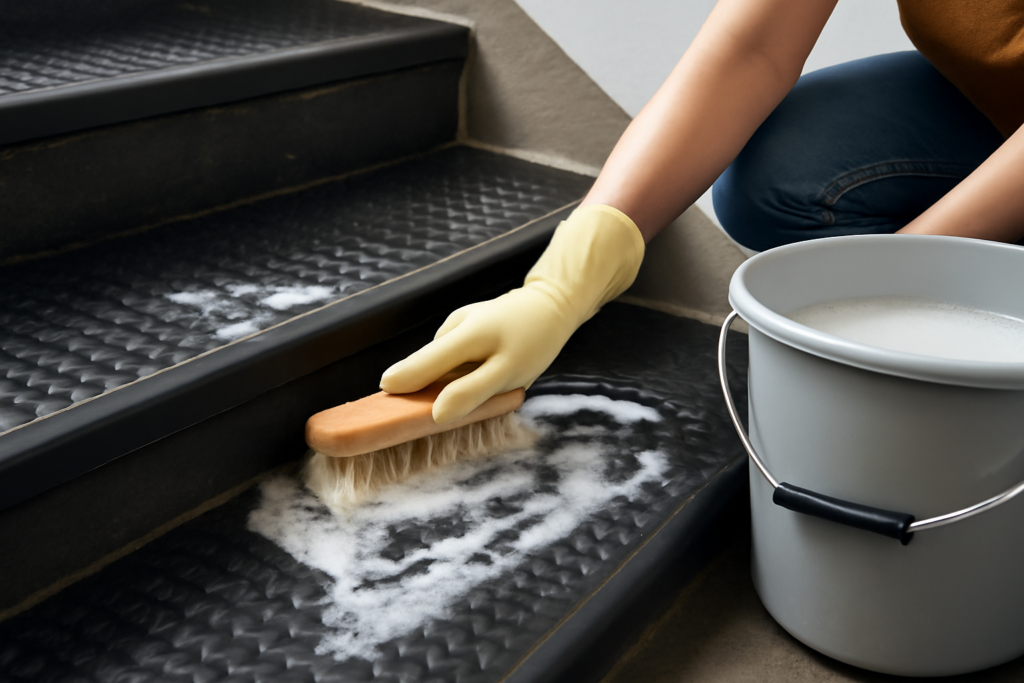
Rubber stair treads are built to take a beating, but the wrong cleaner can quietly ruin them. Harsh solvents swell the rubber, oily dressings make the surface slick, and a film of dried detergent fills the ribs that give you traction. Knowing how to clean rubber stair treads properly keeps them grippy, prevents cracking, and stretches their life to 10 years or more. This guide covers routine care, deep cleaning, stain removal, and the products you should never use.
Part of our Stairs & Stair Flooring guide — explore the full guide →
How to Clean Rubber Stair Treads: The Quick Answer
For most treads, the routine is simple: sweep or vacuum loose grit, scrub with a pH-neutral cleaner diluted in warm water using a medium-bristle brush, rinse with clean water, and let the treads dry completely before anyone walks on them. That covers 90 percent of the dirt you will see on residential basement, garage, porch, and commercial-style interior stairs.
The remaining 10 percent (grease, black heel marks, gum, salt residue, and mildew) needs targeted treatment, which you will find below. First, though, it helps to understand what you are cleaning.
Know Your Tread Material
Not all “rubber” treads are the same compound, and the material affects which cleaners are safe.
- Natural or synthetic rubber (SBR): common in heavy-duty commercial treads. Durable but sensitive to petroleum solvents and ozone.
- Vinyl or PVC treads: often sold as “rubber-look.” They resist oils better than rubber but can scratch and dull with abrasive powders.
- Recycled rubber: made from ground tires, often used outdoors. Porous and prone to trapping dirt; it may shed a faint odor when new.
- Thermoplastic rubber (TPR): softer, often found in residential stair tread mats with raised patterns.
Check the manufacturer’s care sheet if you still have it. Many commercial brands list approved cleaners and warn specifically against solvent-based strippers and wax.
Supplies You Will Need
- Broom, dustpan, or a vacuum with a brush attachment
- Two buckets (one for cleaning solution, one for rinse water)
- pH-neutral floor cleaner, or a teaspoon of mild dish soap per gallon of warm water
- Medium-stiff nylon scrub brush and a small detail brush or old toothbrush for grooves
- Microfiber cloths or a sponge mop
- Plastic scraper for gum or dried debris
- Optional: white vinegar, baking soda, a melamine sponge, and an enzyme or rubber-safe degreaser
Skip steel wool and green abrasive pads. They cut into rubber and create a rough surface that holds more dirt afterward.
Step-by-Step Routine Cleaning
- Remove loose debris. Sweep each tread from the back edge forward, or vacuum with a brush head. Grit left behind acts like sandpaper once the brush hits it.
- Mix your solution. Combine a pH-neutral cleaner with warm (not hot) water, around 90 to 110°F. Very hot water can soften some tread adhesives.
- Work from the top down. Starting on the top step keeps dirty water from dripping onto treads you already cleaned.
- Scrub with the grain of the pattern. Run the brush along the ribs or across the raised circles in overlapping passes. Use the detail brush on the nosing and any grooved edges.
- Rinse thoroughly. Wipe each tread with a cloth or mop dampened in clean water. Soap residue is the leading cause of slippery rubber, so rinse twice if the water looks cloudy.
- Dry completely. Towel off standing water, then let the stairs air-dry for 30 to 60 minutes. Block the stairway or warn household members until the treads are dry.
How often? Interior residential stairs usually need a quick sweep weekly and a wet clean every two to four weeks. Garage, porch, and entry stairs may need a wet clean weekly during winter when salt and slush get tracked in.
Removing Tough Stains and Marks
Black scuff and heel marks
Rub gently with a dry melamine sponge (the “magic eraser” type) or a clean tennis ball. For stubborn marks, dampen the sponge slightly. Use light pressure; melamine is a fine abrasive and can dull glossy vinyl treads if you scrub hard.
Grease and oil
Garage and basement treads collect motor oil and grease. Sprinkle baking soda over fresh spills to absorb what you can, wait 15 minutes, and sweep it up. Then scrub with a rubber-safe degreaser or a stronger dilution of dish soap. Avoid gasoline, mineral spirits, and acetone; they swell and weaken rubber.
Winter salt residue
That chalky white film is calcium or sodium chloride. Mix one part white vinegar to four parts warm water, apply with a mop, let it sit for five minutes, and scrub. Rinse with plain water afterward. Occasional diluted vinegar is fine, but do not use it as your everyday cleaner because repeated acid exposure can age some rubber compounds.
Chewing gum and tar
Hold an ice cube in a plastic bag against the gum for a minute until it hardens, then pop it off with a plastic scraper. Any remaining smear usually lifts with a drop of dish soap and the detail brush.
Mildew and mold
Outdoor and basement treads can grow mildew in the grooves. Scrub with a solution of 1/2 cup oxygen bleach (sodium percarbonate) per gallon of warm water, leave it for 10 minutes, and rinse well. Chlorine bleach can be used sparingly at a 1:10 dilution on many commercial rubber treads, but test first because it may fade colors. Fix the moisture source too, whether it is a leaky gutter, a basement humidity problem, or poor ventilation.
Products to Avoid
Several common household products damage rubber or make it dangerous to walk on:
- Oil-based cleaners and “rubber shine” dressings: tire shine and silicone protectants leave a slick film. Never use them on walking surfaces.
- Petroleum solvents: mineral spirits, paint thinner, gasoline, and many adhesive removers soften rubber and can loosen tread glue.
- Floor wax and polish: designed for resilient tile, not textured rubber. Wax builds up in the pattern and reduces grip.
- Abrasive powders: scouring powder scratches the surface and leaves a gritty residue if not rinsed perfectly.
- Undiluted ammonia or chlorine bleach: dries rubber over time, leading to cracking at the nosing.
Restoring Grip on Slippery Treads
If your treads feel slick even when dry, the culprit is usually residue rather than wear. Do a two-bucket deep rinse with clean water and a stiff brush; often that alone restores traction. If a waxy or silicone film is present, use a commercial rubber-floor cleaner designed to strip residue, following the label dilution, and rinse thoroughly.
Worn treads are another story. Once the raised pattern has flattened to less than about half its original height, or the nosing has rounded off and cracked, cleaning will not bring the grip back. Replacement treads cost roughly $15 to $60 per step for residential and light-commercial rubber, and many can be installed with contact adhesive or tread adhesive in an afternoon.
Protecting Rubber Treads Between Cleanings
Place a coarse walk-off mat at the top and bottom of garage and exterior stairs to capture grit before it reaches the treads. Keep outdoor treads out of prolonged direct sun when possible, or choose UV-stabilized products, because ultraviolet light and ozone are the main causes of surface chalking and cracking. Inspect the adhesive at the nosing a few times a year. A tread with a lifted front edge is a trip hazard; reglue it with the adhesive the manufacturer recommends, weighing it down for 24 hours.
For interior stairs in homes, a monthly check also lets you spot early problems: a loose tread, a split, or a spot where water collects. Catching these early prevents both accidents and the cost of replacing the entire set.
Common Questions
Can I use a steam mop on rubber stair treads?
It is best to avoid it. Steam can soften tread adhesive and, on some compounds, cause warping or surface blooming. Warm water with a neutral cleaner is safer and just as effective.
Is vinegar safe for rubber stair treads?
Diluted vinegar is fine occasionally for salt residue or hard-water film. Use about one part vinegar to four parts water, rinse afterward, and do not make it your daily cleaner.
Can I pressure wash outdoor rubber treads?
Yes, on a low setting with a wide fan tip held at least 12 inches away. High pressure can lift tread edges and erode recycled rubber surfaces.
Why do my rubber treads smell?
New recycled rubber often off-gasses for a few weeks. Persistent odor usually means trapped moisture or mildew underneath; lift a corner to check and clean with an oxygen bleach solution.
Once you understand how to clean rubber stair treads without solvents, wax, or harsh abrasives, maintenance becomes a quick routine: sweep, scrub with a neutral solution, rinse well, and dry. Handle grease, salt, and mildew with the targeted methods above, and your treads will stay clean, safe, and slip-resistant for years.


