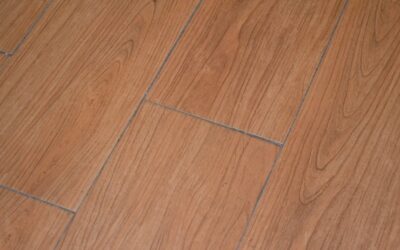
A laminate plank that suddenly pops up an inch off the subfloor is rarely a defect. It is almost always a symptom of pressure with nowhere to go, and ignoring it for more than a few weeks turns a 30-minute fix into a full room replacement. How to fix laminate flooring that is lifting comes down to identifying the underlying cause first — expansion gap, moisture, or subfloor failure — then applying the matching repair. Skip the diagnosis step and you will repeat the repair every six months.
- Diagnose Why It is Lifting Before You Touch a Tool
- Tools and Materials You Will Need
- Fix 1: Inadequate Expansion Gap (Most Common)
- Fix 2: Single Plank Lifted in the Field
- Fix 3: Moisture-Related Lifting
- Fix 4: Subfloor Squeaks and Hollow Spots
- Preventing Future Lifting
- When to Call a Professional
- Cost Estimates for Common Repairs
- Frequently Asked Questions
Diagnose Why It is Lifting Before You Touch a Tool
Laminate floats on the subfloor and expands roughly 1/8 inch per 10 feet with seasonal humidity changes. Three primary culprits cause lifting:
- Insufficient expansion gap at walls, doorways, or fixed objects
- Moisture intrusion from below the subfloor or above (leaks, spills)
- Subfloor failure — squeaky joists, unlevel patches, or rotted plywood
Press down on the lifted area. If it springs back up immediately, the issue is lateral pressure (expansion gap problem). If it stays flat for a moment then slowly rises, moisture is involved. If you hear a hollow squeak underneath, the subfloor is the suspect.
Tools and Materials You Will Need
Most fixes require basic tools you already own:
- Pry bar or oscillating multi-tool with flush-cut blade
- Utility knife with fresh blade
- Tape measure and 4-foot level
- Moisture meter (Pinless models from $35 are accurate enough)
- Wood glue or polyurethane construction adhesive (Loctite PL Premium)
- Painter’s tape, weights (gallon paint cans work)
- Quarter round or shoe molding if removing baseboards
Fix 1: Inadequate Expansion Gap (Most Common)
When figuring out how to fix laminate flooring that is lifting near walls, doorways, or large furniture, the expansion gap is usually the culprit. Manufacturers require 3/8 inch of free space around every fixed vertical surface. New homeowners often discover the original installer skipped this step.
Pop off the baseboard or quarter round on the wall closest to the lifted area. Inspect the gap between the laminate edge and the drywall. If it measures less than 3/8 inch — or if the laminate is touching the wall directly — you have found the cause. Use a multi-tool with a flush-cut blade to trim 1/2 inch of laminate from along that wall, restoring the proper gap. Reinstall the baseboard, and the lifted plank should settle within 24 to 48 hours.
Fix 2: Single Plank Lifted in the Field
If only one plank is buckling away from a wall, check whether the locking joint has separated. This often happens when a single board takes a heavy point load (a chair leg, dropped weight) that pops the click joint loose.
Pry up the lifted plank carefully using a thin pry bar wrapped in painter’s tape to protect adjacent boards. Inspect the tongue and groove for damage. If the locking edge is intact, apply a thin bead of wood glue to the underside of the tongue, click the plank back in place, and weight it down with paint cans for 12 hours. If the locking edge is chipped, the plank needs replacement from your attic stock.
Fix 3: Moisture-Related Lifting
Use a moisture meter on the subfloor through the lifted plank. Readings above 12 percent on plywood subfloors or above 4.5 percent (using a calcium chloride test) on concrete indicate active moisture. The repair sequence is:
- Identify and stop the moisture source (leaking dishwasher, plumbing, exterior grading)
- Remove all affected planks until subfloor moisture drops below 12 percent
- Run a dehumidifier for 5 to 10 days to dry out the subfloor
- Inspect for mold under affected boards; remediate if found
- Replace any swollen or warped subfloor sheathing
- Install new 6-mil polyethylene moisture barrier underlayment
- Reinstall planks from attic stock
Skipping the dry-out step is the single biggest reason moisture repairs fail. The subfloor must reach equilibrium with the room’s relative humidity (typically 30 to 50 percent) before any new flooring goes back down.
Fix 4: Subfloor Squeaks and Hollow Spots
Walk slowly across the lifted area in stocking feet. Listen for squeaks and feel for soft spots that flex underfoot. These indicate subfloor problems that no amount of laminate work will fix.
For minor squeaks, drive 2-1/2 inch deck screws through the laminate at a slight angle into the floor joists below. Counter-sink the screw heads, fill with color-matched putty. For severe deflection, the planks must come up so you can sister joists or replace damaged plywood sheathing.
Preventing Future Lifting
Once your floor is repaired, three habits keep it flat for the next 20 years:
- Keep indoor humidity between 30 and 50 percent year-round with a humidifier or dehumidifier
- Wipe spills within 5 minutes — laminate is water-resistant on the surface but vulnerable at seams
- Maintain at least 3/8 inch expansion gap when adding cabinets, walls, or large fixtures
Installing transition strips at every doorway gives the floor room to move independently in each room, which prevents pressure buildup across long runs.
When to Call a Professional
Knowing how to fix laminate flooring that is lifting at the single-plank or single-wall scale is weekend DIY territory. Call a flooring contractor when:
- Multiple planks across multiple rooms are lifting simultaneously
- You suspect a slab leak under concrete subfloor
- Visible mold extends beyond a single plank’s footprint
- The lifting returns within weeks of a previous repair
- The subfloor shows structural deflection greater than 1/4 inch
Repair calls run $150 to $400 for simple jobs and $800 to $2,500 for moisture remediation involving multiple planks and subfloor work.
Cost Estimates for Common Repairs
DIY costs versus pro pricing for typical lifting repairs:
- Single plank reseat with glue — $5 DIY, $150 pro
- Trim expansion gap on one wall — $20 DIY, $250 pro
- Replace 5 to 10 damaged planks — $80 DIY, $400 to $700 pro
- Moisture remediation, 100 sq ft — $200 DIY (dehumidifier rental), $1,500 to $3,000 pro
Frequently Asked Questions
Why is my laminate flooring lifting in the middle of the room?
Center-of-room lifting almost always indicates expansion pressure from inadequate perimeter gaps or moisture trapped under planks. Diagnose by checking gaps at the nearest walls and testing subfloor moisture before repairing.
Can I just glue down lifting laminate planks?
Gluing solves the symptom but never the cause. If pressure or moisture is driving the lift, glued planks will pop adjacent boards or split at the locking joint within months. Always diagnose first.
How long does it take laminate to flatten after fixing the gap?
Minor lifts settle within 24 to 72 hours after pressure is relieved. Severe buckling may take a week to fully relax, especially in dry winter conditions when the planks contract.
Will lifted laminate flooring flatten itself?
Only if the underlying cause resolves on its own — for example, summer humidity dropping. Permanent fixes require addressing the gap, moisture, or subfloor issue. Lifted boards left untreated typically fail at the joint within one season.
Prefer to explore on your own?
See how new flooring looks in your actual room in seconds — free, no signup.
Try the free Floor Studio →