Most people make the same mistake the moment they spot a muddy footprint: they grab a wet rag and start scrubbing. That is exactly how a small mess becomes a permanent stain. Learning how to get dirt out of carpet starts with a counterintuitive rule, which is to let dirt dry before you touch it. Wet dirt smears into the fibers and spreads, while dry dirt breaks up and vacuums out. I have cleaned carpets in rentals, family homes, and high-traffic offices, and nearly every stubborn stain traces back to someone rubbing wet mud in a panic.
This guide walks through the right way to remove fresh mud, dried grime, and ground-in dirt from carpet using supplies you almost certainly already own. No special machine required for most jobs.
- Why Scrubbing Wet Dirt Backfires
- What You Will Need
- How to Remove Fresh Mud
- The Core Method for Ground-In Dirt
- The Baking Soda and Vinegar Treatment
- Tackling Really Stubborn Spots
- Mistakes That Ruin Carpet
- Keeping Dirt Out in the First Place
- Handling Different Types of Dirt
- When to Call a Professional
- The Bottom Line
Why Scrubbing Wet Dirt Backfires
Carpet fibers are like tiny hooks. When dirt is wet, scrubbing drives the particles deeper and spreads the muddy water outward, enlarging the stain and pushing grime down toward the backing where a vacuum cannot reach. Rubbing also frays and distorts the fibers, leaving a dull, roughed-up patch even after the dirt is gone.
The professional approach is the opposite of instinct. You let mud dry into a brittle crust, then break it up and lift it away dry before introducing any moisture. Only after the loose material is gone do you treat what remains with a cleaning solution.
What You Will Need
- A vacuum with strong suction
- A stiff-bristle brush or an old toothbrush for edges
- White dish soap or laundry detergent
- White vinegar and baking soda
- Two white cloths or paper towels (colored cloths can transfer dye)
- A spray bottle and a bowl of warm water
- A butter knife or spoon for scraping
How to Remove Fresh Mud
If someone tracks in wet mud, resist the urge to clean it right away. The single best thing you can do is walk away and let it dry completely, which usually takes a few hours. Cover the spot with a fan or a paper towel to speed things along if you like, but do not press down hard.
Once the mud is dry and crumbly, use a spoon or butter knife to gently break the crust, then vacuum up every loose particle. You will be amazed how much lifts out with zero moisture. Only the residual stain that is left after this step needs wet treatment, and there is usually far less of it than you expected.
The Core Method for Ground-In Dirt
For everyday embedded grime in traffic lanes, this dish-soap method is my go-to when figuring out how to get dirt out of carpet without renting equipment. It is gentle, cheap, and effective.
Step 1: Vacuum Thoroughly
Go over the area several times in different directions to pull up as much loose dirt as possible before adding any liquid. This alone removes a surprising amount of grit.
Step 2: Mix a Cleaning Solution
Combine one teaspoon of clear dish soap with two cups of warm water in a spray bottle. Avoid bleach or colored soaps that can discolor fibers.
Step 3: Blot, Do Not Rub
Lightly mist the dirty area, wait a minute, then blot with a clean white cloth. Work from the outside of the stain inward so you do not spread it. Repeat with a fresh section of cloth as it picks up dirt.
Step 4: Rinse and Dry
Mist with plain warm water to rinse the soap, blot dry, then place a dry towel over the spot and weigh it down for an hour to wick up remaining moisture.
The Baking Soda and Vinegar Treatment
For older, set-in dirt or lightly soiled areas that need deodorizing too, a two-part natural treatment works well. Sprinkle a generous layer of baking soda over the dry, vacuumed area and let it sit for 15 minutes to absorb odor and loosen grime. Vacuum it up.
Next, mix equal parts white vinegar and warm water in a spray bottle, mist the area lightly, and blot with a clean cloth. The mild acid in the vinegar dissolves greasy soil, and the smell dissipates completely as it dries. This combination is safe on most synthetic carpets and leaves no sticky residue.
Tackling Really Stubborn Spots
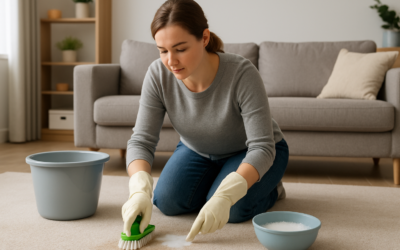
Some traffic paths and doorway areas hold years of compacted grime that resists gentle methods. For these, agitate the wet area lightly with a stiff brush, brushing in one direction rather than scrubbing in circles, to release dirt from deep in the pile without tangling the fibers. Follow with the blot-and-rinse routine.
If a spot still looks gray after cleaning, the dirt has likely reached the carpet backing, and a hot-water extractor rental will do what hand cleaning cannot. But try the DIY methods first, because they resolve the large majority of household dirt.
Mistakes That Ruin Carpet
- Cleaning mud while wet: The top cause of spreading stains. Always dry first.
- Over-wetting: Soaking the carpet can cause mold, odor, and browning as dirt wicks up from the backing.
- Using too much soap: Leftover detergent is sticky and attracts new dirt fast, making the spot look worse in a week.
- Rubbing aggressively: This frays fibers and creates a permanent dull patch.
- Skipping the rinse: Unrinsed cleaner traps grime. Always rinse and blot dry.
Keeping Dirt Out in the First Place
The easiest dirt to remove is the dirt that never gets in. Place walk-off mats at every exterior door and shake or wash them weekly. Adopt a no-shoes rule in carpeted areas, since shoes carry the vast majority of tracked-in grit. Vacuum high-traffic zones two or three times a week so particles do not have time to grind down into the backing, where they cut fibers and dull the color.
Rotating furniture occasionally and using a professional or rental deep clean once a year keeps the whole floor looking even. Prevention is far less work than restoration.
Handling Different Types of Dirt
Not all dirt behaves the same way, and tailoring your approach gets better results. Dry, powdery dirt like dust and sand responds best to thorough vacuuming alone; adding water too soon just turns it to mud. Greasy or oily grime, common in kitchens and entryways, needs a grease-cutting dish soap or a dab of rubbing alcohol on a cloth to break the oil before blotting.
Mud, as covered, must dry first, then break up and vacuum. Clay-based dirt is especially stubborn because it bonds tightly to fibers, so expect to repeat the blot-and-rinse cycle a few times. For dirt tracked in with salt during winter, a vinegar-and-water solution neutralizes the white residue that plain water leaves behind. Identifying what kind of dirt you are dealing with before you reach for a cleaner saves you from spreading it or setting it deeper into the pile.
When to Call a Professional
DIY methods handle the vast majority of household dirt, but know your limits. If a traffic lane stays gray after repeated cleaning, the grime has reached the backing and a hot-water extractor is needed. Deep-set clay, years of neglected soil, or dirt combined with pet accidents may also warrant a professional visit, which typically runs $30 to $60 per room and includes far stronger suction than any hand method.
The Bottom Line
Knowing how to get dirt out of carpet comes down to a few reliable principles: let mud dry before you touch it, vacuum before you wet anything, blot instead of rub, and always rinse out your cleaner. A simple dish-soap solution handles most everyday grime, while baking soda and vinegar tackle set-in dirt and odor. Reserve rental extractors for the deep, backing-level stains that hand cleaning cannot reach. Follow this order and you will lift dirt cleanly, protect the fibers, and keep your carpet looking fresh for years without harsh chemicals or costly service calls.