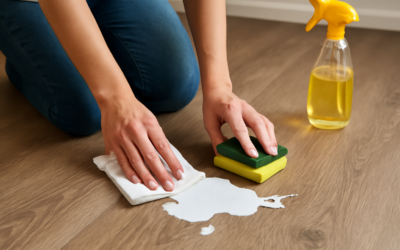
That splatter of glossy enamel across the back of your hand looks like it needs a turpentine bath, but the smartest removal starts with something already in your kitchen. Knowing how to get oil based paint off skin the gentle way matters because the harsh solvents most people grab for can dry, crack, and chemically burn your skin in minutes. This guide walks through the safe sequence professional painters actually use, from the kindest oils first through stronger options only when truly needed.
Part of our Paint & Walls guide — explore the full guide →
Why Skin and Oil Paint Do Not Mix Easily
Oil-based paints use linseed, alkyd, or mineral spirit carriers designed to bond tightly with porous surfaces. Your skin qualifies as porous, which is why the paint locks into the fine ridges and pores on your hands and forearms. Water does nothing because oil and water repel each other on a molecular level.
The golden rule of solvents is that like dissolves like. Oil-based paint dissolves in oil-based cleaners. That simple chemistry is why vegetable oil, baby oil, and butter all work better than the sink soap most people try first. The gentle oils loosen the paint bond without stripping the natural protective lipid layer on your skin.
Start With Vegetable or Baby Oil
Before you open any solvents, reach for the pantry. Pour a tablespoon of vegetable, olive, or canola oil into your palm and massage it into the painted area for 60 to 90 seconds. You will feel the paint soften as it dissolves back into a slick film that wipes away with a paper towel.
Baby oil works even faster because it is pure mineral oil with added fragrance. Johnson’s Baby Oil at about $5 a bottle is what many pros keep in their truck. Work it in with your fingertips, let it sit for two minutes, then wipe. Most fresh splatters come off on the first pass.
Dish Soap and Warm Water Follow-Up
Once the bulk of the paint lifts, wash thoroughly with a grease-cutting dish soap like Dawn. The surfactants in dish soap emulsify any residual oil and paint so they rinse away completely. Cold water chases the oil in circles on your skin, so use comfortably warm water, roughly 100°F, for best results.
Scrub gently with a soft nail brush if the paint settled into cuticles or creases around knuckles. Avoid using anything abrasive like pumice stones on the first attempt. Those tools can scrape away paint but also take a layer of skin cells with them, leaving you raw and sensitized for days.
Stronger Options for Stubborn Paint
If the paint has already begun to cure, usually after 2 to 4 hours, the gentle oils may need help. Here is the escalation ladder:
- Butter or shortening: The fat content breaks down partially dried paint without any chemical irritation. Rub in thoroughly, wait 5 minutes, wipe off.
- Peanut butter: Oddly effective thanks to its high oil content plus mild abrasion from the solids. Works well on tougher spots.
- Baby oil plus sugar scrub: One part sugar to two parts baby oil creates a gentle exfoliant that lifts cured paint without damaging skin.
- Gojo or Fast Orange: Industrial hand cleaners designed for mechanics. Pumice-free formulas are gentler and still remove stubborn paint in one application.
- Mineral spirits as last resort: Effective but harsh. Apply with a cotton ball for less than 30 seconds, rinse immediately, and moisturize afterward.
What Never to Use on Skin
A surprising number of people reach for paint thinners, turpentine, acetone, or gasoline to remove paint from skin. Every one of these is a serious mistake. Turpentine and paint thinners strip the skin’s oil barrier within minutes, causing dermatitis, redness, and sometimes chemical burns. They also absorb through skin into the bloodstream.
Acetone, the same chemical in nail polish remover, does remove oil paint but leaves skin extremely dry and cracked. Gasoline is the worst possible choice because it contains benzene, a known carcinogen. Never put any automotive solvent on skin under any circumstance.
Special Situations
Paint in hair requires a different approach. Saturate the strands with baby oil or conditioner, wait 15 minutes, then gently work the paint down the hair shaft with your fingers before shampooing with a clarifying shampoo. For paint on a child’s skin, always start with vegetable oil and soapy water only. Children’s skin is thinner and more permeable, so avoid every chemical solvent entirely.
Paint that has dried for more than 24 hours generally needs to wear off naturally over 3 to 5 days as your skin sheds. Daily washing with soapy water and moisturizing at night speeds the process. Avoid the temptation to pick at it, which can tear healthy skin along with the paint chip.
Aftercare Your Skin Will Thank You For
Any paint removal process, even the gentle ones, leaves skin temporarily dehydrated. Apply a thick moisturizing lotion or cream immediately after drying off. Products with ceramides, glycerin, or shea butter rebuild the lipid barrier fastest. CeraVe, Cetaphil, and Eucerin all make affordable options that run $10 to $15 at any drugstore.
If your skin feels irritated or looks red the next morning, apply a thin layer of petroleum jelly overnight under a cotton glove. This occlusive treatment traps moisture against the skin and allows the barrier to rebuild in about 8 hours. Repeated paint exposure without protection eventually leads to sensitization, so nitrile gloves at $10 for a box of 100 are cheap insurance for your next project.
Prevention Tips for Next Time
The easiest paint to remove is paint that never touches your skin. Before starting any oil-based painting project, apply a thin layer of barrier cream or even plain petroleum jelly to any exposed skin. Wear nitrile rather than latex gloves, since mineral spirits weaken latex within minutes. A long-sleeve shirt and painter’s tape wrapped around your wrist cuffs keeps splatter from running inside the glove. Five minutes of prep saves the thirty minutes of scrubbing that inspired you to read this guide in the first place.