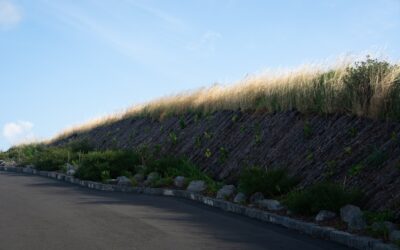
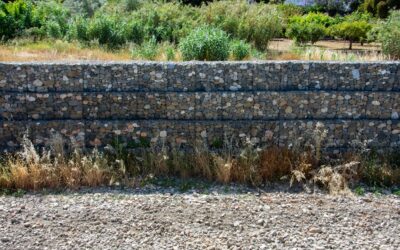
A 100-linear-foot retaining wall at 4 feet tall in stacked concrete block costs $4,500 to $9,500 once you factor in excavation, base prep, drainage, and labor, which is why most homeowners with steep yards are looking for alternatives. Learning how to landscape a steep slope without retaining walls opens up techniques that cost a fraction of masonry while delivering better long-term erosion control. Plant roots stabilize soil more effectively than any wall over a 25-year timeline, and natural terracing techniques have been used on agricultural hillsides for over 5,000 years. After designing and installing slope plantings on yards from 15 percent to 60 percent grades, I have learned the projects that succeed long-term combine plant selection, soil prep, and surface armor in a layered system.
Assess the Slope Before Choosing a Strategy
Measure the slope grade using a 4-foot level and tape measure. Set the level on the slope, measure the vertical drop from the high end to the ground at the low end over 4 horizontal feet, divide by 4, multiply by 100. A 24-inch drop over 4 feet equals 50 percent grade.
Slopes under 25 percent are easy to plant with most ground covers and shrubs. Slopes 25 to 50 percent need erosion control fabric and more aggressive root systems. Slopes over 50 percent challenge any planting strategy and may genuinely need engineered solutions.
Check for water flow patterns. Slopes that channel runoff during storms need different treatment than slopes that drain uniformly. A 6-foot section that funnels all roof runoff needs swale armoring at the top regardless of plant choice.
Terraced Planting Beds Without Walls
Natural terracing uses the existing soil rather than imported wall materials. Cut horizontal shelves 18 to 24 inches wide into the slope at regular vertical intervals. The shelves should slope back into the hill at 5 to 10 degrees so water sinks rather than running off.
For each shelf, install a row of dense fibrous-root plants along the downhill edge. The root mass holds the cut face. Behind that, plant the bed normally. Repeat the shelf cut every 18 to 36 inches vertically depending on slope steepness.
This technique creates a planted staircase that looks intentional, drains well, and stabilizes the slope through the combined effect of horizontal cuts and root systems.
Best Plants for Slope Stabilization
Junipers (Juniperus horizontalis cultivars) are workhorses for sunny slopes. Blue Rug Juniper at $25 per gallon spreads 6 to 8 feet wide and tolerates Zones 3 to 9. The dense fibrous roots create an interlocking mat within two seasons. Plant on 4-foot centers for full coverage in 3 years.
Creeping cotoneaster (Cotoneaster dammeri) handles moderate shade and tolerates poor soils. The evergreen foliage holds soil even in winter. Plant on 3 to 4 foot centers at $20 to $30 per gallon plant.
For shade slopes, Pachysandra terminalis and Vinca minor periwinkle establish thick mats within 2 to 3 years. Both spread aggressively via rhizomes and stems that root at nodes. Plant on 12-inch centers for quickest coverage; expect $1 to $2 per plug from wholesale nurseries.
Native grasses like little bluestem (Schizachyrium scoparium), switchgrass (Panicum virgatum), and Indian grass (Sorghastrum nutans) develop root systems 6 to 10 feet deep that physically reinforce soil at depth where no other planting reaches.
Erosion Control Fabric and Blankets
Plant your slope all you want; if it rains the day after install, soil washes downhill and takes the plants with it. Coconut coir or jute blankets from North American Green or Greenfix anchor topsoil while plants establish. Cost runs $0.30 to $0.80 per square foot for material.
Pin blankets with 6-inch landscape staples on 18-inch centers. Cut X-shaped slits through the fabric to plant directly through it. The blanket degrades over 12 to 24 months as plants establish, leaving the soil held by roots permanently.
For steeper slopes above 40 percent, double the blanket overlap (12 inches at edges instead of 4 inches) and use 8-inch staples on 12-inch centers. The Hanes Geo Components C125 coconut blanket at $0.65 per square foot handles slopes up to 2:1 with proper installation.
Boulder Placement for Visual Anchors
Strategically placed boulders create visual interest while serving as mini-terraces. Each 3 to 5 foot boulder anchors 30 to 60 square feet of planting downslope by breaking up water flow and creating sheltered planting pockets above.
Source boulders from local stone yards at $80 to $250 per ton delivered. A 3-foot boulder typically weighs 800 to 1,500 pounds. Set boulders one-third buried in the slope so they look natural and structurally engage with the soil rather than appearing dropped on the surface.
Plant low-growing ground covers like creeping thyme (Thymus serpyllum) or sedum varieties around the boulder base. The combination of stone mass and shallow-rooted cover creates a permanent low-maintenance feature.
Swales and Drainage Above the Slope
The single biggest reason slope plantings fail is uncontrolled water from above. A 1-foot wide swale at the top of the slope captures runoff and directs it to a controlled outlet rather than letting it sheet-flow across the planting.
Dig the swale 8 to 12 inches deep with a slight pitch (1 percent) toward a drainage outlet. Line with river rock 1 to 2 inches in diameter for a permanent, low-maintenance system. Total cost runs $4 to $8 per linear foot in materials and labor.
For larger watersheds above the slope, a French drain with 4-inch perforated pipe in gravel-filled trench handles 5 to 10 gallons per minute of subsurface flow. Pipe runs $1.50 to $3 per foot; trenching and gravel push installed cost to $20 to $40 per linear foot.
Mulch Choice for Slope Stability
Standard shredded hardwood mulch washes downhill in the first heavy rain. Pine straw at $5 to $7 per bale (covers 30 to 40 square feet) interlocks with itself and stays in place on slopes up to 30 percent. Larger nuggets and stone mulches stay in place better than shredded organic.
For steeper slopes, skip loose mulch entirely and use a living ground cover or mulch netting. Mulch netting holds shredded hardwood in place on slopes up to 50 percent and degrades within 18 months as plants fill in.
Timeline and Maintenance Realities
A new slope planting takes 2 to 3 years to fully establish. Year one is high-risk for erosion; expect to replace some plants washed out in storms. Year two sees root systems knitting together but still vulnerable. Year three the planting holds itself.
Water deeply once a week for the first two growing seasons. Slope soils drain faster than flat ground, and new plants stress easily without consistent moisture. Drip irrigation on the slope, installed under the erosion blanket, delivers water directly to root zones without runoff loss.
Hand-weed monthly during establishment to prevent invasive species from outcompeting your installed plants. A 1,000-square-foot slope planting requires roughly 6 to 10 hours of maintenance per year once established, far less than the long-term inspection and repair needs of a retaining wall.