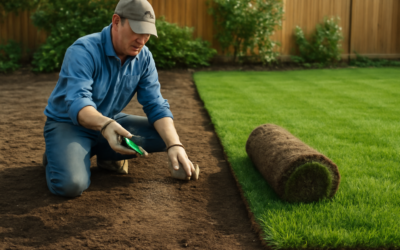
It sounds like a smart shortcut: roll fresh sod right over a patchy lawn and skip the digging. In practice, sod laid on top of old grass rarely roots well. The old turf forms a spongy, thatchy layer that dries out fast, blocks new roots from reaching soil, and often rots underneath, leaving you with brown seams and a lawn that lifts like a rug. If you are researching how to lay sod over existing lawn, the honest answer is that the old grass needs to go first, and then you resod onto real soil.
The proper process is straightforward: kill or cut out the old turf, loosen and amend the soil, level it so it drains away from the house, then lay the new sod with tight seams and water it deeply. It takes a few extra days compared with the shortcut, but it is the difference between a lawn that knits in within two to three weeks and one that has to be redone the following season.
How to Lay Sod Over Existing Lawn: Why the Shortcut Fails
Sod is a thin mat of grass with roughly an inch of soil and roots attached. Those roots need direct contact with moist, loose soil to grow downward. Old grass, even mowed short, puts a barrier between the two. Here is what typically happens when people place sod over existing grass:
- Poor root contact. New roots grow into a layer of old stems and thatch instead of soil, so they stay shallow.
- Fast drying. Air pockets between the layers dry out quickly. Edges and seams brown first.
- Decay underneath. The smothered old grass breaks down, which can invite fungus and leaves soft, uneven spots as it settles.
- Raised grade. Sod on top of turf sits 1 to 2 inches high, which can cause trip edges at walkways and push water toward the foundation.
- Weeds come back. Perennial weeds and aggressive grasses in the old lawn often grow straight through the new sod.
The same goes for trying to lay turf over existing lawn after scalping it very short. Scalping helps a little but does not remove the root mat.
Option 1: Cut Out the Old Turf
Removing turf with a sod cutter is the fastest path to bare soil. A gas-powered sod cutter, rented by the day, slides a blade under the grass and cuts strips about an inch thick that you roll up and haul off or compost in a pile. Set the blade just deep enough to get the roots, typically 1 to 1.5 inches.
Sod cutters are heavy and vibrate hard. Wear safety glasses, hearing protection, gloves and sturdy boots. Keep both hands on the controls and keep bystanders away from the front. Rolled strips of old turf weigh a lot, especially when wet, so lift with your legs and use a wheelbarrow or tarp to move them. Before cutting, call 811 so buried utility lines are marked, and flag any sprinkler heads and shallow lines so the blade does not catch them.
Option 2: Kill the Old Grass First
The other route uses a non-selective herbicide to kill existing grass and weeds, then you till or rake the dead material. This keeps more organic matter in the soil but requires patience. Most products need dry weather for application and a waiting period, often one to two weeks, before you till or plant. Some tough grasses need a second application.
Herbicide Safety
Read and follow the product label exactly. It is the legal guide for use. Wear the protective gear the label specifies, which usually includes chemical-resistant gloves, long sleeves, closed shoes and eye protection; use a respirator if the label calls for one. Spray on a calm day so drift does not reach garden beds, trees or a neighbor’s yard. Keep kids and pets off the area for the time listed. Never mix herbicides with other chemicals, store them in original containers away from heat and pilot lights, and rinse sprayers away from storm drains and wells. For people who would rather avoid chemicals, smothering the lawn with cardboard or plastic for several weeks also works, just much more slowly.
After the grass dies, either remove it with a sod cutter or till it into the soil and rake out clumps.
Step-by-Step: How to Resod a Yard
- Clear the area. Cut out or kill and remove the old turf as described. Pull remaining weeds by the root.
- Loosen the soil. Till 4 to 6 inches deep, ideally with 1 to 2 inches of compost spread on top first. Wear eye and ear protection around the tiller.
- Amend as needed. A soil test tells you whether lime, sulfur or nutrients are needed. Mix amendments in while tilling.
- Grade and level. Rake soil so it slopes away from the house, about 6 inches of drop over the first 10 feet. Fill low spots and remove high spots. Keep soil about 1 inch below walks and driveways.
- Roll lightly. Use a lawn roller about one-third full of water to firm the surface and expose dips. Fill and re-roll.
- Apply starter fertilizer. Rake it lightly into the top inch, following local rules and the bag rate.
- Dampen the soil. Lightly water the day before so the surface is moist but not muddy.
- Lay the sod. Start along a straight edge such as a driveway. Lay pieces in a staggered brick pattern with seams butted tight and not overlapped. Use a sharp knife to cut around curves and beds.
- Roll the new sod. Roll once more to press roots into contact with the soil.
- Water deeply. Within 30 minutes of laying each section, water until the soil underneath is wet 3 to 4 inches deep. Lift a corner to check.
Sod rolls and pallets are heavy, often 30 to 50 pounds per roll and much more when wet. Keep your back straight, carry rolls close to your body, and use a wheelbarrow or cart to move them across the yard.
Partial Resodding: Fixing Patches
For dead patches in an otherwise healthy lawn, the same rule applies on a smaller scale. Cut out the dead area in a square with a flat spade, removing about 1.5 inches of old turf and roots. Loosen the soil below, add a little compost, and level it so the new piece sits flush with the surrounding grass. Lay a piece cut to fit, press it in, and water daily until it roots. Placing a patch of sod over existing grass in a bare spot without removing the old layer creates a raised bump that dries out.
Watering and Early Care
For the first two weeks, keep sod and the soil under it consistently moist, which usually means watering once or twice a day in warm weather. Then taper to less frequent, deeper watering as roots take hold. Gently tug a corner after 10 to 14 days: if it resists, roots are knitting into the soil. Stay off the lawn as much as possible for the first two to three weeks, and hold off on the first mow until the sod is firmly rooted and the grass is about one-third taller than the normal mowing height.
Troubleshooting
Seams shrinking and browning. Sod is drying out. Water more often and top-dress open seams with a little soil.
Sod lifts easily after three weeks. Poor soil contact or overwatering. Roll again if it is still loose, and check that the soil below is not waterlogged.
Old grass growing through. Some of the old lawn survived. Spot-treat or dig out runners early before they spread.
Cost Ranges
Doing the resod yourself typically costs about $0.50 to $1 per square foot for sod plus equipment rental, often $70 to $150 per day for a sod cutter or tiller. Professional removal of old turf and installation of new sod commonly falls in the range of about $1.50 to $3.50 per square foot depending on region, grass type and how much grading the yard needs. Herbicide, compost and starter fertilizer add modest amounts.
When to Call a Pro
Hire a landscaper for large yards, heavy regrading, drainage problems near the foundation, or when you cannot lay the sod within a day of delivery. Crews can remove old turf, grade and lay sod in a single day, which limits how long sod sits on the pallet. If you prefer not to apply herbicides yourself, a licensed lawn care applicator can handle that step.
Frequently Asked Questions
Can you put sod directly on top of grass?
You can physically do it, but it usually fails. The old grass blocks root contact, dries out and decays, so sod roots stay shallow and seams turn brown.
Do I have to remove old grass before laying sod?
Yes, for reliable results. Cut it out with a sod cutter or kill it and till it in, then grade and prep the soil before laying.
How long should I wait after herbicide to lay sod?
Follow the product label. Many non-selective herbicides allow planting after about one to two weeks, but wait times vary.
What is the cheapest way to resod a yard?
Doing the prep and laying yourself with a rented sod cutter is the most budget-friendly route. Buying sod by the pallet also lowers the per-square-foot price.
Can I lay new sod over dead grass?
Dead grass still forms a barrier. Remove it or till it into the soil and rake out the clumps before laying new sod.