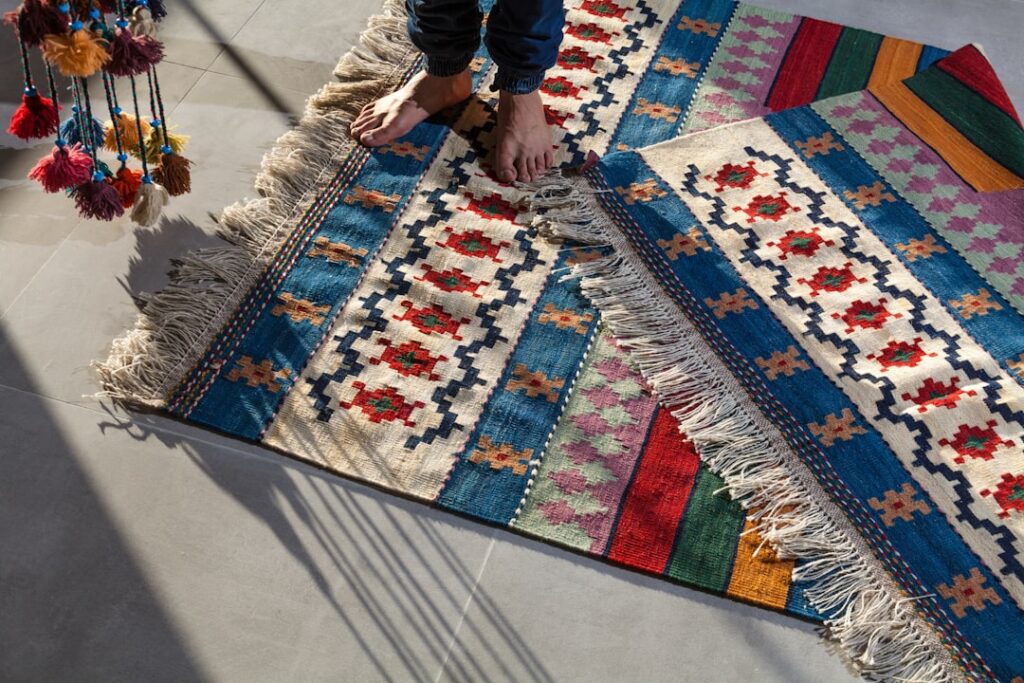
You unroll a brand-new rug, and instead of lying obediently flat, the corners curl up like they’re trying to escape and a wrinkle runs straight down the middle. Learning how to make a rug lay flat is mostly about understanding why it’s fighting you in the first place, memory from being rolled tight in a warehouse, backing that’s stiff from cold, or fibers that need to relax. The good news: nearly every rug will flatten with the right combination of heat, weight, and a little patience. No special tools required.
Why Rugs Curl and Wrinkle in the First Place
Most flatness problems trace back to how the rug was stored and shipped. A rug rolled tightly for weeks or months develops a curved memory in its backing, especially the ends that were on the outside or inside of the roll. Latex and synthetic backings get stiff when cold, so a rug that arrives in winter often curls worse than one delivered in July.
Wrinkles and ripples in a rug that’s been down for a while usually mean something different, foot traffic pushing the rug across a slick floor, or a lack of grip underneath. Diagnosing which problem you have tells you which fix to reach for. Curled corners and end-of-roll waves call for heat and reverse rolling. Persistent middle wrinkles usually call for a rug pad.
Method 1: Reverse Roll the Rug
The fastest fix for a rug fresh out of the box is to counteract the memory directly. Roll the rug in the opposite direction of its curl, so if the corners curl up, you roll it face-out with the curled edges on the outside of the new roll. Secure it loosely with a couple of soft straps or even old socks and leave it for a few hours.
This gentle reverse-flexing relaxes the backing without any heat. It works especially well on wool and cotton rugs that you don’t want to expose to high temperatures. For a stubborn rug, repeat the reverse roll two or three times over a day, rolling a little tighter each pass. It’s slow but completely safe for delicate fibers.
Method 2: Weight It Down
Sometimes the simplest approach wins. Lay the rug flat where you want it, then place heavy, flat objects along the curled edges and over any wrinkles. Stacks of books, filled water jugs, or plywood weighted with paint cans all work. Distribute the weight so pressure lands directly on the problem areas.
Give it time, 24 to 72 hours for a lightly curled rug, up to a week for a thick or heavily rolled one. Rotate the weights to cover different spots if the whole rug needs attention. Placing furniture legs on the corners is a permanent version of this trick and one of the reasons rugs anchored under a sofa or coffee table almost never curl.
Method 3: Apply Gentle Heat
Heat softens stiff backing so it can be reshaped, and it’s the most reliable method for winter-delivered rugs. You have a few safe options depending on what you have on hand:
- Hair dryer: Set it to medium heat, hold it 6 to 12 inches from the curled corner, and warm the backing for 30 to 60 seconds. Then press the corner flat and hold it, or weight it down, until it cools.
- Iron with a towel: Place a damp cotton towel over the wrinkle, set the iron to low or the wool setting, and press for 10 to 15 seconds at a time. Never put a hot iron directly on rug fibers, the towel is what protects them.
- Sunlight: Lay the rug face-down outside on a warm, dry day for a few hours. The sun heats the backing evenly, and you can flip it to flatten the pile side afterward.
Whatever heat source you use, always test a small hidden corner first, and keep the temperature moderate. Synthetic backings can melt or discolor if you get aggressive, and overheating a latex backing can make it brittle. Warm and patient beats hot and fast every time.
Method 4: The Steam Treatment
For deep wrinkles that heat alone won’t budge, steam relaxes the fibers and backing together. Use a garment steamer or the steam function on an iron, held just above the surface without touching it. Pass it slowly over the wrinkle, then immediately smooth the area flat with your hand or a clean towel and weight it while it cools and dries.
Steam works particularly well on wool and cotton, which respond to moisture. Avoid soaking the rug, you want a light misting of steam, not a wet rug that takes days to dry and risks mildew in the backing. After steaming, let the rug air out fully before walking on it heavily.
The Long-Term Fix: A Quality Rug Pad
If your rug keeps wrinkling or sliding no matter what you do, the real problem is what’s underneath. A proper rug pad grips both the floor and the rug backing, preventing the shifting that causes ripples and bunching. It also cushions the rug, extends its life, and protects your flooring from abrasion and dye transfer.
Buy a pad cut about an inch smaller than the rug on all sides so it stays hidden. For hard floors, a felt-and-rubber pad (roughly $30 to $80 for a standard room size) offers the best grip and cushion. On carpet, use a thin, stiff pad designed for carpet-over-carpet. A good pad is the single most effective way to keep a rug flat permanently, most professionals consider it non-negotiable.
Fixing Curled Corners Specifically
Corners are the most stubborn part of any rug because they carry the tightest memory from rolling and get kicked and stepped on the most. If a corner keeps popping up after you’ve flattened the rest of the rug, target it directly. Warm the underside of the corner with a hair dryer for about a minute, fold it slightly backward against the curl, then lay it flat and set a heavy book or a piece of furniture on it overnight.
For a corner that simply won’t stay put, anti-curl corner grippers are the tidy solution. These thin adhesive triangles stick to the rug backing and grip the floor, holding the corner down without damaging the rug or leaving residue like packing tape would. A four-pack runs about $10 to $15 and handles the corners of one rug. In high-traffic doorways where corners catch feet, they’re worth every penny.
How Long Should It Take?
Patience is the ingredient most people skip. A lightly curled synthetic rug will often flatten within 24 to 48 hours of being laid out with weights or reverse-rolled. A thick wool rug that shipped tightly wound in cold weather can take a full week of combined heat, weight, and time to fully relax. Don’t judge your results after a couple of hours, give each method a fair window before deciding it didn’t work or moving to a more aggressive approach.
What to Avoid
A few tempting shortcuts do more harm than good. Don’t fold a rug to store it, folding creates hard creases that are far harder to remove than roll memory, always roll instead. Skip high-heat irons directly on the pile, which can scorch or flatten fibers permanently. And resist yanking or stretching a rug hard to flatten it, because that can tear the backing or distort the weave.
Cheap double-sided carpet tape seems like an easy fix for curled corners, but it can leave sticky residue and pull up fibers when removed. If you want to tack down corners, use rug-specific anti-curl corner grippers designed to peel off cleanly.
The Bottom Line
Figuring out how to make a rug lay flat is really about matching the method to the cause. Fresh-from-the-box curl responds to reverse rolling and gentle heat. Deep wrinkles surrender to steam. And persistent ripples in a rug that’s been down for months almost always mean it’s time for a proper rug pad. Start with the gentlest method, give it time to work, and you’ll have a rug that lies flat and stays that way.