Roughly one in three DIY carpet projects on stairs comes up short, usually because the homeowner forgot to add for the nose of each tread or for matching pattern direction. Learning how to measure carpet for stairs the right way takes about 15 minutes with a tape measure and a calculator, and the math itself is not complicated once you know what to count. The bigger trap is choosing between the waterfall and cap-and-band install methods before you measure, because each style needs a different amount of carpet per step.
Part of our Stairs & Stair Flooring guide — explore the full guide →
Tools and Information You Need First
You only need a few items to get an accurate measurement. A 25-foot tape measure, a pencil and pad, a calculator on your phone, and a flashlight to see the back edges of treads. Beyond the tape work, you also need to know two things about the carpet you intend to buy.
- Carpet roll width, almost always 12 feet, sometimes 13 feet 2 inches or 15 feet
- Pattern repeat, in inches, if your carpet has a visible pattern
Plain solid carpets are simplest. Patterned and Berber carpets need extra material to keep the pattern centered and running the same direction on every step.
Anatomy of a Stair Step
Every step has three measurable parts. The tread is the horizontal surface you step on. The riser is the vertical face that connects one tread to the next. The nose is the rounded front edge of the tread where it overhangs the riser.
A typical residential stair has a 10 to 11 inch tread depth, a 7 to 8 inch riser height, and about a 1 inch nose overhang. That means the total fabric needed to wrap one full step from the back of the upper tread, over the nose, and down to the next tread comes out to roughly 18 to 20 inches per step. Always measure your actual stairs, because older homes can have steps that vary by an inch from top to bottom.
Step-by-Step Measurement Process
Work top to bottom. For each step in your run, follow this measurement sequence.
- Measure the tread depth from the back of the step to the front of the nose, in inches
- Measure the riser height from the top of one tread to the top of the tread below
- Add 2 inches per step for the curve over the nose and tuck under the carpet on the riser below
- Measure the width of the stairs from one wall or stringer to the other
- Repeat for every step or, if all steps match within 1/4 inch, multiply once
Write each measurement down. For a standard 13-step staircase with 10-inch treads, 8-inch risers, and 36-inch widths, your total runner length comes out to roughly 13 times 20 inches, or 260 inches, which is 21 feet 8 inches. Add 10 percent for cuts and fitting and you need a 24-foot run.
Waterfall vs Cap-and-Band Install Methods
These two install methods drive the math differently. Waterfall is the simpler and more common style. The carpet flows over the nose and falls straight down to the next tread with no break. Cap-and-band, also called Hollywood or French cap, wraps the carpet under the nose and pulls it tight against the riser face, creating a tailored look on each step.
Waterfall typically needs 18 to 19 inches of carpet per step. Cap-and-band needs 19 to 21 inches per step because of the additional wrap. If you have not chosen yet, waterfall installs faster, costs less in labor, and works well on standard pile carpets. Cap-and-band looks more custom and is the right call for patterned runners and high-end whole-stair installs.
Calculating Square Yards Needed
Carpet is sold by the square yard, and you need to convert your linear measurements before ordering. Multiply the total runner length in feet by the stair width in feet, then divide by 9.
For our 24-foot length and 3-foot stair width, that is 24 times 3, which equals 72 square feet, divided by 9, which equals 8 square yards. Add 10 percent waste for cuts and pattern match, and you order 9 square yards. At a mid-grade wool blend carpet running 35 dollars per square yard, plus pad and labor, expect a total cost around 700 to 1,000 dollars for a full 13-step run.
Pattern Match and Direction Considerations
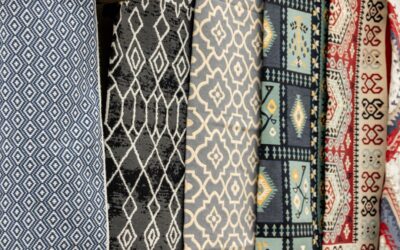
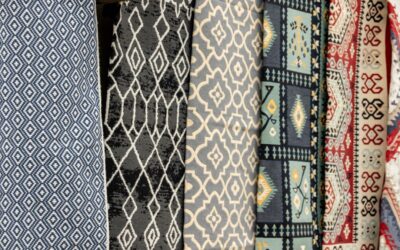
Patterned carpets add complexity. If the pattern repeats every 12 inches, you can use almost every cut piece. If the repeat is 24 or 36 inches, you waste a lot of carpet aligning the design from step to step. Always check the pattern repeat on the manufacturer spec sheet before ordering.
Direction matters too. Cut all step pieces with the pile running the same direction, normally down the stair toward the user. Reversing pile on a single step shows as a color shift even on solid carpets because of how light reflects off the fibers. A 90-degree pile flip on patterned goods is usually visible from 10 feet away.
Landings, Turns, and Pie Steps
L-shaped stairs with a landing add a flat rectangular section. Measure the landing as a separate piece, length times width, and add to your total. For a 36-by-36 inch landing, that is 9 square feet or 1 square yard.
Pie or winder steps that fan around a curve are the hardest to measure. Each winder needs to be measured at its widest point and treated as a trapezoid. Add at least 25 percent waste for winders because you will cut and template each step individually. Most pros template these with poster board first and trace the carpet from the template.
Common Mistakes That Waste Carpet
The four mistakes we see most often on DIY stair measures share a theme: rushing the math. Skipping the 2-inch tuck allowance on every step adds up to 24 to 30 inches on a 13-step run. Forgetting to add for the nose curve leaves the carpet pulled tight and short on the bottom step. Ordering 12-foot-wide roll for a 13-foot run forces a seam mid-stair, which always looks unfinished. And buying exactly the calculated amount with zero waste factor leaves no room for a recut if a piece installs short.
Knowing how to measure carpet for stairs accurately is mostly about counting every fold and curve, picking your install method before you order, and giving yourself a 10 percent safety margin. Walk your stairs with the tape twice, double-check the math, and pick a runner width that matches your stair tread. Get those steps right and your carpet order shows up with enough yardage, no awkward mid-stair seams, and a runner that lays down clean from the first nose to the last riser.