A stray paint splatter on your siding after a trim project can feel like a permanent eyesore, but it rarely is. Knowing how to remove paint from vinyl siding comes down to matching the right method to the type of paint and how long it has been sitting there. Fresh water-based paint often wipes away with soap and water, while dried oil-based paint needs a gentler chemical approach to avoid harming the siding. The key to how to remove paint from vinyl siding safely is starting with the mildest method and escalating only as needed, because aggressive scraping or harsh solvents can permanently mar the vinyl. This guide covers every method from a bucket of soapy water to store-bought removers.
Part of our Paint & Walls guide — explore the full guide →
- Act Fast: Wet Paint Is Easiest
- Method 1: Soap and Water for Fresh Latex
- Method 2: Warm Soapy Water and a Plastic Scraper
- Method 3: Household Solvents for Stubborn Spots
- Method 4: Removing Dried Oil-Based Paint
- Method 5: Store-Bought Vinyl-Safe Removers
- What to Avoid
- Preventing Paint Splatter Next Time
- What to Do After the Paint Is Gone
- Frequently Asked Questions
Act Fast: Wet Paint Is Easiest
Timing is everything. Wet paint that has not yet cured is dramatically easier to remove than dried paint, so if you catch a fresh splatter, deal with it immediately. Grab a damp rag and wipe the paint away before it sets. For water-based (latex or acrylic) paint, plain water and a cloth often do the whole job in seconds.
If the paint has started to tack up but is not fully dry, a squirt of dish soap in warm water and a soft sponge will lift it. The lesson every painter learns: keep a wet rag handy while you work, and check the siding for overspray before you pack up for the day.
Method 1: Soap and Water for Fresh Latex
Start with the gentlest approach, which handles most water-based paint spills.
- Mix a few drops of dish soap into a bucket of warm water.
- Dip a soft cloth or non-abrasive sponge and wet the painted area.
- Rub in a circular motion with light pressure.
- Rinse with clean water and check your progress.
This works best on paint that is still fresh or only recently dried. If the paint budges but does not fully release, let the soapy water soak the spot for several minutes before trying again. Never use steel wool or abrasive scrub pads, which scratch the vinyl’s finish permanently.
Method 2: Warm Soapy Water and a Plastic Scraper
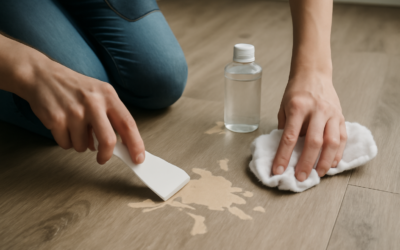
For latex paint that has dried but is not deeply cured, add gentle mechanical help. After soaking the area with warm soapy water for 10 to 15 minutes, use a plastic putty knife or an old credit card to gently lift the softened edges of the paint. Hold the scraper at a low angle and apply light pressure so you slide under the paint rather than gouging the siding. Reapply water as needed to keep the paint soft. Metal scrapers are tempting but risky; the edge digs into vinyl and leaves marks, so stick with plastic.
Method 3: Household Solvents for Stubborn Spots
When soap and water is not enough, several common household products dissolve paint without harming vinyl if used carefully.
- Rubbing alcohol (isopropyl): Effective on dried latex. Dampen a cloth, hold it on the spot to soften the paint, then rub away.
- White vinegar: Warm it slightly, apply with a cloth, let it sit a few minutes, and scrub gently. A mild, siding-safe option.
- Denatured alcohol: Stronger than rubbing alcohol for tough latex spots. Apply to a rag, not directly to the siding.
Always test any solvent on an inconspicuous area first, such as a lower corner behind a bush, to confirm it does not dull or discolor the finish. Work in small sections and rinse thoroughly when done.
Method 4: Removing Dried Oil-Based Paint
Oil-based paint is the toughest to remove and requires more caution because the solvents that dissolve it can also attack vinyl. Avoid harsh strippers containing methylene chloride or strong lacquer thinners, which can melt or warp the siding.
Instead, try a small amount of mineral spirits on a cloth, applied to the paint spot and rubbed gently. Mineral spirits are milder than paint thinner and less likely to damage vinyl, but you must still test first and work quickly, rinsing the area with soapy water immediately after the paint lifts. For a safer commercial option, look for citrus-based or biodegradable paint removers specifically labeled as safe for vinyl and plastic surfaces. These gel-type removers cling to vertical surfaces and give you time to work without dripping.
Method 5: Store-Bought Vinyl-Safe Removers
Several products are formulated specifically for delicate surfaces. Citrus-based removers such as those with d-limonene, along with soy-based gel strippers, break down paint while remaining gentle on vinyl. Apply according to the label, usually brushing on a layer, waiting the specified dwell time, then wiping or gently scraping away the softened paint with a plastic tool. These cost $10 to $25 and are worth it for larger areas or when household methods fall short. Always follow the manufacturer’s instructions and confirm the label states it is safe for vinyl.
What to Avoid
A few mistakes can turn a small paint spot into permanent damage. Never use a pressure washer on a high setting aimed directly at paint; it can drive water behind the siding and does little to remove cured paint. Skip abrasive tools like steel wool, wire brushes, and sandpaper, which scratch the finish. Avoid harsh solvents such as acetone, nail polish remover, lacquer thinner, and methylene chloride strippers, all of which can dissolve or cloud vinyl. Finally, do not work in direct hot sun, which dries solvents too fast and can cause streaking.
Preventing Paint Splatter Next Time
The easiest paint to remove is the paint that never lands on your siding. Before your next exterior project, mask adjacent siding with painter’s tape and drop cloths or plastic sheeting. Cover the ground and shrubs below trim you are painting. On windy days, either postpone spraying or switch to a brush to control overspray. Keep a bucket of soapy water and a rag within reach so any splatter can be wiped before it dries. A little prep saves hours of cleanup.
What to Do After the Paint Is Gone
Once you have lifted the paint, a little finishing care keeps the repair invisible. Rinse the whole area thoroughly with clean water to remove any solvent residue, which can attract dirt or leave a faint film if left behind. Then wash the section with mild soapy water and let it dry.
You may notice the cleaned spot looks slightly different from the surrounding siding, either shinier from solvent contact or cleaner than the weathered panels around it. If so, wash a larger area or the whole wall so the finish blends evenly. For siding that has faded over years, a gentle overall cleaning brings back a more uniform appearance and hides the fact that anything happened. Inspect the spot in different light to confirm no ghost of the paint remains before calling it done.
Frequently Asked Questions
Does paint come off vinyl siding easily? Fresh water-based paint often wipes off with soap and water. Dried and oil-based paints are harder and may need rubbing alcohol, mineral spirits, or a vinyl-safe commercial remover, always starting with the gentlest method.
Can I use a pressure washer to remove paint from siding? A pressure washer on a low, wide setting can help rinse loosened paint, but high pressure can force water behind the siding and rarely removes cured paint. It is not a substitute for the right solvent.
Will paint thinner damage vinyl siding? Strong paint thinners and lacquer thinners can dissolve or warp vinyl. Use milder mineral spirits sparingly and test first, or choose a citrus- or soy-based remover labeled safe for vinyl.
How do I remove dried latex paint from vinyl? Soak the spot in warm soapy water, then gently lift it with a plastic scraper. For stubborn latex, apply rubbing alcohol or denatured alcohol on a cloth to soften the paint before wiping it away.
Is it safe to scrape paint off vinyl siding? Only with a plastic scraper or old credit card held at a low angle. Metal scrapers and abrasive tools gouge and scratch vinyl permanently, so avoid them.
Knowing how to remove paint from vinyl siding is mostly about patience and picking the right method. Start with soap and water, escalate to rubbing alcohol or vinegar for dried latex, and reach for mineral spirits or a vinyl-safe commercial remover for oil-based paint. Always test in a hidden spot, avoid harsh solvents and abrasive tools, and your siding will come clean without a trace of the mishap.