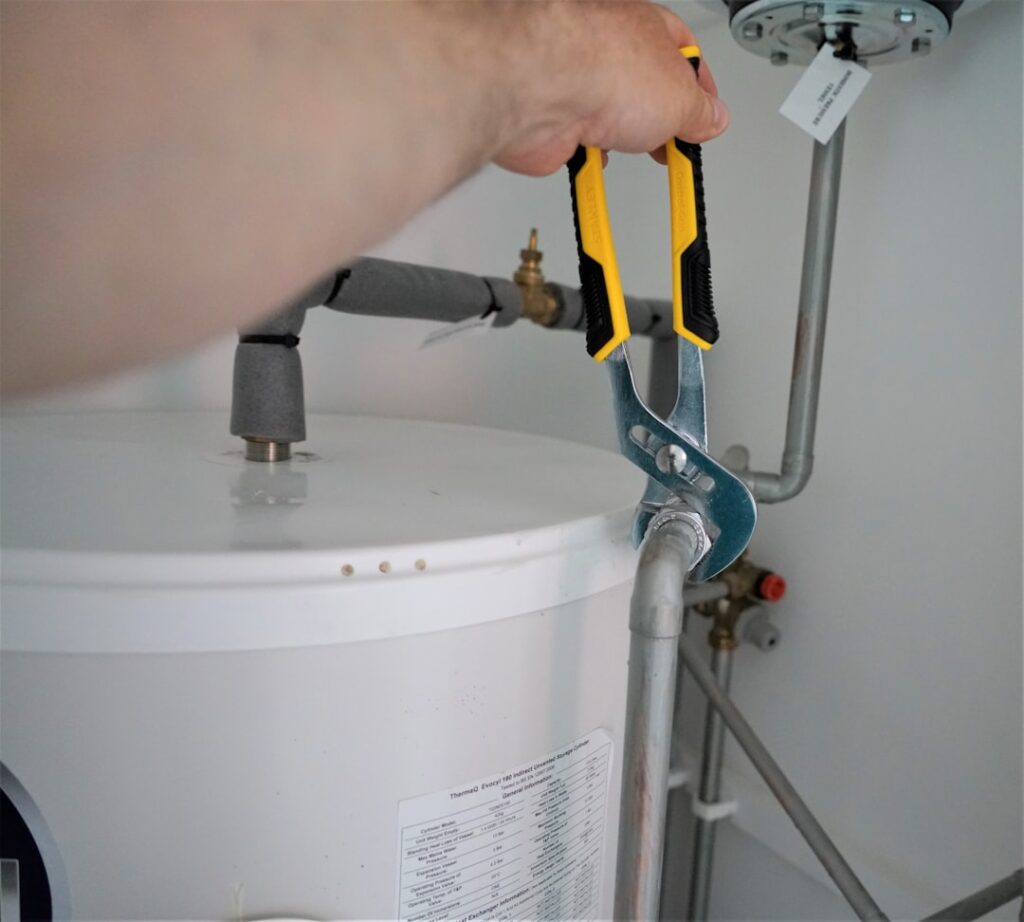
The single cheapest thing you can do to double the life of a water heater costs about $30 and an hour of your time, yet almost nobody does it. Knowing how to replace anode rod in water heater is the maintenance secret that separates tanks that last 6 years from tanks that last 15. Learning how to replace anode rod in water heater means understanding a simple piece of sacrificial metal that rusts so your tank does not.
Why Replacing the Anode Rod Matters
Inside every tank-style water heater is a long metal rod, usually magnesium or aluminum, threaded into the top. Through a process called galvanic corrosion, this rod attracts the corrosive elements in your water and dissolves in place of the steel tank walls. That is why it is called a sacrificial anode. As long as the rod has metal left, the tank stays protected.
The problem is that most rods are fully consumed in three to five years, and once they are gone, the tank itself starts to rust from the inside. By the time you see a rusty puddle on the floor, it is too late. Checking and swapping the rod before it disappears is the difference between a quick chore and a $1,500 replacement heater.
Tools and Parts You Will Need
Gather everything before you start so you are not running to the store mid-job with a half-drained tank. You will need:
- A new anode rod ($20 to $40) matched to your water chemistry
- A 1-1/16-inch socket, the standard hex size for the rod head
- A 1/2-inch breaker bar or long-handled ratchet for leverage
- An impact wrench if you have one, which makes breaking the torque far easier
- Teflon tape or pipe-joint compound for the new threads
- A garden hose and adjustable pliers
- Possibly a helper to hold the tank steady
If ceiling clearance above the tank is under 44 inches, buy a segmented or flexible anode rod that bends as it goes in. A standard rigid rod is about 42 inches long and will not clear a low basement joist.
Choosing the Right Replacement Rod
The metal you pick depends on your water. Magnesium rods offer the strongest protection and are the default for most municipal water, but they corrode fast in soft or acidic water and can produce a rotten-egg sulfur smell if bacteria react with them. Aluminum rods last longer in hard water and resist the odor, though aluminum byproducts settle as sediment.
If you battle a sulfur smell from the hot tap, switch to a powered or aluminum-zinc rod, which resists the reaction. For a water softener, aluminum-zinc is the common recommendation because softened water is aggressive toward magnesium. When in doubt, magnesium is the safe general-purpose choice and gives the best corrosion protection.
Step-by-Step Replacement
Work methodically and safety comes first. Here is the full sequence:
- Cut the power. For an electric heater, flip the breaker off. For gas, turn the control knob to “Pilot” or “Off.”
- Shut the cold water supply valve on top of the tank.
- Relieve pressure. Open a hot faucet in the house, then drain 2 to 3 gallons from the tank’s bottom drain valve into a bucket or through a hose. You do not need to empty the whole tank, just lower the level below the rod port.
- Locate the rod. It sits under a hex head on top of the tank or under the hot-water outlet on combo units. You may need to peel back insulation.
- Break the torque. Fit the 1-1/16-inch socket and breaker bar. Rods are often torqued to well over 100 foot-pounds and can seize with age. Brace the tank so it does not spin, and consider a helper. An impact wrench is the easiest route here.
- Pull the old rod out. Lift it straight up. If it is heavily corroded down to a bare steel core wire, you replaced it just in time.
- Wrap the new rod threads with three or four turns of Teflon tape or a smear of pipe dope.
- Thread it in by hand first to avoid cross-threading, then tighten firmly with the socket, snug but not gorilla-tight.
Refilling and Testing
Close the drain valve and reopen the cold supply. Leave that hot faucet open upstairs; when water runs steady and air stops sputtering, the tank is full. Only then restore power or relight the gas burner, running an empty electric element with no water will destroy it in seconds.
Walk around the top of the tank and check the rod port for any weeping. A slight drip means you need another quarter-turn or fresh tape. Give the water 30 to 60 minutes to reheat, then check the hot tap. You are done, and you just added years to the tank.
How Often to Check the Rod
Inspect the rod every two to three years on typical municipal water, and annually if you have a softener, well water, or high mineral content. Replace it once more than 6 inches of the core steel wire shows, when the rod is under 1/2 inch thick, or when it is coated in a crusty calcium buildup. A rod that comes out looking nearly new means you can wait longer before the next check.
Homes with water softeners burn through anodes fastest, sometimes in as little as one to two years, because sodium accelerates the galvanic reaction. If yours disappears quickly, an aluminum-zinc or electrically powered anode, which uses a small current instead of sacrificial metal, is a set-and-forget upgrade at around $60 to $150.
Solving a Seized or Stubborn Rod
The single hardest part of this job is breaking a rod loose that has been torqued down and left for a decade. If your breaker bar just spins the whole tank, you need to stop the tank from rotating. Have a helper hold it steady, or wedge the tank against a wall or a length of 2×4 braced to a joist. For serious cases, apply penetrating oil to the threads and let it sit, or gently warm the area around the fitting with a heat gun to break the thread bond, never an open flame near a gas heater.
An impact wrench is the real answer here; its hammering action breaks stuck fittings that a steady pull never will. If you own or can borrow a 1/2-inch impact driver, it turns a frustrating hour into a five-second job. When the rod still will not budge and you fear damaging the tank, that is the point to call a plumber, because cracking the tank fitting turns a $30 fix into a replacement. Do not overtighten the new rod on the way in; snug plus a quarter turn is plenty and keeps the next replacement from becoming this same fight.
Combination Anodes for Low-Clearance Tanks
Some water heaters, especially in basements and closets with joists close overhead, do not have the roughly 44 inches of clearance a rigid rod needs to pull straight out. You have two options. A flexible or segmented rod is jointed so it bends as it enters and exits, fitting into as little as a couple feet of clearance. These cost a few dollars more and are the standard solution for tight installs.
The second option is a combination or combo anode rod, which threads into the hot-water outlet port on top of the tank rather than a separate dedicated port. Many heaters, particularly in mobile homes and compact installations, use this design and have no separate anode port at all, so the combo rod is the only rod present. Replacing it means disconnecting the hot-water line first. Check your specific model before buying, since ordering a standard rigid rod for a low-clearance or combo-only tank guarantees a wasted trip and a second purchase.
Signs Your Anode Rod Needs Attention
You do not have to guess when the rod is due. A few symptoms point straight to a depleted anode. The classic warning is a rotten-egg or sulfur smell coming only from the hot water, caused by bacteria reacting with a corroding magnesium rod; switching to an aluminum-zinc rod usually clears it. Rusty or discolored hot water is another red flag, meaning the rod is gone and the tank steel itself has started to corrode.
Age alone is reason enough to check. If your water heater is more than three or four years old and you have never inspected the rod, pull it and look. A rod worn down to the bare steel core wire, coated in heavy calcium scale, or reduced to less than half an inch thick is overdue for replacement. Catching it at this stage, before the tank walls begin to rust, is exactly how you turn a $30 part into a decade of extra service. Set a reminder to inspect every two to three years, and this small habit will quietly protect one of the most expensive appliances in the house.
The Payoff
A water heater is one of the few appliances whose lifespan is genuinely in your hands. Manufacturers know most owners never touch the anode, which is why tanks are engineered to just outlast the warranty. Spend $30 and an hour every few years, and you can push a 6-year tank to 12 or 15. Compared with the cost, mess, and disruption of a full replacement, this is the highest-return maintenance task in the whole house, and now you know exactly how to do it.