A dust mop is the fastest, gentlest way to clear dust, hair, and grit off hard floors, but most people sabotage it by mopping like they would with a broom. Knowing how to use a dust mop properly means the dust ends up in the trash, not floating back into the air or scattered into corners. The single most important rule is this: keep the mop head flat on the floor and never lift it until you are done.
This guide covers the right technique, the figure-8 and straight-pass methods, how to treat and clean your dust mop pad, and when a dust mop beats a vacuum or wet mop.
- What a Dust Mop Does Best
- Before You Start: Prep the Mop
- The Core Technique: Keep It on the Floor
- Figure-8 vs. Straight Passes
- Working Around Furniture and Edges
- Finishing Up: Collect the Dust
- Choosing the Right Dust Mop
- Mistakes That Undo Your Work
- Cleaning and Maintaining the Pad
- Dust Mop vs. Other Tools
What a Dust Mop Does Best
A dust mop uses a wide, flat head of microfiber or cotton strands to trap fine debris through gentle contact and a slight static cling. It excels on hard surfaces, hardwood, laminate, vinyl, tile, and sealed concrete, where it lifts the dust a broom would just push around and scatter. It is also far quieter and faster than a vacuum for a daily once-over, and it will not scratch a delicate finish the way stiff bristles can.
Before You Start: Prep the Mop
A few seconds of prep makes a big difference in how much dust you actually capture.
- Shake out a used pad outdoors or over a trash can so it starts clean.
- Consider a dust mop treatment for cotton heads. A light spray of dust mop treatment spray helps the strands grab and hold fine particles. Use it sparingly and let it sit a few minutes before mopping.
- Microfiber heads usually need no treatment, since the fibers attract dust on their own. A lightly dampened microfiber pad picks up even more on smooth floors.
The Core Technique: Keep It on the Floor
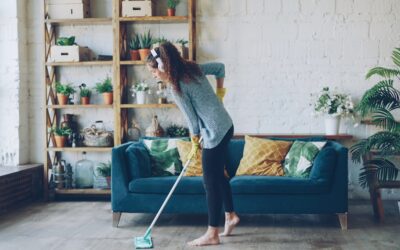
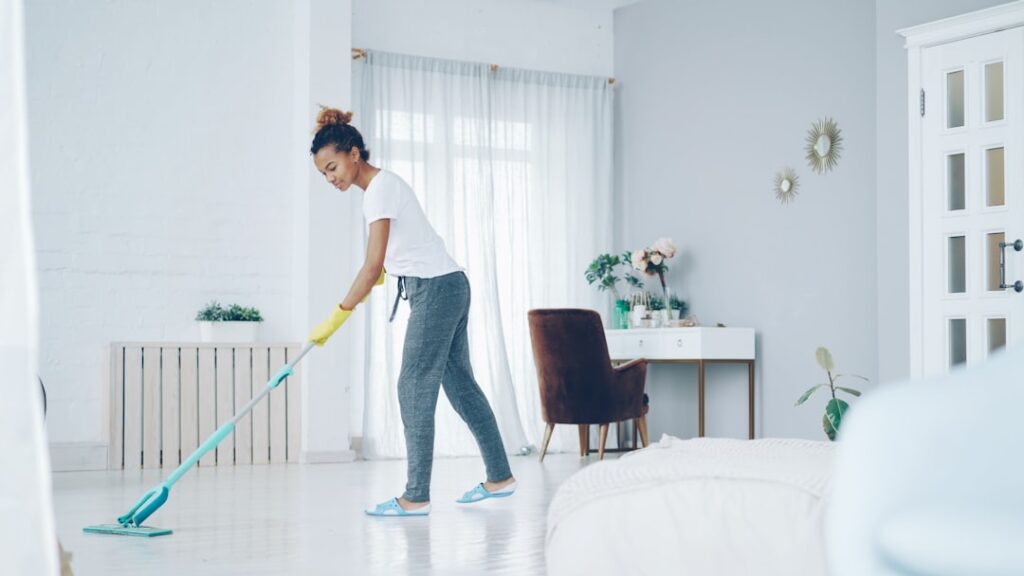
The cardinal rule of dust mopping is to never lift the head off the floor mid-pass. Lifting throws the collected dust back into the air and onto the floor you just cleaned. Instead, glide the mop in continuous, overlapping strokes, letting the dust gather along the leading edge of the head.
Push the mop slowly and steadily. Speed scatters debris; a measured pace lets the fibers do their job. Overlap each pass by a few inches so you do not leave untouched strips between strokes.
Figure-8 vs. Straight Passes
There are two proven patterns, and the right one depends on your space.
- Straight passes: best for open floors and along walls. Work in straight, slightly overlapping lines from one side of the room to the other, always pushing the dust ahead of you. Start at the far end and work toward the door.
- Figure-8 motion: ideal for larger open areas. Sweep the mop in a smooth, looping figure-8 without lifting it, which keeps the same edge gathering debris and covers ground quickly. This is the classic technique used by janitors in big spaces.
Whichever pattern you use, drive the dust toward a central pile or one corner. Then scoop it up with a dustpan or vacuum, never by lifting the mop and shaking it indoors.
Working Around Furniture and Edges
Use the flat profile of the dust mop head to slide under beds, sofas, and low cabinets where dust loves to gather. Tilt the handle low to reach far back, then pull the debris out toward open floor. For corners and baseboards, angle a corner of the mop head into the edge. A swivel-head dust mop makes these maneuvers much easier than a fixed head.
Finishing Up: Collect the Dust
Once you have gathered everything into a pile, hold the mop in place and sweep the pile into a dustpan with a small hand broom, or run a vacuum over it. Resist the urge to flick the mop head, which just relaunches the dust. Only after the floor is clear should you take the mop outside to shake it out fully.
Choosing the Right Dust Mop
The mop itself affects how well the technique works. A few features make a real difference for hard floors.
- Microfiber heads grab fine dust through static cling and wash easily, making them the top choice for most homes.
- Cotton heads hold more debris and respond well to dust-mop treatment, a good pick for large areas.
- A swivel head lets you maneuver around furniture legs and into corners without lifting the mop.
- An adjustable, lightweight handle saves your back on big floors and helps you reach under low furniture.
- Width matters: wider heads cover open floors faster, while a narrower head is easier in tight rooms.
Mistakes That Undo Your Work
Even with the right mop, a few common habits sabotage the results. The biggest is lifting the head mid-pass, which broadcasts the dust you just gathered back across the room. Pushing too fast is nearly as bad, since speed launches debris into the air instead of trapping it in the fibers. Using a dirty, overloaded pad just smears dust around and leaves streaks, so shake or wash it before it gets saturated. Finally, dust mopping a floor that is genuinely sticky or gritty with large debris is a job for a vacuum or wet mop first; the dust mop is for fine, loose dust, not caked-on mess. Avoid these and your daily pass stays quick and genuinely effective.
Cleaning and Maintaining the Pad
A dust mop only works if the pad is clean, because a saturated head simply smears dust around.
- Shake or vacuum the head after every use to remove loose debris.
- Machine wash removable pads as the maker directs, usually in warm water with mild detergent. Skip fabric softener, which coats fibers and kills their dust-grabbing ability.
- Air dry the pad rather than using high heat, which can damage microfiber.
- Replace the head when it stops picking up well or looks matted, typically after many washes.
Dust Mop vs. Other Tools
Reach for a dust mop for quick, frequent passes on hard floors between deeper cleanings. Use a vacuum when you need to pull debris out of grout lines, rugs, or heavy traffic areas. Bring out a wet or damp mop only after dust mopping, since wet-mopping a dusty floor just turns the grit into muddy streaks. A smart routine is to dust mop first to clear loose debris, then damp mop to handle sticky spots and finish the shine.
Used with the right technique, a dust mop keeps hard floors looking clean with minimal effort and zero scratching. Keep the head down, work in overlapping figure-8 or straight passes, gather the dust into a pile, and wash the pad regularly. Do that and a two-minute pass each day will keep your floors looking freshly cleaned.