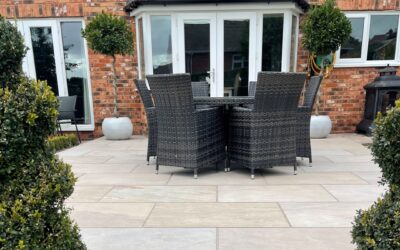
A big patio with a small rug looks like a postage stamp in a parking lot. If you’ve built out a real outdoor living room — a full sectional, a dining set, or both — you need a rug scaled to match, and that means going bigger than most stores put on the front display. A huge outdoor rug ties a large deck or patio together the way a properly sized rug anchors an indoor room, defining the space and making expensive furniture look grounded instead of scattered. But oversized outdoor rugs come with their own rules on material, drainage, and anchoring that a small doormat never has to worry about.
Part of our Windows & Doors guide — explore the full guide →
This guide covers what counts as “huge,” the real dimensions to shop for, which weatherproof materials survive sun and rain at scale, and how to keep a giant rug flat and mildew-free.
What Counts as a Huge Outdoor Rug
In outdoor rugs, “large” usually starts around 8 x 10 ft. A huge outdoor rug means the oversized tier — 9 x 12 ft and up, running to 10 x 14, 12 x 15, and even custom 12 x 18 or larger for sprawling patios and event spaces. At this scale the rug isn’t an accent; it becomes the floor of your outdoor room, and it needs to cover enough ground that the furniture sits on it, not around it.
Standard Huge Outdoor Rug Sizes
Match the rug to the furniture group, not the total patio. These are the oversized sizes to shop and what each one fits:
- 9 x 12 ft: A large sectional or a six-seat dining set. Roughly 108 sq ft. $120 to $350.
- 10 x 13 / 10 x 14 ft: A full outdoor living room with sofa, two chairs, and a coffee table. $200 to $500.
- 12 x 15 ft: A combined lounge-and-dine layout or an eight-seat table. $350 to $800.
- 12 x 18 ft and custom: Sprawling patios, poolside cabanas, and event tents. $600 and up, often made to order.
For a dining set, size the rug so chairs stay on it when pulled out — add at least 24 inches of rug beyond each edge of the table. A 72-inch outdoor table needs a rug at least 10 feet in that direction. For a seating group, aim to get at least the front legs of every piece on the rug, with 6 to 12 inches of border showing around the arrangement.
Best Materials for Oversized Outdoor Rugs
Polypropylene (Olefin)
This is the dominant material for outdoor rugs, and for good reason: it’s mold-resistant, fade-resistant, fast-drying, and cheap enough to buy in huge sizes. Most flatwoven “reversible” outdoor rugs are polypropylene, and they hose off in minutes. For a big patio that gets full sun and afternoon storms, this is the safe default. Look for UV-stabilized versions that resist fading for five-plus years.
PET / Recycled Plastic
Rugs woven from recycled PET (soda bottles) feel softer than olefin, resist stains, and dry quickly. They cost a bit more but hold up well in huge sizes and come in richer patterns. A good pick if you want indoor-outdoor comfort underfoot.
Polyester
Softer and more vivid in color, polyester outdoor rugs feel more like an indoor rug, which suits a covered porch. Uncovered, they fade faster than olefin, so keep them out of relentless direct sun.
Natural Fibers
Skip jute and sisal for a truly outdoor spot — they soak up water and rot. They only work under a fully covered, dry porch, and even then a synthetic is the smarter huge-size buy.
Drainage, Airflow, and Mildew
The single biggest reason a huge outdoor rug fails is trapped moisture. A giant rug covers a lot of surface, and if water can’t escape, mildew grows between the rug and the deck, staining both. Protect against it:
- Choose an open, flatwoven rug over a plush pile. Flat weaves let water drain through and dry fast; deep pile holds it.
- Use an outdoor-rated rug pad with an open, waffle-style weave that lifts the rug slightly and lets air move underneath. Never use a solid indoor pad outside — it traps water.
- Lift the rug periodically after heavy rain so both the rug back and the deck can dry.
- Position for airflow. On grass or gravel, a huge rug can smother and kill the surface beneath it and stay damp; a hard, well-drained patio or deck is a far better base.
Anchoring a Huge Outdoor Rug in the Wind
The bigger the rug, the more the wind wants to lift it. A gust can flip a 12 x 15 rug like a bedsheet. Anchor it:
- Let the furniture hold it down. The main advantage of huge sizing is that heavy sofas and tables sit on the rug and pin it in place. Position furniture legs on the rug wherever possible.
- Use an outdoor gripper pad, which adds friction against a smooth deck or concrete.
- Add rug stakes or weights at exposed corners in windy locations — landscape staples work through a flatweave rug into grass, and decorative corner weights work on a hard patio.
- Roll it up in storm season. For a big rug, storing it during extended bad weather or over winter dramatically extends its life.
Cleaning a Giant Outdoor Rug
The upside of synthetic outdoor rugs is that cleaning is genuinely easy, even at huge sizes:
- Shake or sweep off debris regularly so grit and leaves don’t grind into the weave.
- Hose it down for routine cleaning. For a deeper clean, use a soft brush with mild dish soap and water, then rinse thoroughly.
- Treat mildew with a solution of one cup white vinegar per gallon of water; scrub, rinse, and dry fully. Avoid bleach on colored rugs.
- Dry flat in the sun before rolling it back onto the deck — never store or replace a huge rug while it’s still damp.
Styling a Large Patio with a Huge Rug
A huge outdoor rug is the visual foundation, so let it set the palette. A bold geometric or striped pattern brings energy to a plain concrete patio, while a neutral solid or tonal weave lets colorful cushions and plants be the stars. Because the rug is so large, a busy print can overwhelm — when in doubt, a large-scale simple pattern reads better across 100-plus square feet than a small, fussy one. Repeat one color from the rug in your throw pillows or planters to tie the whole outdoor room together.
Budgeting for the Oversized Sizes
Price climbs fast once you cross into huge dimensions, so know where the money goes. A basic flatwoven polypropylene rug in 9 x 12 can run as little as $120, but a UV-stabilized version with a tighter weave and richer pattern in 12 x 15 easily hits $500 to $800. The premium buys you three things that matter outdoors: better fade resistance so the pattern survives full sun, a denser weave that resists fraying at the edges, and often a recycled-PET blend that feels softer underfoot. For a covered porch out of direct weather, you can spend less; for a fully exposed patio that bakes all afternoon, the UV-stabilized upgrade pays for itself by lasting twice as long.
Factor in the extras, too. An outdoor rug pad sized for a huge rug adds $40 to $100, and corner weights or stakes are another $15 to $30 — small costs that protect a much larger investment from wind damage and slipping.
Final Thoughts
A huge outdoor rug is what separates a patio that feels finished from one that feels like scattered furniture on bare concrete. Size it to your furniture group with the legs on the rug, choose UV-stabilized polypropylene or recycled PET for weatherproof durability, use an open outdoor pad for drainage and grip, and anchor the corners against wind. Keep it swept, hosed, and dried, and store it through the worst weather. Do that, and an oversized outdoor rug will anchor your outdoor living space beautifully for many seasons.