An empty patio always looks like unfinished furniture waiting for a floor — and that floor is usually a rug you didn’t realize you needed. An outdoor rug 10×12 is one of the most popular sizes for exactly that reason: at 120 square feet, it’s large enough to define a full dining or lounge zone on a deck or patio without swallowing a small yard. This guide covers the true dimensions, the layouts a 10×12 fits, the materials that survive sun and rain, and how to keep one looking good through a full season outdoors.
Part of our Windows & Doors guide — explore the full guide →
Exact Dimensions of a 10×12 Outdoor Rug
A 10×12 rug measures 10 feet by 12 feet, which is 120 inches by 144 inches, covering 120 square feet of floor. It’s a rectangle, so orient the 12-foot length along the longer axis of your space. For reference, that’s noticeably bigger than the common 8×10 (80 square feet) and a step below the large 9×12 and 12×15 sizes. The 10×12 hits a practical middle ground for medium to large patios, decks, and covered porches.
Before buying, measure your usable outdoor area and subtract a border. You generally want 12 to 24 inches of hard surface visible around the rug so it frames the seating rather than running wall to wall like carpet.
What Fits on an Outdoor Rug 10×12
The 120-square-foot footprint is built for full furniture groupings, not just a single bench. Here’s what it comfortably holds:
- Outdoor dining sets for 6 to 8: a rectangular table up to about 72 inches long with chairs on all sides. Aim to keep chairs on the rug even when pulled out — leave at least 24 inches of rug past the table edge.
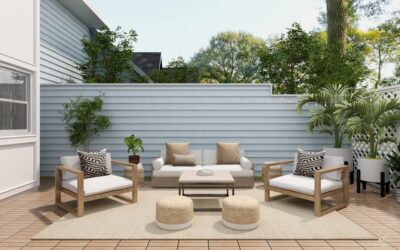
- Full lounge groupings: a sofa, two chairs, and a coffee table, with front legs of all pieces resting on the rug to tie the arrangement together.
- Sectionals: an outdoor L-shaped sectional plus a cocktail table, with the rug extending past the front edge of the seat cushions.
The two placement schools both work outdoors: “all legs on” for a plush, grounded look when you have the room, or “front legs on” to stretch coverage across a larger conversation area. For a dining set, all four legs of every chair should stay on the rug through the full pull-out motion so they don’t catch and tip.
Best Materials for Outdoor Rugs
Outdoor rugs live under UV, rain, pollen, and foot grit, so material is the whole ballgame. The winners are all synthetic.
Polypropylene (Olefin)
The dominant choice, and for good reason. Polypropylene is mold- and mildew-resistant, dries fast, sheds water, and resists fading. Most flatwoven outdoor rugs use it. A 10×12 typically runs $80 to $200 depending on brand and weave. It’s the safe default for uncovered patios.
Polyester and PET
Recycled-PET rugs (made from plastic bottles) feel softer underfoot and hold color well, making them popular for lounge areas where you’ll be barefoot. Expect $100 to $250 for a 10×12. They handle moisture well but can be slightly less abrasion-resistant than polypropylene in heavy traffic.
What to Avoid Outdoors
Natural jute, sisal, and wool are beautiful but wrong for open-air use — they absorb water, grow mildew, and rot. Reserve those for covered, dry porches only, and even then expect a shorter life.
Drainage, Backing, and Airflow
The single most important outdoor-rug feature is that water passes through and air moves underneath. Look for a flatweave with an open reverse (reversible rugs are ideal) rather than a rubber-backed rug that traps moisture against your deck. Trapped water discolors wood decking and stains concrete, and it turns the underside of the rug into a mildew farm.
- Choose a reversible flatweave or a rug labeled “quick-dry” and “breathable.”
- Skip solid rubber backing on wood decks; if you need grip, use an open-weave outdoor rug pad that still lets water and air pass.
- Lift and hang the rug periodically so the deck underneath dries out, especially after heavy rain.
Cleaning and Care
Outdoor rugs are refreshingly low-maintenance if you stay ahead of debris. A simple routine keeps a 10×12 looking new for years:
- Shake or sweep off leaves and grit weekly — accumulated organic matter is what actually breeds mildew.
- Hose it down as needed. For stains, scrub with a mild dish soap and water solution using a soft brush.
- Rinse thoroughly and hang over a railing or two chairs to drip-dry. Never store it rolled up while damp.
- For mildew spots, a solution of one part white vinegar to three parts water knocks them out without harsh bleach.
- At season’s end, clean, fully dry, roll (don’t fold, which creases the weave), and store somewhere dry.
Is 10×12 the Right Size for Your Space?
Before committing to 120 square feet, sanity-check the fit against the sizes just above and below it. An 8×10 (80 square feet) suits a four-seat bistro set or a compact conversation pair, and it’s the better call for balconies and small courtyards where a 10×12 would leave no border at all. Step up to a 9×12 (108 square feet) if your space is narrower but still long. Go to a 12×15 (180 square feet) only for expansive decks and pool patios hosting oversized sectionals or two separate zones.
A quick way to decide: tape out a 10-by-12-foot rectangle on your patio with painter’s tape and set your furniture inside it. If chairs pull out and stay on the tape and you still see hard surface around the perimeter, the 10×12 is your size. If chairs spill off the edge, size up; if the border swallows the rug, size down.
Anchoring Against Wind and Weather
A large outdoor rug behaves like a sail, and a gusty afternoon will fold a loose 10×12 over on itself or send a corner flapping. Beyond weighting the corners with furniture legs, consider a few reinforcements on exposed sites. Landscape staples or ground pins work on rugs laid over grass or soil. On hard decks and concrete, an open-weave outdoor rug pad adds friction while still letting water drain. For persistent wind, some homeowners tuck small, discreet corner weights — flat sandbags or decorative stone — under the edges. The goal is a rug that lies flat and stays put without trapping moisture underneath.
Placement Tips for a Polished Patio
A large rug can either anchor a space or make it feel cramped, and the difference is in the setup. Center the rug under the primary furniture grouping, not the geometric center of the patio, so the seating reads as a defined “room.” Keep the rug edges clear of high-traffic paths to doors so it doesn’t buckle from constant off-center steps. On windy sites, weight the corners with heavy furniture legs or add a low-profile outdoor rug pad — a 120-square-foot rug catches wind like a sail if it’s loose. Finally, allow that 12 to 24 inches of visible hard surface around the perimeter; a rug crammed edge to edge looks like a mistake, while a framed one looks designed.
Final Thoughts
An outdoor rug 10×12 is the right call when you’re furnishing a real outdoor room — a six-to-eight-seat dining set or a full lounge grouping on a medium-to-large patio or deck. Stick with polypropylene or PET for durability, prioritize a breathable flatweave that drains and dries, and keep debris swept off so mildew never gets a foothold. Measure for a 12- to 24-inch border, anchor the rug under your furniture, and 120 square feet of easy-care floor will make the whole space feel finished.