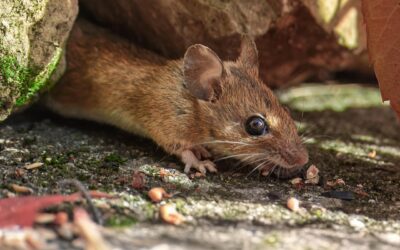
If you are thinking “I accidentally vacuumed mouse droppings” after spotting dark grain-sized pellets on your basement floor, the first thing to know is that panic is not required — but action is. The CDC has warned for decades that vacuuming or sweeping dried rodent droppings can aerosolize hantavirus particles, which cause Hantavirus Pulmonary Syndrome (HPS). In reality, the risk depends heavily on which mouse species, your region, and how much material you disturbed. This guide walks through the actual risk, immediate cleanup, and when a doctor visit makes sense.
Understand the Real Risk
Hantavirus is carried primarily by the deer mouse (Peromyscus maniculatus), white-footed mouse, cotton rat, and rice rat. The common house mouse (Mus musculus) — the gray-brown mouse in most urban homes — does not transmit hantavirus. Deer mice live in rural, wooded, and semi-rural areas across most of the US but especially the Western states, Midwest, and parts of New England.
- House mouse droppings (urban): Salmonella, hantavirus-free — still unsanitary but low respiratory risk
- Deer mouse droppings (rural/suburban): Potential hantavirus risk, requires CDC protocol
- Rat droppings: Leptospirosis and other pathogens, not hantavirus from common species
Total US hantavirus cases average only 30-50 per year, but the mortality rate is roughly 38%. Low probability, high severity — worth taking seriously without spiraling into fear.
Immediate Steps After You Vacuum
Do these within the first hour:
- Leave the room. Open windows if possible and air out for 30 minutes before returning. Aerosolized particles settle.
- Do not touch the vacuum bag or bin yet. Do not shake it, do not empty it into a trash can in the room.
- Wash your hands and forearms with soap and water for 20+ seconds.
- Change clothes and launder them hot (130°F minimum) if you suspect contamination.
- Put on an N95 respirator and disposable nitrile gloves before handling the vacuum.
Most importantly — do not re-vacuum the area. Switch to the wet cleanup method described below.
How to Decontaminate the Vacuum
Whether you keep or replace the vacuum depends on the type and how much material got pulled in.
- Bagged upright or canister: Best case. Seal the bag inside two heavy-duty plastic bags (double-bagged), spray a 1:10 bleach solution onto the outside of the first bag before sealing, and dispose of in outdoor trash. Wipe the vacuum interior and exterior with bleach solution. Replace any pre-motor filter.
- Bagless canister (Dyson, Shark, etc.): Higher risk. Take the vacuum outside, wear an N95 and gloves, and empty the bin directly into a sealed double-bag. Wash the bin, filters, and cyclone assembly with hot soapy water, then soak in 1:10 bleach solution for 10 minutes. Air-dry fully before reassembly. Replace the HEPA filter.
- HEPA vacuum: HEPA filtration traps particles down to 0.3 microns — significantly safer for this scenario. Still disinfect the bin and filter.
- Shop vac: Same as bagless — thorough bleach treatment plus filter replacement.
If you cannot confidently decontaminate the vacuum and you live in a hantavirus-endemic area, replace it. A $200 replacement is cheaper than lung damage.
CDC-Approved Wet Cleanup Method
The correct way to clean rodent droppings is the opposite of vacuuming or sweeping. Use the wet method to suppress aerosol formation:
- Ventilate the room for at least 30 minutes before cleaning.
- Wear a fitted N95, nitrile gloves, and ideally disposable shoe covers.
- Mix 1 part household bleach to 10 parts water (1.5 cups bleach per gallon) — or use a commercial disinfectant labeled for hantavirus.
- Spray the droppings thoroughly until saturated. Let sit 5 minutes.
- Pick up the soaked material with paper towels. Do not sweep or vacuum.
- Place paper towels and droppings in a sealed plastic bag, then into a second bag.
- Spray the contaminated surface again and wipe down. Wipe surrounding hard surfaces within 6 feet.
- Mop floors with bleach solution.
- Remove gloves last, wash hands, and launder clothes hot.
Symptoms to Watch For
HPS symptoms appear 1 to 8 weeks after exposure. Early symptoms mimic flu:
- Fever, chills, muscle aches (especially in thighs, hips, back)
- Headache, fatigue, dizziness
- Nausea, vomiting, abdominal pain
After 4-10 days, late-stage symptoms can include shortness of breath, coughing, and chest tightness. This is a medical emergency — go to an ER immediately and tell them about the rodent exposure. Early antiviral treatment and ICU support significantly improve survival.
When to See a Doctor
Call your physician right away (not urgent care) if:
- You live in or visited a rural/semi-rural area with deer mouse populations
- You disturbed a large quantity of droppings (more than a teaspoon)
- You were not wearing an N95 during the incident
- Any flu-like symptoms develop within 8 weeks
For urban apartments with house mice and small amounts of droppings, medical follow-up is generally unnecessary — basic hygiene and monitoring are sufficient.
Prevent a Repeat
Seal entry points and eliminate the mouse population:
- Seal holes larger than 1/4 inch with steel wool and caulk
- Store pet food and bird seed in sealed metal containers
- Set snap traps along walls — more effective than glue traps
- Consider ultrasonic deterrents as secondary, not primary, control
- Schedule an annual pest inspection if you live in a rural area
Bottom Line
Accidentally vacuuming mouse droppings is usually not a medical emergency, especially in urban homes with house mice. Ventilate the area, decontaminate or replace the vacuum using the steps above, and switch to the CDC wet-cleanup protocol for any remaining droppings. Monitor yourself for flu-like symptoms for 8 weeks and call a doctor immediately if any appear. Then fix the mouse problem at its source so it never happens again.