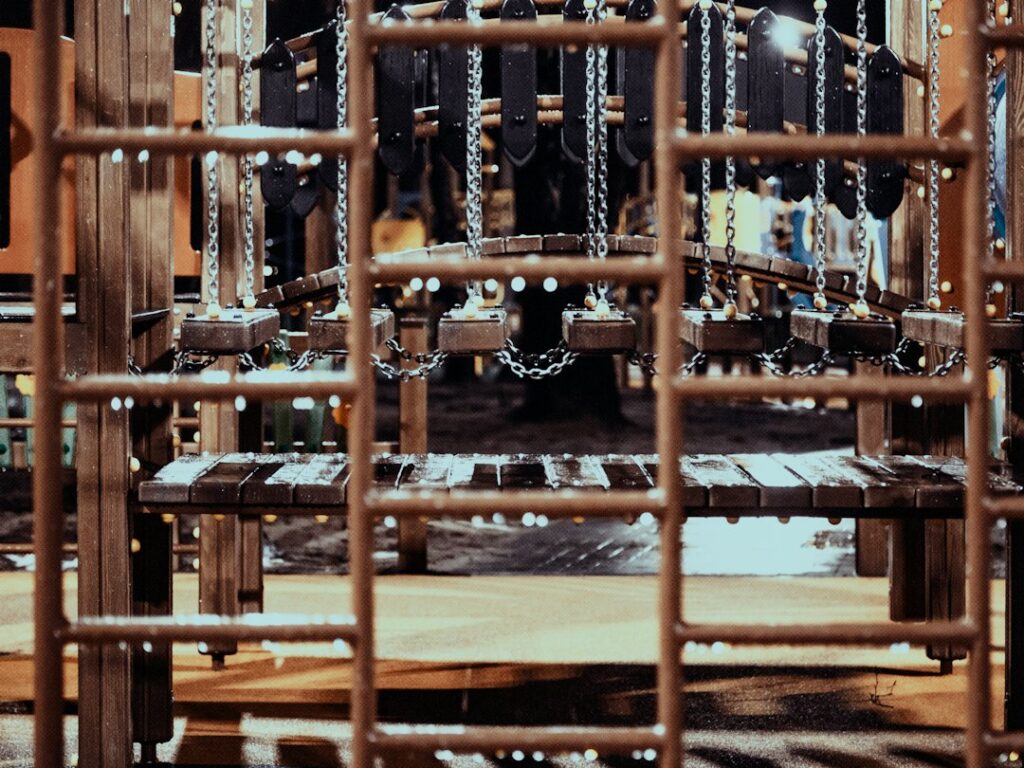
A basement or playroom climbing structure can burn off a rainy afternoon of energy, but indoor falls land on concrete, tile, or thin carpet far more often than outdoor falls land on soft mulch. That is why an indoor wooden playground needs more planning than simply unboxing a climbing gym. The three things that matter most are ceiling clearance, anchoring into framing, and the fall zone surface under and around the structure.
Part of our Windows & Doors guide — explore the full guide →
Here is the short answer. Leave at least 24 inches between the highest point a child can stand and the ceiling, so kids cannot hit their heads or reach light fixtures. Anchor any tall piece to wall studs or the floor with the kit’s hardware. Keep a clear zone of about 6 feet around the structure, or at minimum the height of the highest platform, and cover it with foam crash mats or rubber flooring thick enough for the fall height. For most home setups, 2 inch foam mats over carpet or rubber tiles work well.
Beyond those basics, room choice, layout, and ongoing checks decide whether the setup stays safe as your kids grow bolder.
Planning an Indoor Wooden Playground: Space and Ceiling Height
Start by measuring the room from floor to ceiling, including soffits, ducts, beams, and light fixtures. Many unfinished basements have ceiling height of 7 to 7.5 feet, with ducts dropping lower in places. An indoor wooden playground with a 4 foot platform leaves only about 3 feet of clearance for a child standing on it, which is tight for anyone taller than a preschooler. Pick equipment scaled to the room, not the other way around.
Useful guidelines for sizing:
- Headroom: at least 24 inches from the standing surface of the highest platform to the ceiling or any fixture.
- Fall zone: 6 feet on all sides is ideal. In smaller rooms, keep at least the height of the tallest platform clear of furniture and walls.
- Swinging pieces: indoor swings, rings, and trapeze bars need clearance front and back of roughly twice their hanging height, just like outdoor swings.
- Doors and windows: keep the structure away from doors that swing into the play zone and from windows kids could fall against.
Also look up. Ceiling fans, pendant lights, and exposed pipes within reach of a climbing child should be relocated or the structure moved.
Types of Wooden Indoor Play Structures
Wooden indoor play equipment comes in several common forms, each with different space and anchoring needs.
Climbing triangles and arches
Foldable triangles, climbing arches, and ramps, often associated with movement-based play for toddlers, are freestanding and low. They typically stay under 3 feet high and need only a padded floor and a clear zone.
Wall-mounted climbing gyms
Swedish ladders, rope ladders, rock-climbing panels, and wall bars mount directly to the wall. They save floor space but depend entirely on proper attachment into studs or masonry.
Freestanding indoor playsets
A wooden indoor playset with a platform, slide, and climbing wall resembles a small outdoor set. These are the heaviest option and may need both floor anchoring and wall tie-backs to prevent tipping.
Ceiling-mounted swings and rings
Hanging equipment puts dynamic loads on ceiling joists. These require mounting hardware rated for swinging loads and must be fixed into solid framing, never drywall or drop ceilings.
Anchoring to Studs, Joists and Concrete
Anchoring is the single most important structural step. A climbing child pulls outward on the top of a wall ladder, and several kids on one side of a playset can tip it. Follow the kit’s instructions first, then use these general practices.
- Locate framing. Use a stud finder and confirm with a small test hole or finish nail. Mark the center of each stud, typically 16 inches on center.
- Check for hidden wires and pipes. Avoid drilling directly in line with outlets, switches, and plumbing fixtures. If you must work near electrical boxes, turn off the breaker and confirm power is off with a non-contact voltage tester.
- Use proper fasteners. Structural screws or lag screws of the length the manufacturer specifies should bite at least 2 to 2.5 inches into solid wood. For concrete or block basement walls, use masonry anchors rated for the load, drilled with a hammer drill.
- Add blocking if needed. When studs do not line up with mounting holes, attach a horizontal ledger board across two or more studs and mount the equipment to the ledger.
- Anchor freestanding sets. Use tip-restraint straps to the wall or L-brackets to the floor, following the kit’s guidance.
- Test before play. Hang your adult body weight from the highest rung and pull firmly outward. Nothing should flex, creak, or move.
Drilling into masonry creates silica dust, so wear a dust mask and vacuum with a HEPA filter. For ceiling-mounted swings, locate joists precisely and use swing hangers rated for dynamic loads. If you cannot confirm joist size or condition, or the ceiling is plaster over unknown framing, get a contractor to evaluate it.
Flooring and Fall Protection
The floor under an indoor wooden playground matters as much as the structure. Concrete basement slabs and tile are the worst surfaces to fall on, while carpet alone offers little protection once fall heights exceed a couple of feet.
- Foam crash mats: 2 to 4 inch thick gymnastics style mats are the most common choice and fold for storage. Thicker is better for taller climbers.
- Interlocking foam tiles: 1/2 to 1 inch EVA tiles make a good base layer but should be topped with thicker mats under climbing walls and platforms.
- Rubber flooring: dense rubber tiles, 1 to 2.5 inches thick, hold up to heavy use and suit basement gyms that double as play areas.
- Carpet plus pad: acceptable only under very low equipment such as toddler triangles.
Every mat should have non-slip backing and flat edges that do not curl. Butt mats tightly together so feet cannot catch in gaps, and use beveled edge strips where the padded zone meets the rest of the floor. On a concrete basement floor, check for moisture first by taping a square of plastic sheet down for 24 hours; condensation underneath means you should use rubber or add a vapor barrier so mats do not trap dampness.
Safety Checks and Troubleshooting
Inspect the structure weekly at first, then monthly.
- Loose rungs or wobble: retighten bolts and screws. Wood shrinks in dry winter air, especially near heating vents, so check more often in heating season.
- Splinters: sand smooth and reseal with a child-safe finish.
- Mats sliding: add a rug gripper underlay or switch to interlocking tiles under the mats.
- Anchors pulling out of drywall: stop use immediately. This means the anchors missed studs and must be relocated into framing.
- Head bumps on the ceiling: lower the platform, remove the top level, or move to a room with more height.
Set simple rules too: one child on the top platform at a time, no jumping from higher than a set height, and an adult nearby for kids under 5.
Costs and When to Get Help
Small toddler climbing triangles and ramps usually cost from under a hundred to a few hundred dollars. Wall-mounted climbing gyms and ladders typically range from a couple hundred to several hundred dollars. Full freestanding wooden indoor play structures with slides can run into the low thousands. Foam or rubber flooring for a 10 by 12 foot fall zone adds a few hundred dollars depending on thickness.
Hire a carpenter or handyman if you cannot locate framing, need a ledger across uneven studs, want ceiling-mounted swings, or plan to modify a finished basement wall. Any work that involves moving outlets, lights, or ceiling fans out of the play zone belongs with a licensed electrician. For busy families, a quality indoor climbing gym installed correctly into studs and paired with thick mats gives years of safe active play.
Frequently Asked Questions
How much ceiling height do I need for an indoor wooden playground?
Leave at least 24 inches between the highest standing platform and the ceiling or any fixture. In a basement with a 7.5 foot ceiling, that usually limits platforms to about 4 feet or less.
Do indoor climbing structures need to be anchored?
Wall-mounted equipment must be screwed into studs or masonry, and tall freestanding sets should be tied to the wall or floor. Low toddler triangles are usually freestanding.
What flooring is best under indoor play equipment?
Foam crash mats 2 to 4 inches thick, or dense rubber tiles, over a flat base. Carpet alone is only adequate under very low equipment.
Can I put an indoor playground in a basement?
Yes, if the ceiling is tall enough, the floor is dry, and the structure is anchored properly. Test the slab for moisture and keep ducts, pipes, and lights out of reach.
How much space should be around an indoor play structure?
About 6 feet on every side is ideal. In smaller rooms, keep at least the height of the tallest platform clear of walls, furniture, and hard edges.