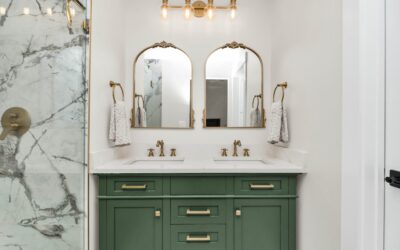
Exposed metal, visible bulbs, and honest materials have taken over bathroom design, and the fixtures over the mirror set the tone. Industrial bathroom vanity lighting pairs raw finishes like matte black, aged brass, and brushed steel with vintage Edison-style bulbs to give a bathroom character that soft, rounded fixtures cannot. Choosing the right industrial bathroom vanity lighting means balancing that rugged look with practical concerns: correct sizing, flattering light color, and the wet ratings a bathroom demands. This guide covers the styles, the specs, and the installation.
Part of our Bathroom Remodeling & Flooring guide — explore the full guide →
What Defines the Industrial Look
Industrial style borrows from old factories and workshops, celebrating function over ornament. In vanity lighting that translates to exposed hardware, pipe-style arms, metal cages or shades, and bulbs left visible rather than hidden behind frosted glass. The palette leans dark and metallic: matte black, oil-rubbed bronze, aged brass, gunmetal, and raw steel.
The style pairs naturally with subway tile, concrete or wood-look vanities, black hardware, and white or gray walls. Against that backdrop, an industrial fixture becomes a focal point. It works in everything from a compact powder room to a large primary bath, and it reads as intentional and current without being trendy to the point of dating quickly.
Popular Fixture Styles
Several fixture types deliver the industrial vibe, each with a slightly different feel.
- Pipe-mount bars: a horizontal fixture built to look like plumbing pipe, with bare or caged bulbs. The quintessential industrial vanity light, $50 to $200.
- Caged sconces: individual wall lights with metal cage guards around the bulb, mounted in pairs beside the mirror, $30 to $120 each.
- Barn and dome shades: metal shades in black or galvanized finish that direct light down, $40 to $180.
- Bare Edison bar lights: a simple metal bar with several exposed vintage bulbs, clean and affordable, $40 to $150.
For a balanced look, many people run a multi-bulb bar over the mirror and add a single caged sconce on each side. If space is tight, one well-chosen bar fixture carries the whole design.
Choosing the Right Bulbs
Bulbs make or break the industrial look, because they are on full display. Edison-style LED bulbs with visible filament give the warm, vintage glow the style is known for while using a fraction of the energy of real incandescent Edison bulbs. Look for LED filament bulbs rated around 2200K to 2700K for that amber, cozy tone.
Here is the practical tension: very warm Edison bulbs look gorgeous but can be too dim and too orange for grooming. The solution is to choose LED Edison bulbs at 2700K with a decent lumen output, around 450 to 800 lumens each, and a CRI of 90 or higher so skin tones stay accurate. If you need brighter task light, add side sconces with slightly cooler 3000K bulbs, or put the vanity bar on a dimmer so you can brighten it when needed.
Finishes That Fit
The finish anchors the whole design, so coordinate it with your other bathroom metals.
- Matte black: the most popular industrial finish, bold and graphic against white tile.
- Oil-rubbed bronze: warmer and more traditional, good with wood vanities.
- Aged or antique brass: adds warmth and a touch of luxe to the raw look.
- Brushed steel and gunmetal: cooler and more machine-like, very true to the factory aesthetic.
For a cohesive room, match the vanity light finish to your faucet, cabinet hardware, and shower fixtures, or deliberately mix black and brass, a popular combination that adds depth. Just keep the mix intentional, using two finishes consistently rather than a random assortment.
Sizing and Placement
Industrial fixtures follow the same proportion rules as any vanity light. A bar over the mirror should span roughly 75 percent of the mirror or vanity width; a 36-inch vanity suits a 24- to 30-inch fixture. Mount the bar so its bottom sits about 75 to 80 inches from the floor, a few inches above the mirror.
Side sconces go at about eye level, 60 to 66 inches from the floor, spaced 28 to 40 inches apart to light the face evenly and fill shadows. Because industrial bulbs are exposed, pay attention to glare; positioning matters more than with shaded fixtures, so aim bare-bulb sconces where they will not shine straight into your eyes at the mirror.
Wet Ratings and Safety
Bathrooms are damp, so fixture ratings are not optional. A fixture over the vanity, away from the shower, should be at least damp-rated; anything near the tub or shower spray zone must be wet-rated. Exposed-bulb industrial fixtures are common over vanities, but confirm the damp rating on the label before buying.
Make sure the bathroom circuit is GFCI-protected and that fixtures sit the code-required distance from water. If you are mixing in any metal cage fixture, verify it is properly grounded. These safeguards keep an authentic industrial look from becoming an electrical hazard in a humid room.
Installation and Cost
Swapping an existing vanity fixture for an industrial one is a straightforward DIY job of 30 to 45 minutes.
- Kill the breaker and verify the wires are dead with a voltage tester.
- Remove the old fixture and mounting bracket.
- Attach the new bracket, connect black to black, white to white, and ground to the green screw or bare wire.
- Mount and level the fixture, then install the Edison bulbs.
- Restore power and test, ideally with a dimmer for flexibility.
Budget $40 to $250 for the fixture plus $8 to $15 per LED Edison bulb. Adding new side sconces where no wiring exists is a bigger job that may need an electrician, at $150 to $350. For most upgrades, though, industrial bathroom vanity lighting is an affordable, high-impact way to give a plain bathroom real personality while still lighting your face well.
Layering Light for the Best Result
Industrial fixtures with exposed bulbs look stunning, but bare bulbs alone can create glare and uneven light. The professional approach is to layer. Use the industrial vanity bar or sconces as your primary face light, then add a recessed ceiling fixture or a flush-mount for ambient fill, and consider a small light inside a shower niche or over the tub for task and safety. Layered light flatters the face, eliminates shadows, and lets the industrial pieces be a design statement rather than the only source.
Putting the vanity lights on a dimmer ties the layers together. Brighten the Edison bulbs for shaving and makeup, then dim them to a warm glow for a relaxing bath. Because exposed filament bulbs can feel intense at full output, a dimmer is almost essential with industrial fixtures, giving you both strong task light and a soft mood setting from the same handsome fixture.
Durability in a Humid Bathroom
Industrial finishes and bathrooms need a little planning to coexist. Raw steel and untreated iron can rust in a humid room, so favor fixtures with a sealed powder-coat or a genuine oil-rubbed bronze or aged brass finish that resists moisture. Matte black powder-coated steel is both on-trend and durable. Run the bathroom exhaust fan during and after showers to keep humidity down, which protects both the fixtures and the room.
Metal cage guards and exposed sockets should be quality pieces with proper insulation, since moisture and electricity are a dangerous mix. Verify the fixture is at least damp-rated, keep it clear of the shower spray zone unless it is wet-rated, and make sure the circuit is GFCI-protected. With the right ratings and a working exhaust fan, an industrial fixture holds up for many years without corrosion.
Trends and Timeless Choices
Industrial style has staying power because it draws on genuine functional design rather than passing fads. That said, some choices age better than others. Matte black fixtures, simple pipe-mount bars, and aged brass accents read as classic and are likely to look good a decade from now. Very novelty pieces, like fixtures shaped like elaborate machinery, can date quickly, so lean toward clean, honest forms if you want longevity.
Mixing metals thoughtfully, most commonly black with brass, keeps the look current and warm. Pair the lighting with subway tile, matte black hardware, and a wood or concrete vanity for a cohesive scheme. Chosen with care, industrial bathroom vanity lighting delivers character and warmth that a plain builder-grade fixture never could, and it does so at a price nearly any renovation budget can absorb.