A bare concrete basement floor or a dull gray garage wall drags down an entire space, and ordinary wall paint peels off it within months. The right interior concrete paint, applied over properly prepped concrete, transforms these surfaces into clean, durable, easy-to-clean finishes that last for years. The catch is that concrete is unlike drywall or wood—it is porous, alkaline, and prone to moisture problems, so both the product and the preparation matter enormously. This guide covers the best paint types for interior concrete, how to prep the surface so the finish actually sticks, and a clear application process for a professional result.
Part of our Epoxy, Concrete & Garage Floors guide — explore the full guide →
Why Concrete Needs Special Paint
Concrete is porous and highly alkaline, and it constantly exchanges moisture with the ground and air. Standard interior wall paint cannot handle these conditions—it fails to bond, traps moisture, and peels or bubbles within a season. Concrete-specific paints are formulated to breathe, resist alkalinity, and grip the rough, porous surface.
Interior concrete surfaces also take abuse that walls never see. Basement and garage floors endure foot traffic, dropped tools, rolling loads, and occasional spills. That is why the right product plus thorough prep is non-negotiable—skip either and you will be repainting far sooner than you hoped.
Best Types of Interior Concrete Paint
Not all concrete coatings are equal, and the right choice depends on whether you are painting a floor or a wall and how much wear it faces. Here are the main options.
- Epoxy paint: The toughest option, ideal for garage and basement floors. It creates a hard, chemical- and abrasion-resistant surface that handles vehicles and heavy traffic. Two-part epoxies are the most durable; kits run $50 to $150 per garage.
- Masonry (elastomeric) paint: A thick, flexible coating best for concrete walls and block. It bridges hairline cracks and resists moisture, making it excellent for basement walls.
- Acrylic latex concrete paint: A water-based option good for lower-traffic walls and floors. Easier to apply and clean up, breathable, but less abrasion-resistant than epoxy.
- Concrete stain: Technically not a paint, but worth knowing—it penetrates and colors rather than coating, giving a natural mottled look for decorative floors.
For a garage or basement floor you park on or work in, epoxy is the clear winner. For basement walls, elastomeric masonry paint handles moisture and minor cracking best. For a lightly used utility room, acrylic latex is a budget-friendly choice.
Surface Prep Is Everything
More concrete paint jobs fail from bad prep than from bad product. Concrete must be clean, dry, and slightly etched so the paint can grip. Rushing this stage guarantees peeling.
1. Clean thoroughly
Sweep, then scrub the concrete with a degreaser or a concrete cleaner to remove oil, dust, and grime. Garage floors especially harbor oil stains that must be lifted, or paint will not adhere over them. Rinse and let dry completely.
2. Repair cracks and holes
Fill cracks with a concrete patching compound and let it cure fully. Smooth any high spots. A sound, even surface takes paint better and looks far cleaner.
3. Etch the surface
New or smooth troweled concrete needs etching so paint can bond. Apply a concrete etcher (often a mild muriatic acid solution) or use a mechanical grinder to open the pores. The surface should feel like medium-grit sandpaper when done.
4. Test for moisture
Tape a two-foot square of plastic sheeting to the floor and leave it overnight. If condensation forms underneath, the slab has a moisture problem that will destroy any coating—address the moisture source before painting. This test saves many failed floors.
Priming Concrete
Bare, porous concrete drinks up paint and needs a bonding primer designed for masonry. A concrete or block-filler primer seals the surface, improves adhesion, and stops the topcoat from soaking in unevenly. Skipping primer on raw concrete leads to blotchy coverage and poor durability.
For epoxy floor systems, many kits include their own primer or a designated first coat—follow the manufacturer’s system rather than mixing brands. On walls, a masonry bonding primer under elastomeric or acrylic paint dramatically extends the finish’s life. Let primer cure the full recommended time, usually several hours, before topcoating.
Application Steps
With prep and priming done, application is the easy part. Work in good ventilation and moderate temperatures—most concrete paints need surface and air temps between 50°F and 90°F to cure properly.
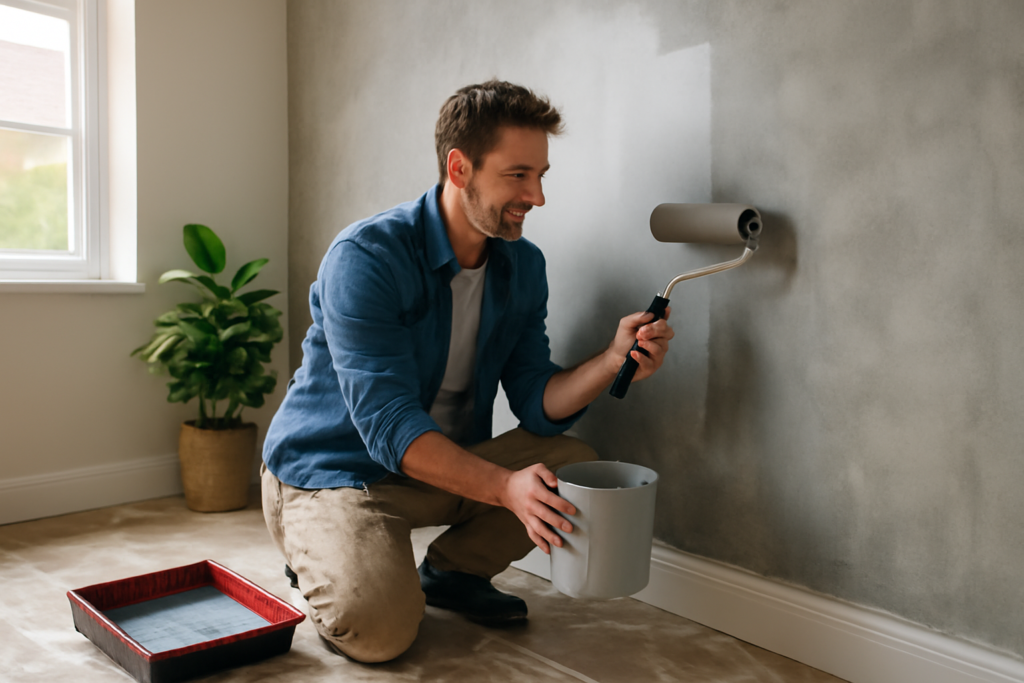
- Cut in edges and corners with a brush first, then roll the main field with a 3/8-inch to 1/2-inch nap roller for good coverage into the texture.
- Apply thin, even coats rather than one thick one—thick coats trap solvent and bubble.
- For epoxy floors, broadcast anti-slip additive or decorative flakes into the wet coat if desired.
- Let the first coat dry for the recommended time, then apply a second coat for durability and even color.
- Allow the finish to fully cure before use—light foot traffic often after 24 hours, but vehicles and heavy use may need 3 to 7 days for epoxy.
Adding a Protective Topcoat
For floors that take heavy wear, a clear polyurethane or urethane topcoat over painted or epoxy-coated concrete adds a sacrificial layer that resists scratches, chemicals, and UV yellowing. It also makes the surface easier to mop and boosts slip resistance when an anti-slip additive is mixed in. This extra step meaningfully extends the life of a garage or basement floor finish and is well worth the modest added cost.
Maintenance and Longevity
Properly prepped and coated interior concrete paint can last 5 to 10 years or more, especially with epoxy floors and a topcoat. Keep it looking good with simple care.
- Sweep regularly and mop with a mild cleaner—avoid harsh acids that degrade the coating.
- Wipe up oil and chemical spills promptly on floors.
- Use floor mats under vehicle tires and workbenches to reduce wear points.
- Touch up chips early before moisture creeps under the coating and lifts it.
Best Uses Around the Home
Interior concrete paint shines in several specific areas of the house, and knowing where it performs best helps you set expectations. Basement floors are the most common project—painting a bare slab brightens a dark space, cuts down on concrete dust, and makes the area easier to clean, turning an unfinished basement into usable living or storage space. Basement walls, especially poured concrete or block, benefit from elastomeric masonry paint that resists the moisture these below-grade surfaces constantly face.
Garage floors are the flagship use for epoxy, standing up to vehicle traffic, dropped tools, and chemical spills while giving the space a clean, professional look. Utility rooms, laundry areas, workshops, and even interior accent walls of exposed concrete in modern industrial-style homes all take concrete paint well. The key is matching the product to the traffic: high-wear floors need epoxy, moisture-prone walls need masonry paint, and light-duty surfaces can use acrylic latex.
Color and Design Options
Concrete paint is no longer limited to battleship gray. Modern products come in a wide range of colors, and you can push the look further with a few techniques. Solid colors in warm grays, tans, deep charcoal, and even muted blues and greens transform a floor or wall from utilitarian to intentional. For epoxy floors, broadcasting decorative color flakes into the wet coat creates a speckled, terrazzo-like finish that also hides dirt and adds slip resistance—popular in garages and basements alike.
Concrete stain offers a different aesthetic entirely, penetrating the surface to create a natural, mottled, variegated look that resembles polished stone rather than a solid painted coat. Acid stains produce rich, unpredictable earth tones, while water-based stains offer more consistent color. You can also combine techniques—a base coat with a contrasting border, or a stenciled pattern for a decorative floor. Whatever look you choose, the same rule applies: color and drama only last if the surface underneath is properly prepped, primed, and sealed.
The Bottom Line
Interior concrete paint turns cold, dusty basement and garage surfaces into finished, durable, easy-clean spaces—but only when you match the product to the job and prep the concrete thoroughly. Choose epoxy for high-traffic floors, elastomeric masonry paint for basement walls, and acrylic latex for lighter-duty areas. Clean, repair, etch, and moisture-test the surface, prime with a masonry bonding primer, apply thin even coats, and finish floors with a protective topcoat. Invest the effort in preparation, and your painted concrete will stay sharp and functional for a decade rather than peeling within a year.