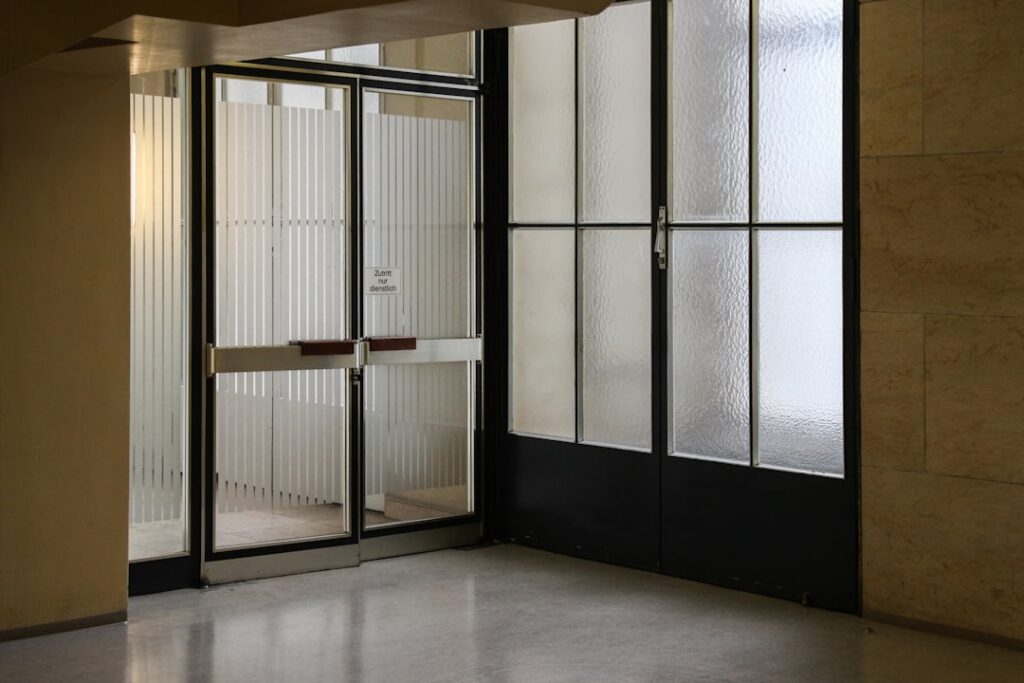
A dark hallway, a windowless home office, a closed-off dining room — the fastest way to make these spaces feel bigger and brighter is not a wall demolition, it is an interior door with glass panel. By borrowing light from adjacent rooms, glass-panel doors open up sightlines and pull daylight into corners that would otherwise stay gloomy, all while still defining separate spaces. Homeowners who swap a solid slab for a glazed door are often stunned by how much larger and more connected the whole floor plan feels.
Part of our Windows & Doors guide — explore the full guide →
- Why Add Glass to an Interior Door
- Popular Glass-Panel Door Styles
- Solving the Privacy Question
- Frame Materials to Consider
- Swinging vs. Sliding Glass Doors
- Where Glass-Panel Doors Work Best
- Installation Considerations
- Cleaning and Maintaining Glass Doors
- Sound Control With Glass Doors
- What They Cost
Why Add Glass to an Interior Door
The main draw is light. Glass panels let sunlight travel from a bright room into a dim one, reducing the need for daytime lighting and making both spaces feel more open. Beyond brightness, glass-panel doors add architectural interest — a divided-lite French door reads as elegant and intentional, while a single large pane feels crisp and modern.
They also maintain connection without sacrificing separation. You can close off a home office for quiet while still seeing a child playing in the next room, or keep cooking smells in the kitchen while the space stays visually part of the open living area. That balance of openness and boundary is exactly why glass doors have become so popular.
Popular Glass-Panel Door Styles
Glass doors come in a wide range of looks to suit any home, from traditional to industrial. The style you choose sets the tone for the whole room:
- French doors: A classic pair of doors, each divided into multiple glass lites by wood or composite grilles, perfect for dining rooms and studies.
- Full-lite doors: A single large pane filling most of the door for a clean, contemporary look and maximum light.
- Half-lite doors: Glass on the upper half with a solid panel below, balancing light with a bit more privacy and durability.
- Industrial/black-frame doors: Slim steel or steel-look frames with divided glass, echoing the popular factory-window aesthetic.
- Barn-style glass doors: Sliding glass panels on exposed hardware, ideal where a swinging door would take too much floor space.
Solving the Privacy Question
The obvious concern with glass is privacy, and the good news is that the glass itself does most of the work. You do not have to choose between light and seclusion. Several glazing options let light through while obscuring the view:
- Frosted/etched glass: Acid-etched or sandblasted to a translucent finish that passes light but blocks clear sightlines — the most popular privacy choice.
- Reeded or fluted glass: Vertical ridges that distort the view for a stylish, textured look trending in modern homes.
- Seeded or rain glass: Textured patterns that obscure detail while adding character.
- Clear glass: Maximum light and openness, best for spaces where privacy is not a concern, like a home office visible to the living room.
For rooms needing full privacy on demand, such as a bathroom or bedroom, choose heavily frosted glass or pair a clear door with a curtain or blind mounted on the glass.
Frame Materials to Consider
The door’s frame determines its durability, weight, and style. Solid wood frames offer warmth and can be stained or painted to match trim, but they are heavier and cost more. MDF and engineered wood frames are budget-friendly and dimensionally stable, resisting the warping that can plague solid wood in humid climates, and they take paint beautifully.
Metal-framed doors, whether true steel or a steel-look aluminum, deliver that sought-after industrial aesthetic with slim sightlines but come at a premium. Whatever the frame, insist on tempered safety glass, which is required by building codes for doors and shatters into small, blunt pieces rather than dangerous shards if broken.
Swinging vs. Sliding Glass Doors
How the door operates should match the room’s layout. A traditional swinging door needs clear floor space for its arc, which can crowd small rooms. A sliding barn-style glass door hangs from a track and glides along the wall, saving floor space and adding a design statement, though it does not seal as tightly for sound or privacy.
Pocket doors that slide into the wall offer the ultimate space savings and disappear entirely when open, but they require opening up the wall to install the pocket frame, making them a bigger project best done during a remodel.
Where Glass-Panel Doors Work Best
These doors shine in specific spots. A home office gets natural light and a professional look while staying quiet for calls. A dining room or den can be closed off for formal occasions yet feel open to the main living area day to day. Pantries and laundry rooms benefit from frosted-glass doors that add light and style to utilitarian spaces. Even a primary bedroom’s walk-in closet or ensuite can gain elegance with a reeded-glass door.
Avoid clear glass where you need reliable privacy or where a door will take frequent knocks and kicks, such as a busy mudroom, unless you opt for the more durable half-lite configuration.
Installation Considerations
Replacing an existing solid door with a glass-panel slab of the same size is a manageable DIY job — you reuse the existing hinges and jamb, transfer the hardware bores, and hang the new door. Standard interior door sizes are 24, 28, 30, 32, and 36 inches wide by 80 inches tall, so measure carefully and buy a matching slab or a prehung unit.
Glass doors are heavier than hollow-core slabs, so upgrade to three sturdy hinges and use long screws into the framing to prevent sagging. For French doors or a new opening, or any door where you are unsure about squaring the frame, hiring a carpenter for a few hours ensures the doors align and latch cleanly.
Cleaning and Maintaining Glass Doors
Glass-panel doors ask for a bit more upkeep than a solid slab, mainly because fingerprints and smudges show on the glass. A quick weekly wipe with glass cleaner and a microfiber cloth keeps the panels sparkling, and it takes seconds. Textured glass like reeded or seeded actually hides smudges better than clear glass, which is a small practical bonus of choosing those styles for high-touch doors.
The frame needs occasional attention too. Wood frames benefit from the same care as your trim, with a periodic dusting and a touch-up of paint or stain where knocks occur. Metal frames wipe clean easily and rarely need more than that. Check the glazing seal or the beading that holds the glass in place once a year and confirm it is snug, since a loose pane can rattle. With this minimal routine, a quality glass door stays looking sharp for decades.
Sound Control With Glass Doors
A common question is whether a glass door blocks sound as well as a solid one, and the honest answer is that it depends on the construction. A well-fitted swinging glass door with a solid frame and a good seal blocks a reasonable amount of everyday noise, plenty for a home office where you want to keep conversation from carrying. It will not match the sound isolation of a heavy solid-core door, but for most household needs the difference is modest.
Sliding and barn-style glass doors seal less tightly, since they hang slightly off the wall and do not seat into a jamb, so they let more sound pass. If quiet is a priority, choose a swinging French or single glass door with weatherstripping around the frame, and consider dual-pane glass, which adds both insulation and a meaningful reduction in transmitted noise. Matching the door type to your acoustic needs prevents the disappointment of a beautiful door that does not keep a room as quiet as you hoped.
What They Cost
Prices span a wide range. A basic single glass-panel prehung interior door starts around $150 to $300 at home centers. Mid-range frosted or reeded-glass doors run $300 to $600, and a quality French door pair or a custom industrial black-frame door can reach $800 to $2,000 or more. Add $150 to $400 for professional installation per door if you are not hanging it yourself.
For the light, openness, and style they deliver, an interior door with glass panel is one of the highest-impact upgrades per dollar in a home. Pick a glass texture that balances your light and privacy needs, match the frame material and swing to your space, and you can transform a closed, dim room into a bright, connected part of your home in a single afternoon.