A half glass interior door is a smart way to borrow natural light between rooms while keeping the structure and privacy of a solid door. With glass filling the upper portion and a solid panel below, these doors brighten dim hallways, define home offices, and add architectural character that a plain flush door never could. This guide explains the styles, glass options, best uses, privacy considerations, and costs so you can choose the right half-lite door for your home.
Part of our Windows & Doors guide — explore the full guide →
- What Is a Half Glass Interior Door
- Where Half Glass Doors Work Best
- Glass Options and Privacy
- Door Materials and Frame Styles
- Design Styles to Consider
- Swinging, Sliding, and Pocket Configurations
- Cost Expectations
- Installation Considerations
- Care and Maintenance
- Tempered Versus Standard Glass Safety
- Sound Transmission Considerations
- Final Thoughts
What Is a Half Glass Interior Door
Also called a half-lite door, a half glass interior door has a glass panel occupying roughly the top half of the door and a solid wood or composite panel across the bottom. This layout, sometimes described as “half-lite,” balances two goals: the glass transmits light and creates an open feel, while the solid lower half provides durability, resists scuffs and kicks, and offers more privacy than a full-glass door. It sits between a fully solid door and a full-lite glass door in both light transmission and cost.
Where Half Glass Doors Work Best
These doors shine in specific spots around the home:
- Home offices — light passes through to keep the space bright while the lower panel hides a messy desk and adds a professional look.
- Interior doors to dark hallways — they pull borrowed light from adjacent rooms into windowless corridors.
- Pantries and mudrooms — a decorative touch that still lets you see whether a light was left on.
- Basement and stairwell doors — light travels down otherwise gloomy stairways.
- Between kitchen and dining or living areas — maintaining openness in a semi-divided floor plan.
Glass Options and Privacy
The glass you choose controls both the look and how much privacy the door provides:
- Clear glass — maximum light and full visibility, best where privacy is not a concern.
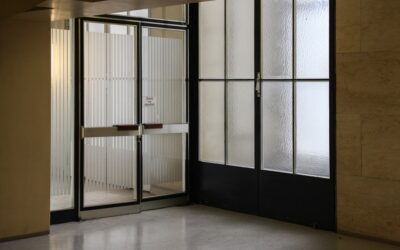
- Frosted or satin-etched glass — transmits light while obscuring the view, ideal for offices and pantries.
- Reeded or fluted glass — vertical texture that distorts the view and adds a trendy, vintage-modern look.
- Seeded or rain glass — decorative textures that blur sightlines while keeping a soft glow.
- Textured or patterned glass — offers strong privacy with a decorative element.
If privacy matters, choose frosted, reeded, or textured glass; if brightness is the priority, clear glass moves the most light.
Door Materials and Frame Styles
The solid lower portion and the door’s frame come in several materials:
- Solid wood — the premium choice, offering warmth, weight, and a paintable or stainable surface.
- MDF and composite — smooth, stable, and paint-ready at a lower price, resistant to warping.
- Primed or pre-finished — ready to install or requiring a coat of your chosen color.
Frame styles range from a simple single large lite over a flat panel to divided-light designs with muntins that mimic multiple small panes for a traditional or craftsman look.
Design Styles to Consider
Half glass doors span a wide range of aesthetics, so match the style to your home:
- Craftsman — a single wide lite over a flat or shaker panel, clean and versatile.
- Traditional — divided lights with muntins over a raised panel base.
- Modern farmhouse — a black-framed glass panel over a painted lower half, very on-trend.
- Industrial — a grid of black-framed panes echoing steel factory windows.
The black-framed grid look, sometimes called a French or factory-style door, is especially popular for home offices and pantries right now.
Swinging, Sliding, and Pocket Configurations
Half glass doors are available in several operating styles. A standard hinged swinging door is the most common and simplest to install. A sliding barn door with a half-glass panel adds rustic or modern character while saving floor space, popular for offices and pantries. A pocket door with a glass upper disappears into the wall for a clean look in tight spaces. Choose the configuration based on your available wall clearance and the traffic flow of the room.
Cost Expectations
Pricing depends heavily on material and glass type. As a general guide:
- MDF or composite half-lite doors — roughly $150 to $350 for the slab.
- Solid wood half glass doors — $300 to $700 or more depending on species and glass.
- Decorative or textured glass upgrades — add $50 to $200 over clear glass.
- Barn-door hardware kits — $80 to $250 additional if you go the sliding route.
Professional installation typically adds $100 to $300 per door, more if the opening needs modification.
Installation Considerations
Installing a half glass door is similar to any interior door, but the glass adds weight and requires care. Because glass-panel doors are heavier than hollow-core doors, use three sturdy hinges and confirm the frame and jamb are solid. If you are replacing a hollow-core door, the new door’s weight may call for reinforcing the hinge screws with longer screws into the framing. Handle the door carefully during installation to avoid stressing or cracking the glass, and always verify the door swings freely and latches cleanly before finishing. For a pre-hung unit, shim and level the frame precisely so the heavier door does not sag.
Care and Maintenance
Half glass doors are low maintenance. Clean the glass with a standard glass cleaner and a soft cloth, and wipe the solid portion as you would any painted or stained door. Textured and reeded glass hides fingerprints well, which is a bonus in high-traffic spots. Check the hinges periodically and tighten any loose screws, since the added weight of the glass can work fasteners loose over time. A well-cared-for half glass door retains its bright, architectural appeal for decades.
Tempered Versus Standard Glass Safety
An important detail many homeowners overlook is the type of glass used in the door, which matters for both safety and code. Tempered glass is heat-treated to be several times stronger than standard annealed glass, and when it does break, it shatters into small, relatively harmless pebbles rather than large sharp shards. Building codes often require tempered or otherwise safety-rated glass in doors, especially in locations near the floor or in high-traffic areas where someone could fall against it. When buying a half glass interior door, confirm whether the glass is tempered, particularly if the door will be used in a busy hallway, a child’s play area, or anywhere impact is a realistic risk. Reputable manufacturers label the glass, and choosing tempered glass is a small upgrade that significantly improves safety for the life of the door.
Sound Transmission Considerations
Because a half glass door replaces part of a solid door with glass, it transmits somewhat more sound than a fully solid door, which is worth weighing for certain rooms. For a home office where you take calls or a bedroom where privacy and quiet matter, the reduced sound insulation of a large glass panel can be a drawback compared to a solid-core door. Single-pane decorative glass offers the least sound dampening, while thicker or insulated glass panels reduce transmission somewhat. If quiet is essential, you might reserve half glass doors for pantries, mudrooms, and hallways where light-sharing matters more than soundproofing, and use solid-core doors for spaces that demand acoustic privacy. Balancing the desire for borrowed light against the need for quiet helps you place these doors where they serve you best.
Final Thoughts
A half glass interior door delivers the best of both worlds, pulling natural light between rooms while keeping the durability and privacy of a solid lower panel. Whether you want a bright, professional home office, a light-filled hallway, or a stylish pantry, the key decisions are the glass type for your privacy needs, the material and frame style to match your home, and the operating configuration that fits your space. With options ranging from budget-friendly MDF to premium solid wood and trendy black-framed grids, a half-lite door is one of the most versatile and impactful door upgrades a homeowner can make.