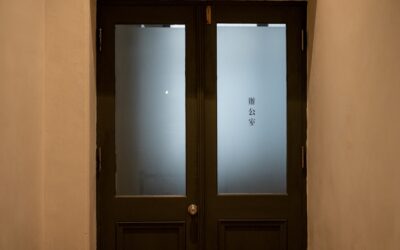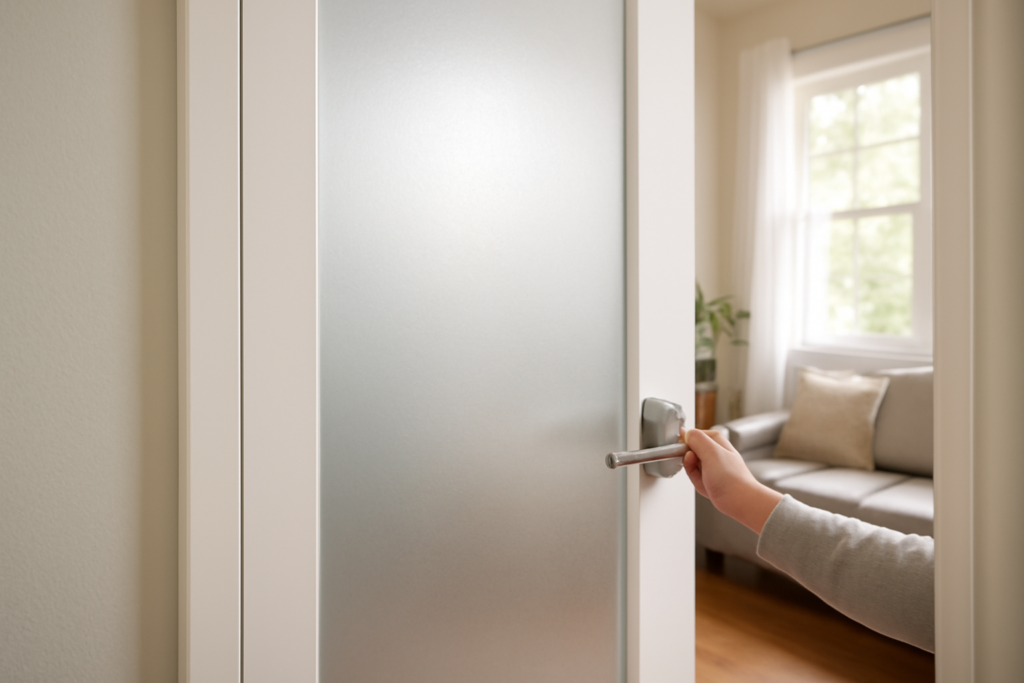
The problem with a solid door is simple: it blocks light along with the view. A frosted interior door solves that by using obscured glass that lets daylight pass while hiding what’s on the other side, so a windowless hallway, office, or bathroom borrows brightness without giving up privacy. These doors have jumped from commercial offices into homes as open, light-filled interiors became the goal. This guide covers the glass styles, privacy levels, frame materials, costs, and the rooms where a frosted door earns its keep.
Part of our Windows & Doors guide — explore the full guide →
How Frosted Glass Works
Frosted glass is clear glass that’s been treated to scatter light and blur what passes through it. There are two main methods: acid etching, which chemically abrades one surface for a smooth, permanent frost, and sandblasting, which physically roughens the surface. The result diffuses light so you get brightness and soft silhouettes rather than a clear view. A cheaper alternative is applied frosted film, a vinyl layer stuck to clear glass, which mimics the look at lower cost but is less durable.
The key thing to understand is that frost obscures detail but not light and not shape. You’ll see a blurred silhouette and shifting shadows, which is plenty of privacy for most rooms but worth keeping in mind for the most private spaces.
Privacy Levels: Not All Frost Is Equal
Frosted glass comes in a range of opacities, and matching the level to the room matters. Think in terms of how much the glass reveals:
- Light frost: Softly blurs the view but transmits maximum light. Good for offices and pantries where total privacy isn’t essential.
- Standard frost / satin: The common middle ground — clear silhouettes but no detail. Suits most bedrooms and home offices.
- Heavy or double-sided frost: Maximum obscurity while still passing light. Best for bathrooms and en-suites.
- Textured / reeded / rain glass: Patterned obscured glass that distorts the view even more, adding a decorative element on top of privacy.
For a bathroom, go with heavy or textured glass. For a home office or reading nook where you mostly want light, a lighter frost keeps the space feeling open.
Glass Styles and Patterns
Beyond plain frost, obscured glass comes in decorative patterns that double as design features. Reeded (or fluted) glass uses vertical ridges for a fashionable, mid-century look. Rain glass has a vertical, water-streaked texture. Seedy and cracked-ice patterns give a vintage feel. You can also get partial frosting — clear borders with a frosted center, geometric designs, or a gradient that fades from clear to opaque.
The pattern you choose sets the room’s tone. Reeded glass reads contemporary and is extremely popular right now, while a simple satin frost is clean and timeless. Patterned glass also adds a bit more privacy than flat frost because it distorts shapes as well as blurring them.
Frame Materials and Door Styles
The glass sits in a frame, and both the material and the configuration affect the look and price:
- Wood-framed: Traditional stile-and-rail doors with a frosted panel, available in paint-grade and stain-grade species.
- MDF / molded: Affordable primed doors with a frosted-glass insert, ready to paint.
- Steel or aluminum-framed: Slim industrial frames, often black, popular for modern and loft-style interiors.
- Full-lite vs. divided-lite: A full-lite door is almost entirely glass; a divided-lite door breaks the glass into multiple panes with grids for a classic French-door look.
Configuration options include single swinging doors, French pairs, sliding barn doors, and space-saving pocket doors. A frosted barn door is a popular way to close off a home office or master bath while keeping the room bright and airy.
Where Frosted Doors Work Best
These doors shine anywhere you need to balance light and privacy. The strongest use cases:
- Home offices: Borrow hallway light and reduce distraction while still feeling connected.
- Bathrooms and en-suites: Brighten interior baths that lack a window, using heavy frost for full privacy.
- Pantries and laundry rooms: Hide clutter while letting light through.
- Bedrooms and closets: Soften the boundary without a solid slab.
- Basements and interior hallways: Pull daylight deeper into rooms that would otherwise be dark.
The common thread is any windowless or dim space that sits next to a brighter one. The frosted door acts like an internal window that also happens to lock.
Cost and What to Expect
A frosted interior door costs more than a solid hollow-core but often less than a solid-wood door. Budget molded doors with a frosted insert start around $150 to $300 as a slab. Mid-range wood-framed and reeded-glass doors run $300 to $700. Steel-framed industrial doors and custom French pairs climb from $700 to $1,500 or more. Prehung versions add $100 to $250 for the frame. Sliding barn-door versions add the cost of the track hardware, typically $70 to $250.
Installation follows the same rules as any interior door — plumb the hinge side, set an even reveal, and confirm the latch aligns. Because glass adds weight, use quality hinges and, for heavier steel-framed or barn doors, verify your wall framing or header can carry the load.
Tempered Glass and Safety Codes
Safety glass matters in any door, and it’s not optional in many locations. Building codes require safety glazing — typically tempered glass — in doors and in glass panels near doors and floors, because a full-height pane is a hazard if someone falls into it. Tempered glass is heat-treated so that if it does break, it shatters into small, relatively harmless pebbles rather than large jagged shards.
When you buy a frosted interior door, confirm the glass is tempered, especially for a full-lite design. Reputable manufacturers use tempered safety glass as standard and mark a small etched stamp in a corner of the pane. This is one area not to cut corners on a bargain door, since a non-tempered full-lite glass door is both a code violation and a genuine injury risk in a busy household.
Frosted Glass vs. Applied Film
You’ll encounter two ways to achieve the frosted look, and the difference affects durability and price. True obscured glass — acid-etched or sandblasted — has the frost built permanently into the surface of the glass, so it never peels, bubbles, or wears off. Applied privacy film is a vinyl layer stuck onto clear glass; it costs less and can even be a DIY retrofit for an existing clear-glass door, but it can lift at the edges over time and scratches more easily.
For a new door purchase, true etched or textured glass is worth the modest premium for its permanence and cleaner look. Film makes the most sense as an inexpensive way to add privacy to a clear-glass door you already own without replacing it.
Design Tips for a Cohesive Look
To make a frosted door feel intentional rather than utilitarian, coordinate its frame and hardware with the rest of the room. A black steel-framed frosted door pairs naturally with black cabinet hardware and light fixtures for an industrial look. A white or wood-framed door with reeded glass suits transitional and modern spaces. Match the door’s hinges and lever to your other interior hardware finish so it reads as part of a deliberate scheme. In a series of rooms, repeating the same frosted-glass style on multiple doors ties the whole level together.
Care and Cleaning
Frosted glass shows fewer fingerprints than clear glass, but the etched surface can trap grime in its micro-texture. Clean it with a standard glass cleaner and a microfiber cloth; for stubborn spots on acid-etched glass, a soft brush helps lift residue from the pores. Avoid abrasive pads that could polish away the frost in spots. If you used applied film rather than true etched glass, clean gently to avoid lifting an edge.
A frosted interior door is one of the highest-impact upgrades for a dim, closed-off room. Pick a privacy level that matches the space, choose a glass pattern that fits your style, and you’ll transform a dark corner into a bright, private room without sacrificing either quality.