Stone has been on the floors of human dwellings for 8,000 years, and there is a reason it keeps coming back into rotation. Interior stone flooring brings something engineered products simply cannot fake: depth that you only get from a material formed under millions of years of pressure. Each tile is a one-off pattern of veining, shells, or crystal structure. The downside is that stone behaves nothing like ceramic, vinyl, or wood, and homeowners who treat it like tile end up etching, staining, or cracking it within the first year.
This guide walks through which natural stones belong inside, how each one behaves underfoot, and what realistic prices and prep look like in 2026.
The Five Stones You Will Actually Choose Between
Most natural stone flooring projects narrow down to one of five materials. Each has very different characteristics:
- Travertine: warm tan and ivory tones, naturally porous with surface holes. Soft (Mohs 4 to 5), needs filling and sealing.
- Slate: deep charcoal, rust, and green hues with a cleft texture. Hard (Mohs 5.5 to 6.5), naturally slip-resistant.
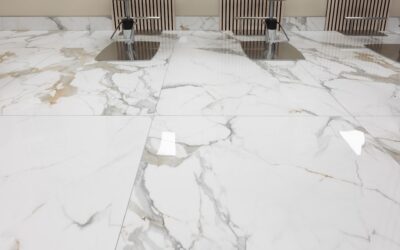
- Marble: classic Carrara, Calacatta, and Statuario veining. Soft (Mohs 3 to 4), etches with anything acidic, scratches with grit.
- Limestone: creamy beige and gray, fine-grained. Softer than travertine, fossil patterns common.
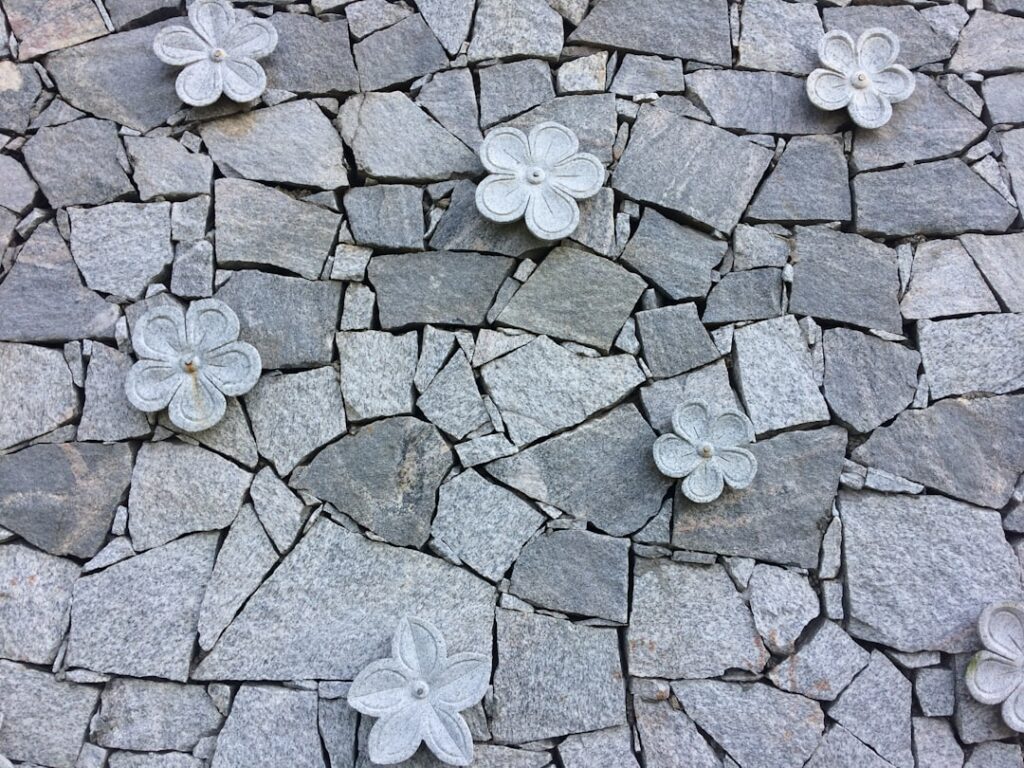
- Granite: speckled or veined, dozens of color families. Hardest residential stone (Mohs 6 to 7), nearly bulletproof.
For a working family kitchen, granite or slate are the right calls. Marble and limestone belong in formal areas where wine glasses do not get knocked over.
Hardness, Slip Resistance, and Real-World Wear
Stone’s Mohs hardness rating is a rough proxy for scratch resistance. A floor walked on by dogs and dragged by furniture will show wear differently across the spectrum. Slate, granite, and the harder travertines hold up to 30+ years of foot traffic without polishing. Marble and limestone need refinishing every 7 to 12 years if you want to keep the polish bright.
For wet areas — bathrooms, mudrooms, transitions to outdoor spaces — verify the Dynamic Coefficient of Friction. ANSI A326.3 requires 0.42 minimum for wet barefoot use. Honed and tumbled finishes meet the spec; polished finishes generally do not without an applied anti-slip treatment.
Finishes: Polished, Honed, Tumbled, Brushed
The same slab can be finished four ways, and each delivers a totally different aesthetic and performance profile:
- Polished: mirror gloss, deepens color, shows etching and water spots immediately. Best for foyers, formal living rooms.
- Honed: matte satin, less reflective, better hides minor scratches. Best for kitchens, bathrooms, hallways.
- Tumbled: rounded edges, slightly weathered look, naturally slip-resistant. Best for entryways, mudrooms.
- Brushed (or Leathered): textured satin, masks etching well. Best for high-traffic kitchens.
For interior stone flooring in a working household, honed is the safest default. It looks beautiful, hides daily wear, and tolerates the occasional cleaning mistake without obvious damage.
Sealing: The Step Most DIYers Skip
Every natural stone except dense granite needs sealing. Without it, water rings, oil drips, and red wine sit on the surface long enough to soak in and stain permanently. Penetrating impregnator-type sealers like Miracle 511, Aqua Mix Sealer’s Choice Gold, or Stone Tech BulletProof saturate the pore structure and repel both water and oil.
Apply two coats during install, then reseal every 12 to 24 months depending on traffic. Test annually with a few drops of water — if it beads, you are fine; if it darkens within 30 seconds, reseal. Skip the topical sealers (the kind that leave a film); they peel and yellow within years.
Real Cost Breakdown in 2026
Material prices vary wildly by source and grade. Realistic per-square-foot costs in the current market:
- Travertine (filled and honed): $5 to $12 per sq ft material
- Slate (gauge tile): $4 to $9 per sq ft material
- Marble (Carrara basic, 12 by 12): $6 to $15 per sq ft material
- Marble (Calacatta or Statuario, larger formats): $20 to $80 per sq ft material
- Limestone: $8 to $20 per sq ft material
- Granite tile (12 by 12 or 18 by 18): $5 to $14 per sq ft material
- Professional installation: $9 to $18 per sq ft
Add 10% to 15% for waste, $1.50 per sq ft for backer board, and $30 to $50 per gallon for sealer. A 200 sq ft kitchen in honed travertine lands around $3,800 to $6,000 installed. The same floor in basic Carrara marble runs $4,500 to $7,500.
Subfloor Requirements
Stone is unforgiving of deflection. Your subfloor needs an L/720 rating for marble and limestone, L/360 minimum for slate and granite. Translation: 3/4 inch tongue-and-groove plywood plus 1/2 inch cement backer board over 16 inch on-center joists is the absolute baseline for residential. For natural stone over a wood subfloor, also install an uncoupling membrane like Schluter Ditra or Mapei Mapeguard. These thin orange layers prevent subfloor movement from telegraphing as cracks in the stone.
Concrete slabs need to be flat within 3/16 inch over 10 feet for tiles 12 inches or smaller, and 1/8 inch over 10 feet for larger formats. Self-leveler at $2 to $4 per square foot is often necessary on older slabs.
Where Stone Wins and Where It Loses
It wins in entryways, mudrooms, kitchens, primary baths, and any room where you want a permanent finish. With proper sealing and care, expect 50+ years of service, and the patina actually improves with age. It also pulls strong resale value in mid-tier and luxury homes.
It loses in basements with active moisture intrusion, second-floor laundry rooms with potential leaks (the weight is brutal on framing), and homes with ambitious DIY budgets. Stone setting is genuinely a craft — try a small entryway before committing to a 1,500 sq ft main floor.
Maintenance That Actually Works
Daily care is simple: dry dust mop, then a damp microfiber pad with a stone-safe pH-neutral cleaner like Stone Tech Revitalizer or Bona Stone, Tile and Laminate. Never use vinegar, citrus cleaners, ammonia, or generic “tile cleaners.” Acidic cleaners etch calcite-based stones (marble, limestone, travertine) within one application.
For polished marble that has dulled, professional honing and re-polishing runs $2 to $5 per sq ft and brings the floor back to factory finish. Done every 7 to 10 years, the floor will outlive the house.
Prefer to explore on your own?
See how new flooring looks in your actual room in seconds — free, no signup.
Try the free Floor Studio →