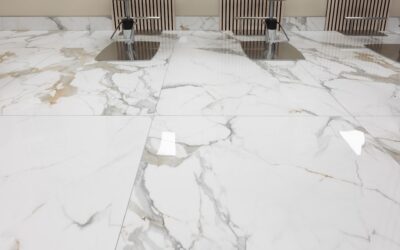
A polished marble slab that looks stunning on a vanity can become a skating rink under running water. That is the core challenge of a marble shower floor: the stone is beautiful, but it is soft, porous and sensitive to acids, and the floor is the one surface in a bathroom that stays wet, carries all your weight and collects soap residue. Done right, with small mosaic tiles, a honed or tumbled finish, a correct slope to the drain and a steady sealing routine, marble can last for decades underfoot. Done wrong, it etches, stains and feels unsafe within a year.
Part of our Countertops guide — explore the full guide →
Most problems trace back to three early decisions: tile size, surface finish and the waterproofing underneath. Get those right and daily upkeep becomes simple.
- Is a Marble Shower Floor a Good Idea?
- Mosaic vs Large Tile for Drainage and Slope
- Honed, Tumbled or Polished: Finish and Slip Resistance
- Waterproofing Underneath the Stone
- Installation Tips for a Marble Shower Floor
- Sealing Schedule That Actually Works
- Etch-Safe Daily Cleaning
- Troubleshooting Common Problems
- Cost Ranges
- When to Call a Pro
- Frequently Asked Questions
Is a Marble Shower Floor a Good Idea?
A marble shower floor works well for homeowners who accept a little routine maintenance and like the way natural stone develops a soft patina over time. It is less suited to households that want zero upkeep, use a lot of acidic or colored products, or have a shower with poor ventilation.
Marble is a metamorphic limestone, made mostly of calcium carbonate. That chemistry is why it etches: acids in vinegar, citrus cleaners, some shampoos and even certain body washes react with the surface and leave dull spots. Sealer does not stop etching, it only slows staining. Knowing that up front prevents most of the disappointment people report.
Pros
- Timeless look that pairs with almost any wall tile
- Mosaics provide excellent grip and slope easily
- Feels pleasant underfoot and stays cooler than many alternatives
- Repairs and refinishing are possible because the color runs through the stone
Cons
- Etches from acids and dulls with harsh cleaners
- Needs periodic sealing
- Lighter varieties can show rust or iron staining if the stone contains iron minerals
- Polished finishes are slippery when wet
Mosaic vs Large Tile for Drainage and Slope
A shower floor must slope toward the drain, typically about 1/4 inch per foot. With a center drain, the floor forms four shallow planes meeting at the drain, which creates compound angles that large flat tiles cannot follow without lippage or awkward cuts.
Small mosaics solve that. Sheets of 1 inch, 2 inch hexagon, penny round or basketweave tiles bend across the slope because each piece is tiny, and the high grout density adds traction. For a marble shower floor with a center drain, mosaics of 2 inches or less are the standard recommendation.
Larger marble tiles, such as 6×6, 12×12 or even slabs, can work when you use a linear drain. A linear drain lets the entire floor slope in one direction, a single plane, so large tiles lie flat. The tradeoff is fewer grout joints and less grip, so a honed or textured finish becomes essential.
| Option | Best Drain Type | Grip |
|---|---|---|
| Mosaic 2 in. or smaller | Center or linear | High |
| Medium tile 4 to 6 in. | Linear preferred | Moderate |
| Large tile or slab | Linear only | Low unless textured |
Honed, Tumbled or Polished: Finish and Slip Resistance
Finish matters more than color for safety. Polished marble has a mirror-like surface with very low wet friction, and it shows every etch mark. It belongs on walls, niches and benches, not on the floor you stand on.
Honed marble is ground to a smooth matte finish. It has noticeably better grip when wet, and etch marks blend in because the surface is already dull. Tumbled marble has softened edges and a slightly rough, aged texture with even more traction. Brushed or leathered finishes add a gentle texture that many people find comfortable underfoot.
When you shop, ask for the wet dynamic coefficient of friction (DCOF) rating if the supplier has it. Values of 0.42 or higher are the commonly cited minimum for level interior floors that get wet, and shower floors benefit from higher numbers. Mosaics add grip on top of the finish, because the grout joints act like tread.
Waterproofing Underneath the Stone
Marble does not make a shower waterproof. Grout and stone both pass moisture, so the real protection is the system underneath. Use either a traditional mortar bed over a pre-sloped liner with weep holes kept clear, or a modern bonded waterproofing membrane system with a matching drain. Either way, flood test the pan for at least 24 hours before tile goes down.
Moisture trapped behind marble can cause dark staining, efflorescence and mold. Fix any existing leaks first, and if you find mold covering more than about 10 square feet during demolition, hire a remediation pro. Run an exhaust fan during and for 20 to 30 minutes after every shower.
Installation Tips for a Marble Shower Floor
- Pick white thinset for light stone. Gray thinset can show through translucent white or cream marble. Use a white, polymer-modified mortar rated for natural stone.
- Back-butter and get full coverage. Wet areas need near-total mortar contact. Voids hold water and lead to cracks.
- Seal before grouting. A pre-grout sealer coat keeps grout pigment from staining porous stone and makes cleanup easier.
- Choose the right grout. Unsanded grout suits joints of 1/8 inch or less. Some installers prefer high-performance or epoxy grouts for showers; test them on a spare tile first, because some can haze polished or honed marble.
- Cut wet. Use a wet tile saw for marble and for any cement backer board. Cutting or grinding stone and cement products releases silica dust, so keep the blade wet, wear an N95 or P100 respirator and clean up with a HEPA vacuum rather than a broom.
- Cure, then seal again. Let grout cure according to the product label, often 48 to 72 hours, then apply a full coat of penetrating sealer.
Sealing Schedule That Actually Works
Use a penetrating (impregnating) stone sealer, not a topical coating. Topical coatings sit on the surface, trap moisture and wear in traffic paths. A penetrating sealer soaks into the pores and leaves the stone breathable.
A practical schedule for a marble shower floor looks like this:
- At installation: one coat before grouting, one or two coats after grout cures
- Every 6 to 12 months: reapply on busy showers; daily-use family showers lean toward 6 months
- Test anytime: sprinkle a few drops of water on the floor. If it darkens the stone within about 5 minutes, it is time to reseal
Ventilate well while sealing, wear gloves and eye protection, and follow the label for respirator use with solvent-based products. Keep the shower dry for the cure time listed, usually 24 hours or more.
Etch-Safe Daily Cleaning
Clean with a pH-neutral stone cleaner or a few drops of mild, dye-free dish soap in warm water. Squeegee or towel the floor after showers to prevent mineral spots. Avoid these products completely on marble:
- Vinegar, lemon or any citrus-based cleaner
- Bathroom cleaners labeled for soap scum or lime removal (they are usually acidic)
- Bleach used straight, ammonia and abrasive powders
- Generic tub and tile sprays not labeled safe for natural stone
Never mix cleaning chemicals, especially bleach with ammonia or acids. For soap film, use an alkaline cleaner labeled safe for stone. For mildew in grout, a diluted hydrogen peroxide solution applied briefly and rinsed well is gentler than bleach. Keep a small bath mat with a non-slip backing outside the shower, sized so its edges lie flat, so wet feet do not track onto other floors.
Troubleshooting Common Problems
- Dull or cloudy spots: This is etching. Light etches on honed marble can be buffed with a marble polishing powder made for the purpose; deep etches need professional honing.
- Yellow or rust-colored stains: Often iron in the stone reacting with water, or a rusty can left on the floor. Try a poultice made for rust stains on stone.
- Dark patches that dry slowly: Water is getting under the tile or the drain weep holes are clogged. Investigate the pan before it becomes a leak.
- Cracked mosaic pieces: Usually from mortar voids. Remove carefully and reset individual tiles with fresh thinset.
- Loose or uneven tiles creating lips: Fix promptly, since raised edges are a trip hazard on a wet surface.
Cost Ranges
Marble mosaic sheets range widely, from budget-friendly white hex and basketweave sheets to premium patterns with waterjet cuts. Expect mosaics to cost more per square foot than plain field tile. Professional installation of a shower floor, including the pan, waterproofing and tile, often costs several hundred to a few thousand dollars depending on size, drain type and region. Sealer and stone-safe cleaner are modest ongoing costs, typically under the price of a dinner out per year.
When to Call a Pro
Hire a tile setter experienced with natural stone if you are building a new shower pan, moving or installing a drain, or using large tile with a linear drain. Plumbing changes to the drain or valve may require a permit and a licensed plumber. Call a stone restoration specialist for widespread etching, deep stains or honing an existing floor.
Frequently Asked Questions
Is marble too slippery for a shower floor?
Polished marble is slippery when wet, but honed or tumbled mosaics provide good grip. Small tiles add grout lines that work like tread, which is why mosaics are the standard choice for shower floors.
How often should I seal a marble shower floor?
Seal at installation and then every 6 to 12 months depending on use. If a few drops of water darken the stone within about 5 minutes, reseal.
Can I use vinegar to clean marble?
No. Vinegar and other acids etch marble and leave dull spots. Use a pH-neutral stone cleaner or very mild dish soap and water.
What size marble tile is best for a shower floor?
Mosaics of 2 inches or smaller suit center drains because they follow the slope. Larger tiles work best with a linear drain and a single-direction slope.
Does sealer prevent etching?
No. Sealer slows stain absorption but cannot stop acids from reacting with the stone. Avoiding acidic products is the only reliable way to prevent etching.
Prefer to explore on your own?
See how new flooring looks in your actual room in seconds — free, no signup.
Try the free Floor Studio →