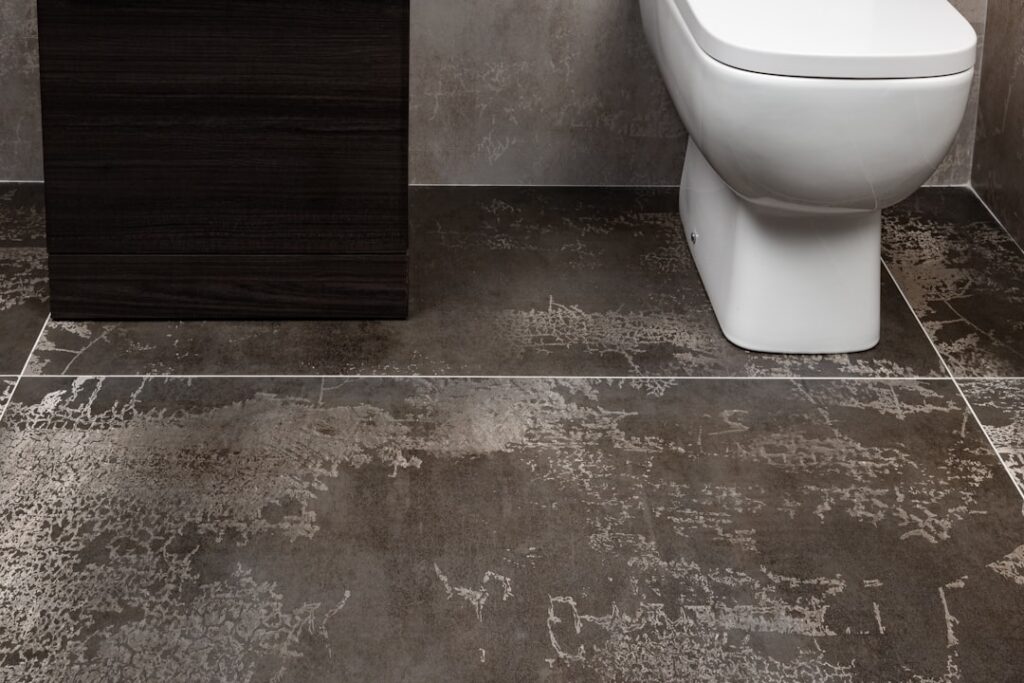
Nothing signals luxury in a bathroom quite like natural stone underfoot. But stone flooring in a bathroom is a commitment, not just a finish, because stone is porous, can be slippery when wet, and demands sealing and care that ceramic tile does not. Choose the right stone and maintain it properly, and you get a stunning, durable floor that lasts decades and lifts your home’s value. Choose poorly and you fight stains, etching, and slips. This guide covers the best stones, their trade-offs, and how to do it right.
Part of our Bathroom Remodeling & Flooring guide — explore the full guide →
- Why Stone Works, and Where It Struggles
- Best Stones for Bathroom Floors
- Slip Resistance Is a Safety Issue
- Sealing and Maintenance
- Pros of Stone Bathroom Floors
- Cons to Weigh
- Cost and Installation
- Grout and Layout Choices
- Radiant Heat Pairing
- Is Stone Right for Your Bathroom?
- Sealing Schedule and Products
- The Bottom Line
Why Stone Works, and Where It Struggles
Natural stone brings depth and character no manufactured tile can fully copy, every slab is unique. It is hard, long-lasting, and adds real resale appeal. The catch is that stone is porous and reactive. Bathrooms are wet, humid environments, so the stone you pick and how you seal it determine whether it thrives or deteriorates.
Best Stones for Bathroom Floors
Not all stone behaves the same in a wet room. Here is how the popular choices compare.
- Slate: Naturally slip-resistant thanks to its textured surface, dense, and forgiving of water. One of the best all-around bathroom stones.
- Granite: Extremely hard, dense, and stain-resistant once sealed. Polished granite can be slick, so prefer honed or textured finishes.
- Travertine: Warm, classic look, but full of natural pits that must be filled and sealed, and it is sensitive to acids.
- Marble: The luxury choice, gorgeous veining, but soft, porous, and prone to etching from acidic products. High-maintenance.
- Limestone: Soft and elegant but very porous, best for low-traffic, carefully maintained baths.
Slip Resistance Is a Safety Issue
A wet bathroom floor is a fall risk, and polished stone is dangerously slick. Choose honed (matte) or textured finishes over high-polish. Slate’s natural cleft surface grips well, and smaller tiles with more grout lines add traction. For showers and tub surrounds, mosaic-size stone with abundant grout is the safest pick.
Sealing and Maintenance
This is the part buyers underestimate. Porous stone must be sealed before use and resealed periodically, often every one to two years, to repel water and stains. Use only pH-neutral, stone-safe cleaners, never vinegar, lemon, or generic bathroom sprays, which etch marble, travertine, and limestone. Wipe up spills promptly and dry standing water to prevent mineral deposits.
Pros of Stone Bathroom Floors
- Striking, high-end appearance that boosts home value.
- Extremely durable, a well-cared-for stone floor lasts for decades.
- Each tile is one of a kind, no repeating printed patterns.
- Pairs beautifully with radiant floor heating to take the chill off.
- Slate and granite offer excellent water and wear resistance.
Cons to Weigh
- Porous, requires sealing and ongoing maintenance.
- Polished surfaces are slippery when wet.
- Cold and hard underfoot without radiant heat.
- Higher cost than ceramic or porcelain, both material and installation.
- Soft stones like marble and limestone etch and scratch easily.
- Heavy, may require subfloor reinforcement for thick slabs.
Cost and Installation
Natural stone typically runs $5 to $20 per square foot for material, with premium marble and rare stones costing more, plus skilled installation on top. Stone is heavy and unforgiving to cut, so professional installation is strongly recommended. Confirm your subfloor can carry the load, and budget for sealing supplies as part of the project. Pairing it with electric radiant heat adds comfort that makes cold stone genuinely pleasant.
Grout and Layout Choices
The grout between stone tiles is often the weak link, and getting it right matters as much as the stone. In a wet bathroom, choose a high-quality grout and consider epoxy grout for showers and tub surrounds, it resists water, staining, and mildew far better than standard cementitious grout. Seal cement-based grout along with the stone, and match the grout color thoughtfully, since light grout shows dirt while darker tones hide it.
Layout affects both looks and safety. Large-format tiles read clean and modern but offer fewer grout lines for traction, so reserve them for areas that stay drier. On shower floors, small mosaic tiles with abundant grout lines provide the grip you want underfoot and conform to the slope toward the drain.
Radiant Heat Pairing
Stone’s cold, hard feel is its most common complaint, and electric radiant floor heating is the definitive fix. Thin heating mats install directly under the tile during the setting process, warming the stone to a pleasant temperature and taking the shock out of stepping onto the floor on a winter morning. The system also helps the floor dry faster after showers, which reduces mildew. Installing it during a remodel costs far less than retrofitting later, so if you are tiling anyway, this is the moment to add it.
Is Stone Right for Your Bathroom?
If you want a luxury, long-lasting floor and you are willing to seal and maintain it with the right cleaners, stone is a superb choice, especially slate or honed granite for their water and slip performance. If you want low-maintenance and worry-free, porcelain tile that mimics stone may serve you better. Be honest about how much upkeep you will actually do.
Sealing Schedule and Products
Because sealing is what makes porous stone livable in a wet room, it deserves a clear plan rather than guesswork. Most natural stone gets an initial penetrating sealer right after installation, before the floor sees its first shower. After that, the reseal interval depends on the stone and traffic, dense granite may go two years or more, while soft, porous travertine, limestone, and marble often need attention every year.
Test whether resealing is due with the simple water-drop method, sprinkle a few drops on the floor and watch. If the water beads up, the seal is intact, if it soaks in and darkens the stone, it is time to reseal. Use a penetrating, breathable stone sealer rather than a surface coating, and always pick a product rated for the specific stone you have. Staying ahead of the schedule is far easier than removing a stain that has already set into unsealed stone.
The Bottom Line
A stone flooring bathroom delivers unmatched luxury and durability, but it rewards the right choices, pick slate or honed granite for slip and water resistance, avoid high-polish finishes underfoot, and commit to sealing and pH-neutral cleaning. Add radiant heat to fix the cold, confirm your subfloor can bear the weight, and you will enjoy a beautiful natural-stone floor that lasts for decades.
Prefer to explore on your own?
See how new flooring looks in your actual room in seconds — free, no signup.
Try the free Floor Studio →