
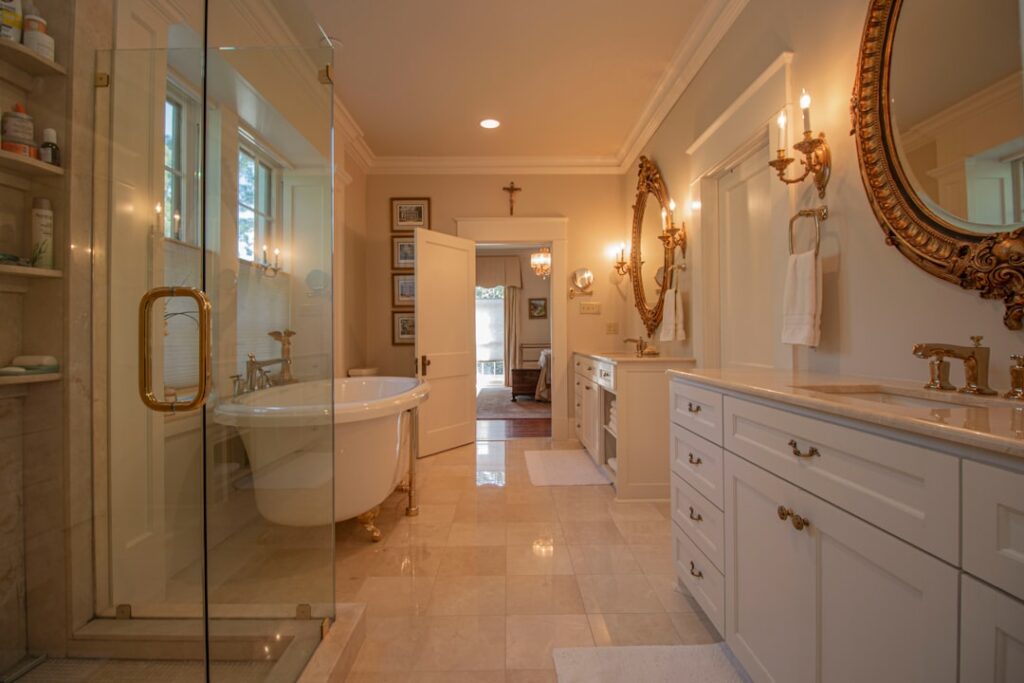
Few materials transform a bathroom the way natural stone does, and it remains one of the most asked-about bathroom floor options. A well-chosen stone tile flooring bathroom floor delivers a look that vinyl and ceramic can only imitate, but it also demands more of you before, during, and after installation. This guide walks through the real trade-offs so you can decide whether the beauty is worth the upkeep in your home.
Part of our Bathroom Remodeling & Flooring guide — explore the full guide →
What Counts as Natural Stone Tile
When people say stone, they usually mean one of five materials: marble, travertine, slate, limestone, and granite. Each behaves differently underfoot. Marble is prized for its veining and cool, luxurious feel, but it is relatively soft and etches when acid touches it. Travertine has a warmer, earthy tone with characteristic pitting that some folks fill and others leave open for texture. Slate is the workhorse of the group, dense and naturally slip-resistant thanks to its cleft surface. Limestone splits the difference with a soft matte look, while granite is the hardest and most stain-resistant of the bunch.
Tile sizes for bathroom floors typically run 12 by 12 inches, 12 by 24 inches, or smaller mosaic sheets around 2 inches for shower pans. Thickness usually falls between 3/8 inch and 1/2 inch for floor-rated stone. Because stone is quarried, no two tiles are identical, so you order roughly 15 to 20 percent extra to account for color blending, breakage, and future repairs.
The Pros: Why Homeowners Love It
The biggest draw is aesthetics. A honed marble floor or a tumbled travertine layout reads as high-end the moment you walk in, and that perception carries real weight at resale. Appraisers and buyers routinely associate natural stone with premium construction, and a stone bathroom can nudge a home’s value in a way few flooring choices do.
Durability is another advantage when the stone is properly sealed and maintained. Slate and granite floors installed in the 1990s are still going strong today, outlasting several generations of vinyl and laminate. Stone also handles heat beautifully, which makes it an ideal partner for electric radiant floor heating systems. Nothing beats stepping onto a warm slate floor on a cold morning. Because each tile is unique, you also get a floor that genuinely cannot be reproduced, which appeals to homeowners tired of the repeating patterns you see in manufactured products.
The Cons: What You Need to Accept
Porosity is the headline problem. Most natural stone drinks up water and staining agents unless you seal it, and a bathroom is the wettest room in the house. Marble and limestone are especially vulnerable to etching from anything acidic, so a splash of toilet-bowl cleaner or even certain soaps can leave a dull spot. That means committing to pH-neutral cleaners for the life of the floor.
Cost is the second hurdle. Stone runs more than ceramic or porcelain both in material and labor, and the installation is genuinely harder, which limits your pool of qualified installers. Finally, some stones are slick when wet, particularly polished marble and granite. In a bathroom that is a safety concern, so surface finish matters enormously, a point covered below.
Slip Resistance and Safety
This is the detail most homeowners overlook until they nearly fall. A polished stone finish looks stunning in photos but turns into a skating rink when wet. For bathroom floors, honed, tumbled, or naturally cleft finishes are the better choice, since they offer far more grip. Slate is a strong pick for exactly this reason; its riven surface sheds water and holds traction.
You can also reduce risk by using smaller tiles with more grout lines in wet zones, since grout adds friction. For shower floors, 2 by 2 inch mosaics are standard because the extra joints keep feet planted. Look for a dynamic coefficient of friction rating of 0.42 or higher, which is the industry benchmark for wet floors set by ANSI A137.1.
Sealing and Maintenance
Sealing is non-negotiable with a stone tile bathroom floor. Before grouting, most installers apply a penetrating sealer to the raw tile, then a second coat after the grout cures. From there you reseal every one to three years depending on traffic and the stone’s porosity. A simple water-drop test tells you when it is time: if water beads, the seal is holding; if it soaks in and darkens the stone, reseal.
Day-to-day care is straightforward but specific. Sweep or vacuum grit that would otherwise scratch the surface, and mop with a pH-neutral stone cleaner rather than vinegar, bleach, or standard bathroom sprays. Wipe up standing water and avoid abrasive pads. Budget maybe $30 to $50 a year in specialty cleaner and sealer, which is the ongoing cost of admission for natural stone.
What Stone Bathroom Flooring Costs
Material prices vary widely by species and grade. Travertine and slate are the value picks, often landing between $5 and $10 per square foot. Limestone runs $6 to $12, while marble typically ranges from $10 to $20 and premium varieties climb well past that. Granite tile sits around $8 to $15. Installation adds another $8 to $15 per square foot because stone requires precise substrate prep, wet-cutting, and careful setting.
For a typical 40 to 50 square foot bathroom floor, expect an installed total somewhere between $1,200 and $2,500 for mid-range stone, more if you choose high-end marble or add radiant heat. That heating system itself adds roughly $10 to $20 per square foot but pays you back in comfort and helps the floor dry faster, which is a real benefit in a damp room.
Installation Considerations
Stone is heavy and unforgiving, so the substrate has to be right. Over a wood subfloor, most pros install a cement backer board or an uncoupling membrane like Schluter Ditra to prevent cracking as the house moves. The floor must be dead flat, within 1/8 inch over 10 feet, because stone will not flex to hide dips the way a resilient floor does.
Tiles are set in a polymer-modified thinset, and many stones require back-buttering for full coverage since voids under the tile lead to cracks and hollow spots. Cutting is done wet with a diamond blade to avoid chipping. Because of all this, stone is not a beginner-friendly weekend project. If you are handy and patient it can be done, but hiring an experienced tile setter is generally the better call for a bathroom, where waterproofing failures get expensive fast.
Comparing the Main Stone Types
Choosing the right species for a bathroom comes down to matching the stone’s character to how you live. Slate is the first recommendation for a family bathroom because it hides dirt, resists staining better than most, and its natural cleft gives excellent traction. Travertine suits a spa-like, Old World aesthetic and stays warm underfoot, though the natural pits collect grime unless they are filled and sealed. Marble is the showpiece for a primary bath where beauty trumps practicality, but be honest with yourself about the etching and the pH-neutral cleaning discipline it demands.
Limestone gives you that soft, uniform matte look designers love, yet it is among the softest and most porous options, so it belongs in lower-traffic powder rooms rather than a busy kids’ bath. Granite is the most bulletproof against stains and scratches, making it a sensible pick for anyone who wants the stone look with the least fuss. Whatever you choose, buy all your tile from a single quarry lot so the color and veining blend, because reordering later almost never matches.
Is Stone Tile Right for Your Bathroom?
Choose natural stone if you want a distinctive, long-lasting floor and you are genuinely willing to seal it and clean it correctly. It rewards owners who care for it and punishes those who ignore it. If you love the look but dread the maintenance, modern porcelain tiles now mimic marble and travertine convincingly at a lower price and with zero sealing. But for authenticity and that irreplaceable feel underfoot, real stone still has no substitute. Match the finish to safety, budget for the upkeep, and a stone bathroom floor will serve you beautifully for decades.
Prefer to explore on your own?
See how new flooring looks in your actual room in seconds — free, no signup.
Try the free Floor Studio →

