Trend-chasing is expensive in a bathroom, because you cannot repaint tile. The bold teal hex that felt fresh in 2018 dates a room fast, while a well-chosen neutral still looks intentional a decade later. That is the quiet case for neutral bathroom floor tile: it reads as timeless, it flatters every wall color and vanity you will ever swap in, and appraisers and buyers respond to it. But “neutral” covers a huge range, from crisp gallery white to warm greige to moody charcoal, and choosing well takes more than picking beige. Here is how to build a neutral floor that feels designed, not default.
Part of our Bathroom Remodeling & Flooring guide — explore the full guide →
What Counts as Neutral
Neutrals are the colors without a strong hue: whites, creams, grays, greiges (gray-beige), taupes, and soft blacks. They come in two temperature families, and matching temperature is the trick to a cohesive room.
- Warm neutrals: Cream, beige, greige, warm taupe, sandy tones. They make a bathroom feel cozy and pair with brass fixtures, wood vanities, and travertine looks.
- Cool neutrals: True gray, greige leaning gray, charcoal, crisp white. They read modern and clean, and pair with chrome, matte black, and quartz.
Pick a lane. A warm cream floor under a cool gray vanity fights itself. Decide whether your bathroom is warm or cool first, then choose the tile temperature to match.
Material Options
Porcelain and Ceramic
The default for good reason: waterproof, affordable, and available in every neutral imaginable, including convincing stone and concrete looks. Porcelain (under 0.5% water absorption) is the tougher choice for a floor. Expect $2.50 to $7 per sq ft.
Natural Stone Looks
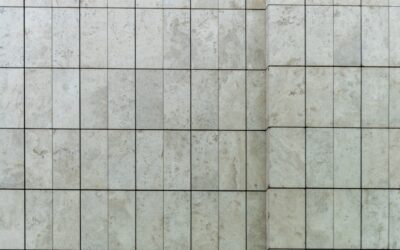
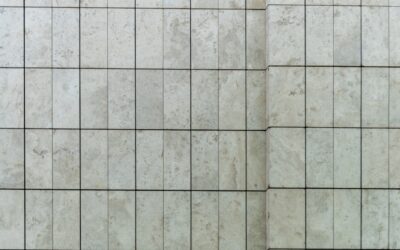
Marble-look and travertine-look porcelain deliver the luxury neutral of real stone with none of the sealing and etching headaches. A honed white-marble-look porcelain is one of the most timeless bathroom floors you can install.
Concrete and Cement Looks
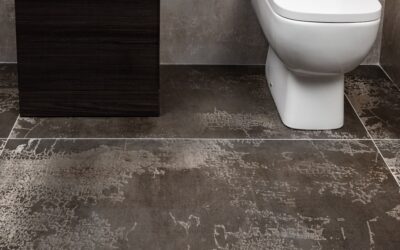
Soft gray concrete-look porcelain gives a modern, spa-like neutral that pairs with almost anything. Cement-look tiles avoid the sealing and cracking of real concrete or encaustic cement tile.
Color Ideas That Age Well
- Warm greige: The most forgiving neutral, it hides water spots and hair better than stark white and works in warm or cool rooms.
- Soft white marble-look: Bright, classic, and resale-friendly; use a matte finish and gray-toned grout so it does not look sterile.
- Charcoal or slate gray: A grounded, modern neutral that hides dirt and reads high-end against white walls and fixtures.
- Warm sand or limestone look: Cozy and organic, especially in a spa-style bath with wood accents.
Size and Layout
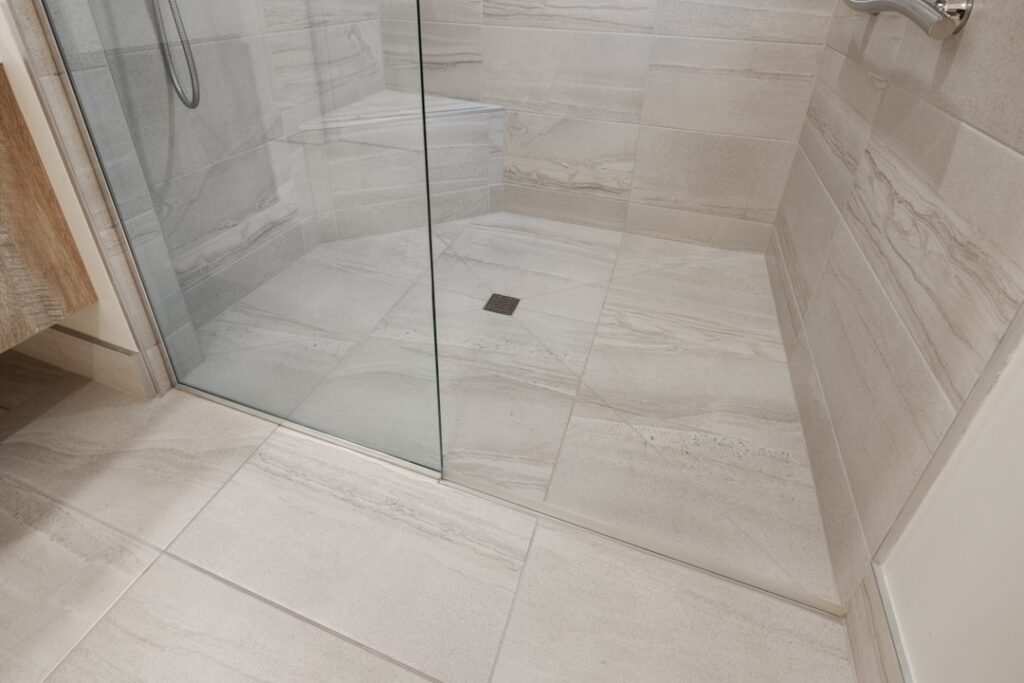
Tile size changes the whole feel. Large-format tiles (12×24 and up) mean fewer grout lines, a cleaner modern look, and easier cleaning, and they make a small bathroom feel bigger. Classic mosaics like penny round, hexagon, and 2×2 add subtle vintage texture and, importantly, extra slip resistance from all those grout lines. A popular timeless move is a large-format neutral on the main floor with a matching or slightly contrasting mosaic in the shower pan for grip.
Do Not Forget Slip Resistance
Neutral does not mean smooth. Bathroom floors get wet, so choose a matte or textured finish with a Dynamic Coefficient of Friction (DCOF) of at least 0.42. Polished neutral tile looks gorgeous in a showroom and becomes a hazard by the tub. A honed or matte neutral gives you the calm look with real-world grip.
The Grout Decision
Grout color can make or break a neutral floor. Matching the grout closely to the tile creates a seamless, expansive look and hides the seams. Choosing a grout a shade or two off adds subtle definition and a slightly more traditional feel. Avoid bright white grout on a floor; it stains and shows every footprint. A warm gray or greige grout stays looking clean far longer and flatters most neutral tile. Use a stain-resistant urethane or epoxy grout to keep those lines fresh.
Cost to Expect
- Neutral porcelain tile: $2.50 to $7 per sq ft.
- Marble-look and premium porcelain: $6 to $12 per sq ft.
- Installation: $7 to $14 per sq ft, more for intricate mosaics or patterns.
A standard 50 sq ft bathroom floor typically runs $500 to $1,000 installed with mid-grade neutral porcelain.
Pattern and Layout Ideas Within a Neutral Palette
Neutral does not have to mean boring. Because your colors are quiet, you can add interest through pattern without the room feeling busy. A few timeless moves:
- Herringbone or chevron in a single neutral tone adds subtle movement and reads as tailored and upscale.
- Hexagon or penny-round mosaics in a matte white or greige bring vintage character and extra slip resistance.
- Large-format tiles laid straight with tight, color-matched grout for a clean, expansive, modern look.
- A simple two-tone border or a mosaic shower pan that ties into the main floor for quiet definition.
Pick one feature and keep everything else calm. A herringbone floor pairs best with plain walls; a busy patterned floor wants simple surroundings.
Coordinating the Rest of the Bathroom
A neutral floor is a foundation, not the whole design, and it frees you to bring personality in through elements that are easy and cheap to change. Because greige, gray, and cream go with everything, you can swap paint colors, add a bold vanity, hang colorful art, or change out towels and a shower curtain over the years without ever touching the floor. That flexibility is the practical payoff of a neutral: the expensive, permanent surface stays timeless while the inexpensive, changeable accents carry the trends. When you do coordinate, keep metals consistent (all warm brass or all cool chrome) and let the floor’s temperature guide that choice.
Why Neutrals Protect Resale Value
If there is any chance you will sell, a neutral bathroom floor is money in the bank. Buyers and appraisers respond to floors that feel current and broadly appealing, and a bold or trendy color instantly reads as a project someone will have to redo. A warm greige or soft marble-look floor, by contrast, signals a move-in-ready, well-considered space. It is one of the few design decisions that satisfies both your daily enjoyment and a future buyer’s taste, which is exactly why it remains the default recommendation of designers and stagers alike.
Frequently Asked Questions
What is the most timeless neutral bathroom floor color?
Warm greige and soft white marble-look porcelain are the safest long-term bets. Both flatter nearly any wall color and fixture finish, hide daily grime reasonably well, and consistently appeal to buyers, so they age gracefully.
Should the floor be lighter or darker than the walls?
Either works, but grounding the room with a floor slightly darker than the walls is a classic, comfortable formula. A darker neutral floor also hides dirt and water spots better than a very light one.
Is white bathroom floor tile hard to keep clean?
White tile itself wipes clean easily, but white grout stains and shows footprints. If you love a white floor, pair it with a warm gray grout and a stain-resistant grout formula to keep the lines looking fresh.
What grout color works best with neutral tile?
A grout that closely matches the tile gives a seamless, modern look, while a slightly contrasting shade adds definition. In both cases, lean warm gray or greige rather than bright white, since those hide staining far better on a floor.
A neutral bathroom floor is the design equivalent of a good blazer: it goes with everything and never looks dated. Commit to a warm or cool temperature, pick a matte or textured finish at DCOF 0.42 or higher, match your grout to a stain-hiding gray, and you will have a floor that still looks right long after this year’s trends have come and gone.
Prefer to explore on your own?
See how new flooring looks in your actual room in seconds — free, no signup.
Try the free Floor Studio →