Straight answer: sometimes. So is grout sealant necessary? For standard cement-based grout in stain-prone or wet locations — kitchen floors, backsplashes behind stoves, shower walls — sealing is cheap insurance that makes cleaning dramatically easier and slows staining, and I recommend it. For epoxy and most urethane or pre-sealed grouts, sealing is never necessary and can even leave a smeary film. And contrary to the sales pitch, sealer is not waterproofing and it will not stop mold, save a failing shower, or protect tile — those jobs belong to the waterproofing membrane behind the tile. Once you understand what sealer actually does, deciding where to spend the $15 to $30 a bottle takes about a minute per room. Here is the framework I give clients.
Part of our Tile & Grout guide — explore the full guide →
- What grout sealer actually does — and does not do
- First, know your grout: some never needs sealing
- Where sealing is worth it
- Where you can reasonably skip it
- Penetrating vs. membrane sealers: buy the right kind
- How and when to apply
- Don’t confuse sealing grout with sealing tile
- How often to reseal, and how to check
- The shower caveat that matters
What grout sealer actually does — and does not do
Cement grout is porous, like a very hard sponge. Liquids wick into it, carrying pigments (wine, coffee, pet accidents), oils (cooking grease, body oils), and minerals (hard-water deposits). A penetrating sealer deposits silane/siloxane or fluoropolymer resins inside those pores, making the grout repel water and oil so spills sit on the surface long enough to wipe up instead of soaking in. That is the entire benefit: stain resistance and easier cleaning.
What it does not do: it is not a waterproof coating. Sealed grout still passes water vapor, and a shower assembly is designed to get wet behind the grout and drain via the membrane and weep holes. Sealer also does not strengthen weak grout, glue down flaking grout, or prevent cracking. And it does not make mold impossible — mold grows on the soap film and organics sitting on top of grout, sealed or not — though by keeping the grout surface less absorbent, it does make mold easier to clean off and slower to root in.
First, know your grout: some never needs sealing
| Grout type | Needs sealer? | Notes |
|---|---|---|
| Cement grout, sanded or unsanded | Yes, in the right locations | The standard bagged grout; porous |
| Cement grout with polymer “stain-resist” additives | Optional | Better than plain, still porous over time |
| Epoxy grout | No, ever | Non-porous resin; sealer just films on top |
| Urethane / acrylic premixed | No (check label) | Most are inherently sealed |
| Grout treated with colorant/sealer product | No | The colorant is the sealer |
Not sure what you have? Drip a teaspoon of water on a clean joint. If it darkens within a couple of minutes, the grout is absorbent cement and would benefit from sealer. If it beads and sits, you have epoxy, urethane, or already-sealed grout, and you can put the bottle back on the shelf.
Where sealing is worth it
- Kitchen floors and backsplashes: the strongest case. Grease, coffee, tomato sauce, and foot traffic make unsealed light grout look dirty within a year. Seal these, always.
- Bathroom floors: yes — the area around the toilet in particular will thank you.
- Shower walls and floors with cement grout: yes, for cleanability. Soap scum and hard-water minerals wipe off sealed grout far more easily, and light grout stays light longer. Just understand you are sealing for maintenance, not waterproofing.
- Entryways and mudrooms: yes. Dirt-laden water is a stain delivery system.
- Light-colored grout anywhere: the lighter the grout, the more sealing pays off, purely cosmetically.
Where you can reasonably skip it
- Epoxy or urethane grout anywhere: skip, full stop.
- Dark grout in dry, low-traffic rooms: a charcoal-grouted laundry room floor hides everything; sealing is optional polish, not necessity.
- Rarely used guest bathrooms: low exposure, low payoff. Fine to skip or defer.
- Exterior grout in freeze climates — choose carefully: only use breathable penetrating sealers outdoors; film-forming products can trap moisture and contribute to freeze spalling. When in doubt outside, skip film formers entirely.
Penetrating vs. membrane sealers: buy the right kind
Two families sit on the shelf. Penetrating (impregnating) sealers soak in, leave no film, do not change appearance (unless you buy an enhancing version), and let the grout breathe — this is the right choice for virtually every grout application, at $15 to $40 per pint-to-quart. Membrane-forming (topical) sealers coat the surface with an acrylic film that can add sheen; they show wear paths, can peel or fog in wet areas, and complicate future work, so I avoid them on grout except in rare decorative cases. If the label says “surface sealer” or promises a glossy finish, that is the one to leave behind for a shower or floor.
Within penetrating sealers, solvent-based products tend to penetrate slightly deeper and last longer; water-based products smell less and are fine for most homes. Fluoropolymer-fortified versions add oil repellency, which matters most in kitchens.
How and when to apply
- Timing on new grout: wait 48 to 72 hours minimum after grouting (check your sealer’s label; some want longer) so cure moisture can leave. Sealing same-day traps water and blotches.
- Clean first: sealer locks in whatever is under it, including stains. Scrub the joints, rinse, and let dry 24 hours. On existing floors, deep-clean before resealing.
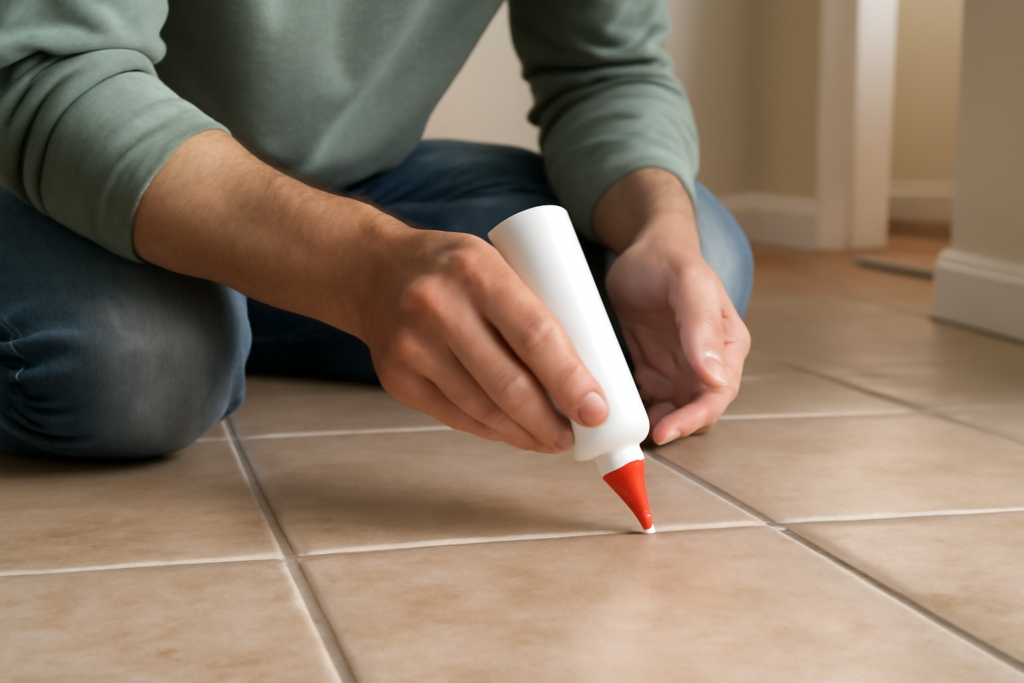
- Apply to the joints: brush, roller wheel applicator, or spray-and-wipe depending on the product. On glazed tile, sloppy application is forgiving — wipe overage off the tile within about 5 minutes so it does not haze. On porous natural stone, seal the whole surface, stone and grout together, with a stone-rated sealer.
- Two thin coats 15 to 60 minutes apart beat one flood coat.
- Cure: keep the area dry for whatever the label says, commonly 24 hours before water exposure.
A bathroom takes an hour of actual work. Pros charge $100 to $300 to seal a bathroom’s grout, which is why this is one of the trades’ most padded add-ons — it is genuinely a DIY task.
Don’t confuse sealing grout with sealing tile
One clarification that saves people from buying the wrong product: glazed ceramic and porcelain tile never need sealing — the fired glaze is already impervious, and sealer just sits on it as a smeary film. Only the grout between those tiles is porous. Natural stone flips the equation: marble, travertine, limestone, slate, and honed granite are porous like grout, so on stone installations you seal the entire surface, stone and joints together, with a stone-rated penetrating sealer, typically on a similar 1-to-3-year cycle. If a contractor quotes you to “seal the tile” on a porcelain floor, they mean the grout lines, and you should be paying for the twenty minutes of applicator work that job actually is.
How often to reseal, and how to check
Forget the blanket “every year” advice printed on bottles. Real resealing intervals: kitchen and entry floors every 1 to 2 years, showers every 1 to 3 years, dry-area floors every 3 to 5. Better than any schedule is the water-drop test twice a year: drip water on the busiest joint; if it darkens quickly, clean and reseal; if it still repels, go back to your life. Over-sealing wastes money but does little harm with penetrating products — the grout simply cannot absorb more.
The shower caveat that matters
The most dangerous misunderstanding I encounter: homeowners with a leaking or moldy shower who believe sealer is the fix. Sealer maintains the cosmetic surface of a healthy shower. If grout is cracking along the tub line, if joints are dark with mold regrowth weeks after cleaning, or if there is any sign of water damage on the ceiling below, the problem is movement or the waterproofing behind the tile, and sealing over it wastes a weekend and hides the evidence. Fix the assembly, regrout, then seal.
So, buying advice in one paragraph: check what grout you have with the water-drop test; if it absorbs, buy one quart of a penetrating, water-based, fluoropolymer-fortified sealer, seal the kitchen and bathrooms on a Saturday morning, and repeat when the drop test tells you to. Skip sealing epoxy, skip the glossy topical products, and never let anyone sell you sealer as waterproofing. Necessary is a strong word — your tile will not fall off the wall without it — but for $25 and an hour, sealed cement grout stays cleaner, wipes up faster, and keeps light joints looking new for years. That trade is worth taking in every kitchen and shower I finish.
Prefer to explore on your own?
See how new flooring looks in your actual room in seconds — free, no signup.
Try the free Floor Studio →