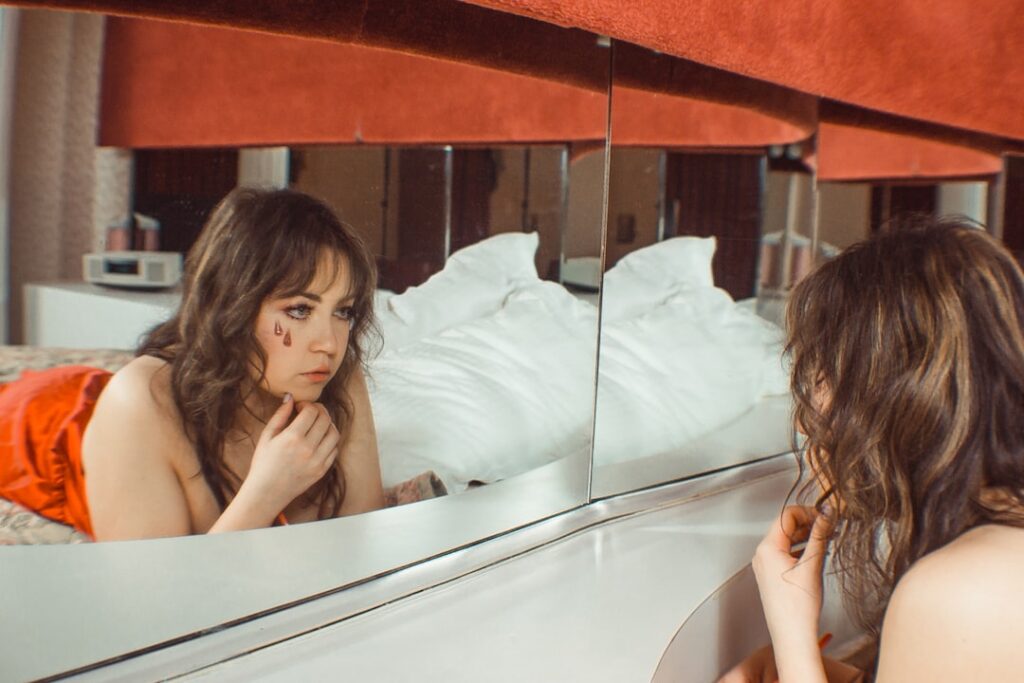
If you have ever wondered is it bad to have a mirror facing your bed, you are tapping into a design question that spans feng shui tradition, sleep psychology, and practical bedroom layout, and surveys consistently show many people report feeling uneasy with a mirror reflecting them while they sleep. There is no scientific proof that a mirror harms you, but there are real reasons rooted in comfort and perception why so many people choose to avoid the arrangement. At D and G Flooring, we care about how homes feel, not just how they look, and bedroom comfort is central to that.
- The Feng Shui Perspective
- The Psychological and Sleep Angle
- How a Mirror Affects the Feel of a Room
- Better Places to Position a Bedroom Mirror
- Practical Fixes if You Cannot Move the Mirror
- What the Evidence Actually Says
- How to Decide for Your Own Bedroom
- Mirrors and Small Bedroom Design
- Final Thoughts
The Feng Shui Perspective
The most well-known objection comes from feng shui, the Chinese practice of arranging spaces to support the flow of energy, or chi. In feng shui, mirrors are considered powerful because they reflect and amplify energy. A mirror facing the bed is traditionally believed to bounce active energy back toward the sleeper, disrupting the rest and calm a bedroom is meant to provide. Practitioners say this can contribute to restlessness and a feeling of being unsettled. Some traditions also hold that a mirror facing the bed can interfere with relationships or invite a third party into a couple’s space. Whether or not you follow these beliefs, they reflect a long-standing intuition that bedrooms should feel still and protected.
The Psychological and Sleep Angle
Beyond tradition, there are practical, mind-based reasons a facing mirror can disturb sleep. At night, a mirror can catch and reflect light from a window, a streetlamp, a phone screen, or a partially open door. Movement in that reflection, or even your own form, can register in your peripheral vision and momentarily trigger the brain’s threat-detection response as you are drifting off or waking in the dark. For light sleepers, this can mean brief startles or a vague sense of unease. A mirror also creates the impression of a second presence in the room, which some people find subtly unsettling even when they know rationally that it is only a reflection.
How a Mirror Affects the Feel of a Room
It is worth balancing the concerns with the genuine benefits, because mirrors are valuable design tools. A well-placed mirror makes a bedroom feel larger and brighter by reflecting light and visually expanding the space. In a small or dim bedroom, removing all mirrors can make the room feel cramped. The goal, then, is not to ban mirrors from the bedroom entirely but to position them thoughtfully so you keep the light-enhancing benefits without the unsettling reflection at your bed.
Better Places to Position a Bedroom Mirror
You can enjoy a mirror without it facing the bed by choosing a smarter location:
- On a side wall: A mirror perpendicular to the bed reflects the room and light without reflecting the sleeper.
- On the inside of a closet or wardrobe door: This keeps a full-length mirror handy for dressing while hiding it when closed.
- Above a dresser away from the bed’s line of sight: Useful and out of the direct reflection path.
- On the same wall as the headboard: A mirror above or behind the bed cannot reflect you while you sleep.
The simple test is to lie in bed and check whether you can see yourself. If you cannot, most of the concerns disappear.
Practical Fixes if You Cannot Move the Mirror
Sometimes a mirror is built in, such as a mirrored closet door, and relocating it is not an option. There are easy remedies. You can cover the mirror at night with a decorative cloth, a curtain, or a folding screen, which many people do specifically for better sleep. Repositioning the bed so it no longer faces the mirror is another solution, even a slight angle change can break the direct line of sight. For mirrored closet doors, hanging lightweight curtains on a tension rod in front of them softens the room and eliminates the reflection while adding a cozy, finished look.
What the Evidence Actually Says
It is important to be clear-eyed: there is no scientific study proving that a mirror facing your bed causes harm, bad luck, or health problems. The feng shui concerns are based on a traditional belief system, not measurable physics. The sleep-related effects are real but indirect, stemming from light reflection and the brain’s response to movement and perceived presence, not from the mirror itself. In other words, whether a facing mirror bothers you is largely personal. Some people sleep perfectly well with a mirror across from the bed and never give it a thought, while others feel noticeably more at ease once they move or cover it.
How to Decide for Your Own Bedroom
The practical approach is to let your own comfort guide you. Ask yourself a few questions. Do you sleep poorly or wake feeling unsettled for no clear reason? Does the mirror catch outside light or movement at night? Do you simply feel uneasy seeing a reflection as you fall asleep? If any answer is yes, repositioning or covering the mirror is a low-cost, no-risk change worth trying. If you sleep soundly and like the brightness a mirror adds, there is no objective reason to remove it. Your bedroom should serve your rest above any rule.
Mirrors and Small Bedroom Design
If you have decided to keep a mirror but want to use it well, placement can solve both the comfort question and a design challenge at once. In a small or dark bedroom, a large mirror is one of the most effective tools for making the space feel bigger and brighter, so the goal is to capture that benefit without aiming it at the bed. Position a tall mirror to reflect a window, which bounces natural daylight deeper into the room and visually doubles the sense of openness. Leaning a full-length mirror against a side wall adds height and a relaxed, designer feel while keeping it out of your sightline from the pillow. Grouping a few smaller framed mirrors on a side wall can also add light and interest without the unsettling effect of one large reflective surface facing you. The key principle is that a mirror should reflect something pleasant, light, art, or greenery, rather than the bed itself, so you gain the spaciousness and brightness while preserving a calm, restful atmosphere for sleep.
Final Thoughts
So, is it bad to have a mirror facing your bed? Not in any proven, physical sense, but plenty of people find it disrupts their sense of calm, whether for feng shui reasons or simply because reflected light and perceived movement interfere with deep rest. The good news is that you do not have to choose between a restful bedroom and a useful mirror. By placing the mirror on a side wall, behind the headboard, or inside a closet, or by covering it at night, you keep the light and space benefits while creating the peaceful, undisturbed retreat a bedroom is meant to be.