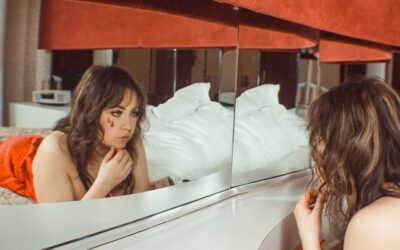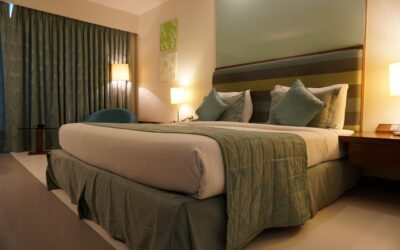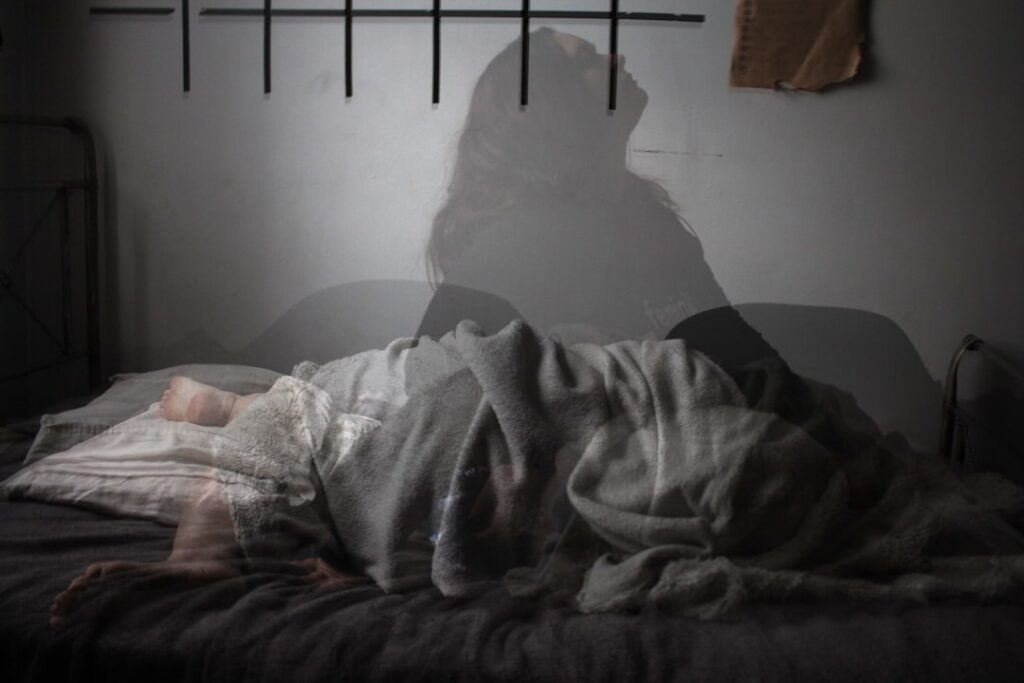
It’s one of the most common bedroom design questions I hear, and the honest answer sits somewhere between old tradition and practical experience. Asking is it bad to sleep with a mirror facing your bed pulls in two very different conversations: centuries of feng shui belief on one side, and genuine everyday reasons about light, reflections, and sleep quality on the other. Both are worth understanding before you decide where that mirror goes.
The Feng Shui Perspective
In feng shui, the ancient Chinese practice of arranging space to support the flow of energy, or chi, a mirror facing the bed is widely discouraged. Practitioners believe mirrors are active, energizing objects. They bounce energy around a room, and a bedroom is supposed to be a place of rest and calm. A mirror reflecting the bed is thought to amplify and circulate energy at exactly the time you want it to settle.
There are a few specific beliefs worth knowing:
- Relationship strain: a mirror reflecting the bed is said to invite a third party into a marriage or partnership.
- Restless energy: the reflection is believed to bounce chi back toward the sleeper, disrupting rest.
- Soul and spirit lore: some traditions hold that the soul leaves the body during sleep, and seeing itself in a mirror can startle it.
- Doubling worries: mirrors are thought to double whatever they reflect, including stress or clutter near the bed.
You don’t have to believe any of this literally for it to be useful. Feng shui is often just codified common sense about creating a restful room, and its mirror guidance overlaps neatly with practical concerns.
The Practical Reasons That Actually Affect Sleep
Set the metaphysics aside and there are concrete, physical reasons a mirror facing the bed can hurt your sleep. These are the ones I point out to clients most often because they’re measurable and real.
Startling Nighttime Reflections
When you wake at 2 a.m. and your eyes are adjusting, a mirror can catch a shadow, a shifting blanket, or your own moving silhouette and read as motion in the dark. That split-second jolt of “something’s there” spikes your heart rate and pulls you further out of sleep. In a room with a streetlight or a cracked door, this happens more than people realize.
Light Bouncing and Amplification
Mirrors reflect and multiply every light source in the room. A phone charging LED, a smoke-detector indicator, moonlight through the blinds, or headlights sweeping across the ceiling all get bounced back toward the bed. Even small amounts of light exposure at night can suppress melatonin and fragment sleep. A large mirror opposite a window is essentially a second window aimed at your face.
A Sense of Being Watched
Plenty of people report a low-level unease sleeping across from a mirror, independent of any belief system. The brain is wired to notice faces and eyes, and catching your own reflection in dim light can create a subtle, persistent alertness that keeps you from fully relaxing.
When a Mirror Facing the Bed Is Fine
It isn’t automatically a problem. If your bedroom is dark, your mirror doesn’t face a light source, and you sleep soundly, there’s no reason to tear anything off the wall. Small mirrors, mirrors above a dresser at an angle, or mirrored closet doors that stay closed rarely cause issues. The concern grows with the size of the mirror, how directly it faces the bed, and how much light is in the room. A giant floor mirror pointed straight at your pillow near a window is the worst case; a modest framed mirror on a side wall is usually harmless.
Simple Design Fixes
If you’d rather not test your luck or your sleep, you have easy options that don’t require redecorating the whole room.
- Reposition it: move the mirror to a wall that doesn’t reflect the bed, such as beside the bed or on the same wall as the headboard.
- Cover it at night: a decorative cloth, a folding screen, or curtains mounted over the mirror let you hide the reflection only while you sleep.
- Angle it upward: tilt a leaning floor mirror so it reflects the ceiling rather than the bed.
- Use mirrored closet doors strategically: keep them closed at night, or replace them with frosted or paneled doors.
- Choose smaller mirrors: a compact vanity mirror gives you function without a wall-sized reflection aimed at the bed.
- Add a folding screen: a room divider placed between the bed and mirror blocks the sightline while adding style.
My usual advice is the least dramatic one: just move it. A mirror works better over a dresser or inside a closet than staring down your bed, and relocating it costs nothing but a few minutes and a couple of drywall anchors.
What Sleep Research Actually Says
No study has ever tested “mirror facing the bed” directly, but the underlying mechanisms are well documented. Sleep researchers are clear that even dim light at night interferes with melatonin, the hormone that regulates your sleep cycle. A 2022 study out of Northwestern University found that sleeping in a moderately lit room raised nighttime heart rate and reduced insulin sensitivity the next morning compared with a dark room. A mirror doesn’t create light, but it redistributes and multiplies whatever light exists, effectively brightening the room from the sleeper’s point of view.
The startle response is equally real. Your visual system stays partially active during light sleep and is tuned to detect movement and faces. A reflection that shifts when you roll over can trigger a brief arousal, and repeated micro-awakenings fragment sleep even if you don’t fully wake. So while the mirror itself is harmless, its two side effects, extra light and unexpected motion, line up with things sleep science already tells us to minimize.
Placement Beyond the Mirror
While you’re rethinking the mirror, it’s worth looking at the whole reflective picture. Glossy picture frames, a television screen, and even a polished metal headboard bounce light in the same way. If your goal is a dark, calm room, treat every shiny surface the same as a mirror: keep it off the wall your bed faces, or cover and angle it away from light sources at night. Blackout curtains and a piece of tape over glowing electronics will do more for your sleep than fretting over a single mirror, but the principle is identical.
Balancing Belief and Practicality
You don’t have to pick a side. If feng shui matters to you, honoring the guideline costs little and may bring peace of mind. If you’re purely practical, the light and reflection reasons stand on their own. Either way, the fix is the same: keep large mirrors from facing the bed, especially if they also face a window or door. The result is a darker, calmer, more restful room, which is what everyone actually wants from a bedroom.
Frequently Asked Questions
Is it bad to sleep with a mirror facing your bed for health reasons?
There’s no medical evidence a mirror harms your health directly. The real effects are indirect: reflected light and startling nighttime reflections can disrupt sleep, and poor sleep does affect wellbeing. Reducing light and reflections toward the bed is the practical takeaway.
Do I need to remove the mirror completely?
No. Repositioning it, covering it at night, or angling it away from the bed solves the problem. Removal is only necessary if there’s truly no other spot for it.
What about mirrored closet doors?
Keep them closed at night to avoid reflecting the bed and any light sources. If they consistently bother you, frosted or paneled replacement doors are an easy upgrade.
Does the size of the mirror matter?
Yes. Large mirrors reflect more light and more of the room, so they’re far more likely to cause issues than a small framed piece. If you want a big mirror, place it where it won’t face the bed or a window.
Trust the overlap between old wisdom and plain physics here. Keep mirrors off the wall your bed faces, control the light, and you’ll sleep better whether or not you believe in chi.