Tear off the boards of a 15-year-old deck and the story is always the same: the joists are sound everywhere except the top edge, where every screw hole and every board gap funneled water into the wood for a decade and a half. Joist tape for decking exists to stop exactly that failure. It is a self-adhering flashing membrane applied to the top of joists, beams, and ledgers before the deck boards go down, sealing fasteners as they are driven and shedding water off the frame’s most vulnerable surface. On a typical 300-square-foot deck it adds $100 to $200 and a couple of hours — trivial numbers against a $4,000-plus frame rebuild. Here is why the top edge rots first, what the tape actually does, and how to choose and install it properly.
Why Joist Tops Rot First
Pressure-treated lumber is not waterproof; it is decay-resistant, and the treatment penetrates the outer layers most. The top edge of a joist takes unique abuse. Deck boards trap a thin, shade-cooled layer of debris and moisture against it after every rain, so it dries slower than any other face. Worse, every fastener hole is a channel past the treated shell into the less-protected core — a single 12-by-24-foot deck can put 700 or more screw penetrations into joist tops. Checks and splits that open as lumber seasons add more entry points, all facing the sky. Rot begins in those holes and checks, spreads along the top edge, and quietly destroys the frame’s bearing surface while the sides still look fine. Ledgers and beam tops fail the same way, and ledger failure is the classic cause of catastrophic deck collapse.
What the Tape Actually Does
Flashing tape attacks the problem three ways. First, it sheds water: the membrane caps the horizontal wood surface so rain runs off to the joist bay instead of soaking in. Second — and most important — quality tapes are self-sealing around fasteners: butyl and modified-asphalt membranes flow around a screw shank as it is driven, gasketing the exact hole that would otherwise pipe water into the core. Third, it separates metal from treated lumber. Modern ACQ and copper azole treatments are notoriously corrosive to steel; a membrane between a galvanized joist hanger flange or a screw head and wet treated wood slows the galvanic attack that eats fasteners. Manufacturers of composite decking know all this, which is why brands like Trex and TimberTech recommend taped frames, and why some framing warranties from tape makers run 20 to 25 years.
Butyl vs. Asphalt: Choosing the Right Product
Two adhesive chemistries dominate:
- Butyl-based tapes — Trex Protect, G-Tape 3040, Imus Seal, DeckWise WiseWrap-JoistTape — stay flexible from roughly minus 20°F to 200°F, do not bleed in summer heat, and install in cooler weather. This is the premium tier, at about $20 to $35 per 50-foot roll of 1 5/8-inch tape.
- Modified-asphalt tapes — Vycor Deck Protector by Grace, standard window-flashing rolls — cost less ($15 to $25 per roll), seal fasteners well, but can ooze black adhesive at high deck-surface temperatures and want installation above about 40°F.
Width matters more than people think. Use 1 5/8-inch tape for single joists, 3 1/8- or 4-inch for doubled joists and beam tops, and 6-inch or wider for ledgers, where the tape should also lap up the wall behind the ledger flashing. For a 12-by-16-foot deck with joists at 16 inches on center, plan on roughly 220 linear feet of narrow tape plus a wide roll for the beam and ledger — typically $120 to $180 total.
Installation: An Hour of Easy Work, a Few Rules
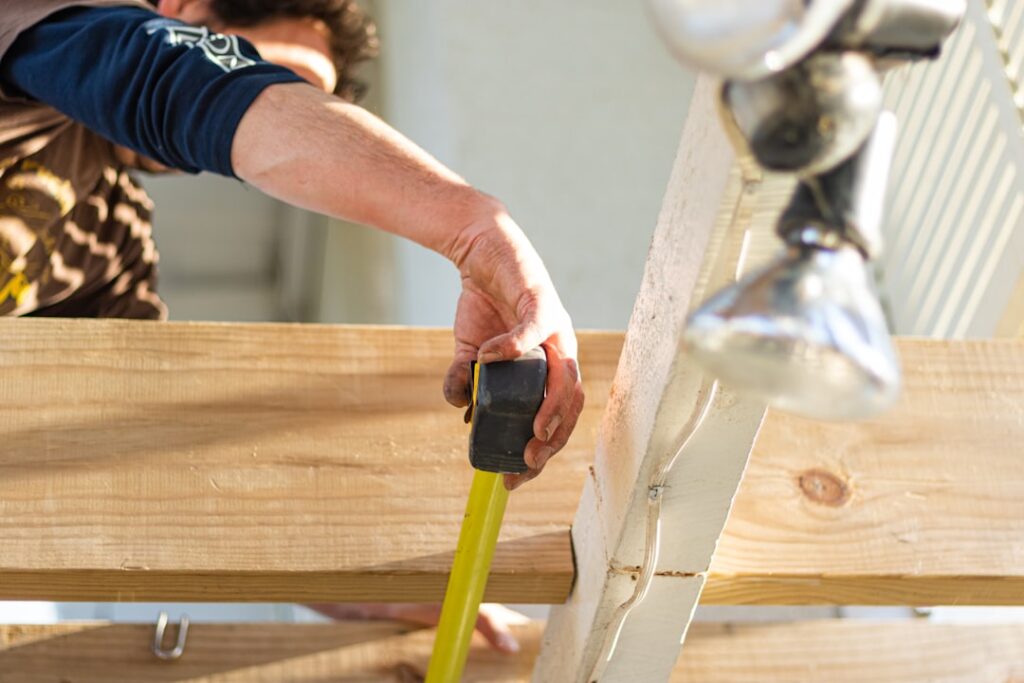
Apply tape after the frame is complete and inspected, immediately before decking. The wood must be dry to the touch and reasonably clean — sweep off sawdust, since adhesive bonds to dust instead of wood. Start at one end, unroll along the joist top, and press firmly with a hand roller or a gloved fist; pressure-activated adhesives reach full bond only when actually pressed. Center the tape so it caps the full edge, and on premium installs, let it drape 1/4 inch down each side rather than cutting flush. Overlap splices by 2 to 3 inches, always shingle-style with the uphill piece on top. Cover joist hanger flanges where practical, tape every blocking row, and give the ledger the widest membrane on the job, tucked behind the metal ledger flashing so any water exits over, not behind. Avoid stretching butyl tape around corners — it creeps back. Total time for an average deck is one to two hours.
What It Costs vs. What It Saves
Run the arithmetic on a 300-square-foot composite deck. The boards themselves cost $1,500 to $3,000 and carry 25-to-50-year warranties, yet they are screwed to a frame whose untreated-core top edges may start failing at year 12 to 18 in wet climates. Reframing that deck — demo, new lumber, labor, and reinstalling the (hopefully salvageable) composite boards — runs $4,000 to $8,000. Joist tape for decking costs $100 to $200 in materials, adds nearly zero labor when planned into the build, and field experience plus manufacturer testing supports frame life extension on the order of 10-plus years, with taped joist tops routinely staying sound past 25. There is no other line item on a deck build with that ratio of cost to consequence. Even on a budget pressure-treated deck, taping the ledger and beams alone — maybe $40 — protects the two members whose failure is most expensive and most dangerous.
Retrofit and Edge Cases
Already-built decks can be taped only if the boards come up, which makes reboarding projects the natural retrofit moment — never lay new $3,000 decking on an unprotected 10-year-old frame without spending the extra $150 while everything is open. Check each joist top first: light surface weathering is fine to tape over after a quick pass with a paint scraper, but punky, soft wood must be sistered or replaced, since tape seals moisture in as effectively as it keeps it out. For ground-hugging decks under 24 inches with poor airflow, tape plus generous side-gap ventilation matters even more, because the frame dries slowest there. And in termite country, keep the tape at the joist top, not wrapped fully around members — inspectors need to see wood surfaces, and full wrapping can hide insect galleries.
Tape as Part of the Whole Moisture Plan
Joist tape does its best work as one layer in a frame-protection system rather than a lone fix. Under the deck, grade the soil to drain away from footings and consider a layer of gravel over landscape fabric in low-clearance bays, which cuts the ground moisture constantly wicking up at the frame. At the house, the ledger assembly deserves redundancy: proper metal or PVC ledger flashing integrated with the wall’s weather barrier first, wide membrane tape over the ledger top second, and stainless or coated structural screws third. Where a joist bears on a beam, a small square of tape between the two members stops the classic rot pocket that forms where two horizontal wood surfaces trap water against each other — a detail that costs pennies and addresses the second most common failure point after the ledger.
Fastener choice completes the system. Pair taped framing with coated deck screws rated for treated lumber (or stainless within 10 miles of salt water), since the tape gaskets the hole but the screw still lives in wet wood. And when the build is done, keep the gaps between deck boards clear each spring with a putty knife and a hose — debris-packed gaps hold water against even taped joists and defeat the drainage the whole assembly depends on. None of these steps takes an hour, and together they are why some builders now confidently quote 30-plus years on frames that used to be tired at 15.
Bottom Line
Decking gets all the showroom attention, but decks die from the frame up. Sealing the horizontal wood that catches every drop of rain is the cheapest durability upgrade in outdoor construction — a Saturday-morning task with roll and scissors that shifts the weak link of the whole structure. If the budget forces a choice, tape the ledger, beams, and joists before spending another dollar on lighting, fascia wraps, or hidden fasteners. Nobody ever stood on a deck and admired the tape, but twenty years from now it will be the reason the deck is still worth standing on.