A Kinetico water softener stands apart from almost everything else on the market because it runs on the power of moving water instead of an electric timer. There is no clock to set, no circuit board to fry in a lightning storm, and no motor to burn out. If you have wrestled with a hard-water problem long enough to be shopping seriously, that mechanical simplicity is the reason a Kinetico system keeps coming up in conversation.
I have installed and serviced softeners of every stripe, and the twin-tank Kinetico design solves a couple of real headaches that single-tank units never fully fix. This guide walks through how the system works, what the popular models cost, how much salt you will actually burn through, and where I think the money is well spent versus where you are paying for the badge.
How the Twin-Tank Design Actually Works
Most softeners you buy at a big-box store use one resin tank and an electronic control head. When the resin is exhausted, the timer kicks off a regeneration cycle, usually at 2 a.m., whether the tank is actually spent or not. If you host a big weekend and blow through your softening capacity by Saturday afternoon, you get hard water until that timer fires.
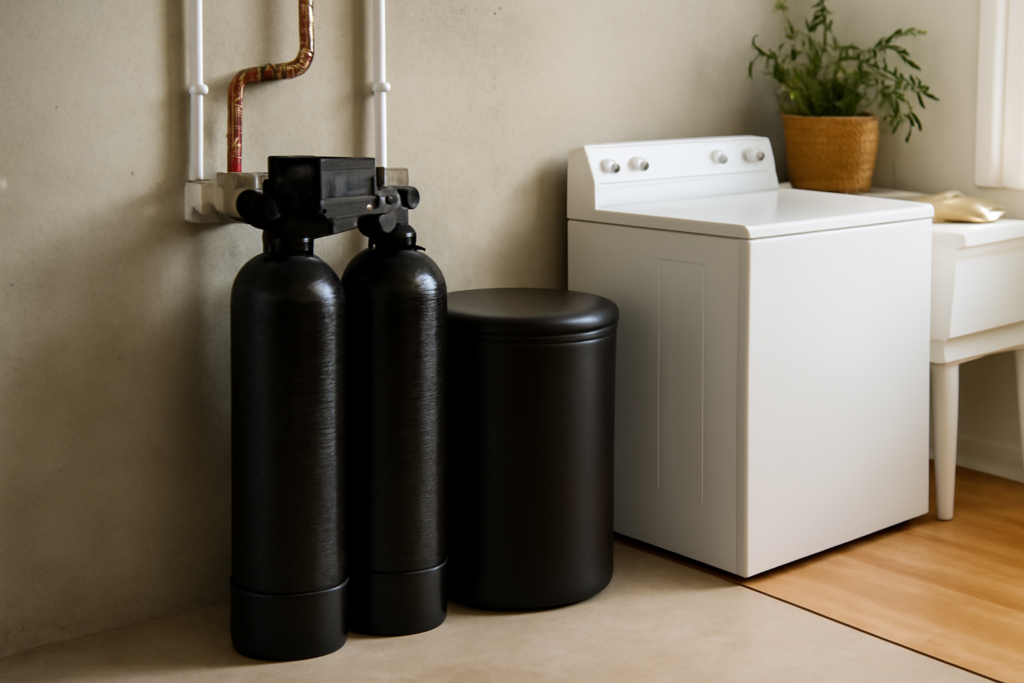
Kinetico uses two resin tanks and a purely mechanical valve driven by water flow. While one tank softens, the other sits in reserve. A small turbine meter counts the gallons that pass through. When the working tank hits its measured capacity, the valve switches you over to the fresh tank instantly and regenerates the spent one using softened water from the other side. You never run out of soft water, and regeneration happens on demand rather than on a guess.
That non-electric, demand-based operation is the core of the pitch. No standby power draw, no display to replace, and regeneration only when you have genuinely used the capacity.
The Model Lineup
Kinetico sells through independent dealers, so pricing is not posted online the way a Whirlpool or GE unit would be. Here is how the range breaks down.
- Premier Series (S250, S650, S850): The flagship twin-tank softeners, sized for households from a couple of people up to large families with high demand. The S650 is the workhorse for a typical four-bedroom home.
- Signature Series (Model 40, 60): A more budget-conscious twin-tank line that keeps the non-electric operation but uses simpler internals. The Model 60 handles most average-hardness suburban homes.
- Compact Softener: A smaller footprint unit for apartments, condos, or point-of-use situations where space is tight.
Expect installed pricing to land roughly between $2,500 and $6,000 depending on model, water-test results, and how much plumbing your installer has to reroute. That is a premium over a $600 to $1,200 single-tank unit from a hardware store, and it is worth being honest about that gap.
Sizing It to Your Water
Buying the right size matters more than the brand. Two numbers drive the decision: your water hardness in grains per gallon (gpg) and your household’s daily water use. A good dealer will run a hardness test on the spot; municipal water often runs 7 to 15 gpg, and well water can spike past 25 gpg with iron in the mix.
Rough math: a four-person household uses about 75 gallons per person per day, so roughly 300 gallons daily. At 12 gpg, that is 3,600 grains of hardness to remove every day. You want a system whose between-regeneration capacity comfortably covers several days of that load. Undersize it and you regenerate constantly, wasting salt and water. Oversize a single-tank unit and the resin sits idle long enough to breed bacteria, which is one more reason the twin-tank rotation is smart.
Salt and Operating Costs
A Kinetico system uses standard sodium chloride or potassium chloride pellets, the same 40-pound bags you buy for any softener. Because regeneration is metered to actual use, salt consumption tends to run leaner than a timer-based unit that regenerates on schedule. A typical family might use one to two 40-pound bags a month, call it $8 to $15 in salt.
The other consumable is water. Every regeneration flushes the resin, and Kinetico’s counter-current design is efficient, often using 3 to 5 gallons of water per pound of salt versus higher figures on older co-current systems. Over a year the water cost is modest, but if you are on a metered municipal supply it is not zero.
Maintenance and Longevity
This is where the design earns its keep. With no electronics, the failure points are mechanical: seals, the turbine meter, and the valve discs. Kinetico builds these to be rebuilt rather than tossed, and the resin itself can last 15 to 20 years in clean water conditions.
- Weekly: Glance at the brine tank salt level and top off before it drops below a third.
- Monthly: Break up any salt bridging, a hard crust that forms above the water and stops brine from forming.
- Every few years: Clean the brine tank fully and check for salt mush at the bottom.
- Long term: Seals and turbine may need a rebuild kit somewhere past the decade mark, a job most dealers handle in under an hour.
Kinetico backs the Premier softeners with a 10-year warranty on the non-electric valve and tanks, which is a genuinely strong term in this category. Read the fine print, though, because coverage often runs through the dealer, and it can lapse if you skip prescribed service.
Where Kinetico Wins and Where It Doesn’t
The strongest case for a kinetico water softener is a household that never wants to think about running out of soft water, values not having another electric appliance to fail, and plans to stay in the home long enough to amortize the premium over 15-plus years. Well-water homes with iron and manganese also benefit from the twin-tank reliability and the reserve capacity.
The weaker case is a smaller household with moderate city-water hardness and a tight budget. A quality single-tank metered softener from a reputable brand will soften your water just as effectively day to day for less than half the money. You give up the never-run-dry guarantee and the non-electric operation, but for many homes that trade is reasonable.
Kinetico Versus the Competition
It helps to see where Kinetico sits against the names you already know. A Culligan system is the closest premium competitor, also dealer-sold and comparably priced, but most Culligan softeners are electric, timer-or-meter controlled single-tank units. You gain a smart display and app connectivity with Culligan; you give up the non-electric simplicity. Whirlpool and GE units from a home center are the budget benchmark at $500 to $1,000, electric single-tank designs that soften water perfectly well but lack the reserve tank and the long mechanical warranty.
The honest comparison is this. If your priority is the lowest sticker price, a big-box unit wins outright. If you want smart features and a strong dealer network, Culligan is a fair fight. Kinetico’s specific edge is the twin-tank, non-electric reliability over a very long service life, and that only pays off if you keep the house long enough to collect on it. Run the 15-year math, not just the checkout total.
Iron, Chlorine, and Add-On Filtration
Hard water is rarely the only problem, especially on a well. If your water test shows iron above about 1 ppm, you want either a softener rated to handle that iron load or a dedicated iron filter ahead of the softener, because iron fouls resin over time. Kinetico dealers sell matching whole-house filters, dechlorinators for city water, and reverse-osmosis drinking systems that pair with the softener. Bundling these can be smart, but price each piece separately so you can see what you are actually paying for and skip anything your water test does not justify. A softener treats hardness; it does not remove chlorine taste, sediment, or contaminants, and no amount of salt changes that.
Getting a Fair Quote
Because Kinetico sells through dealers, the installer matters as much as the equipment. Get the hardness test in writing, ask which specific model they are quoting and why, and confirm the warranty is registered in your name. Have them price both a Signature and a Premier unit so you can see what the step up buys. And always ask what a rebuild kit and a service call cost down the road, since that is the true long-run number that separates a smart purchase from an expensive one.
Handled right, one of these systems disappears into the basement and just works for two decades. That quiet reliability, more than any feature sheet, is what people are really paying for.