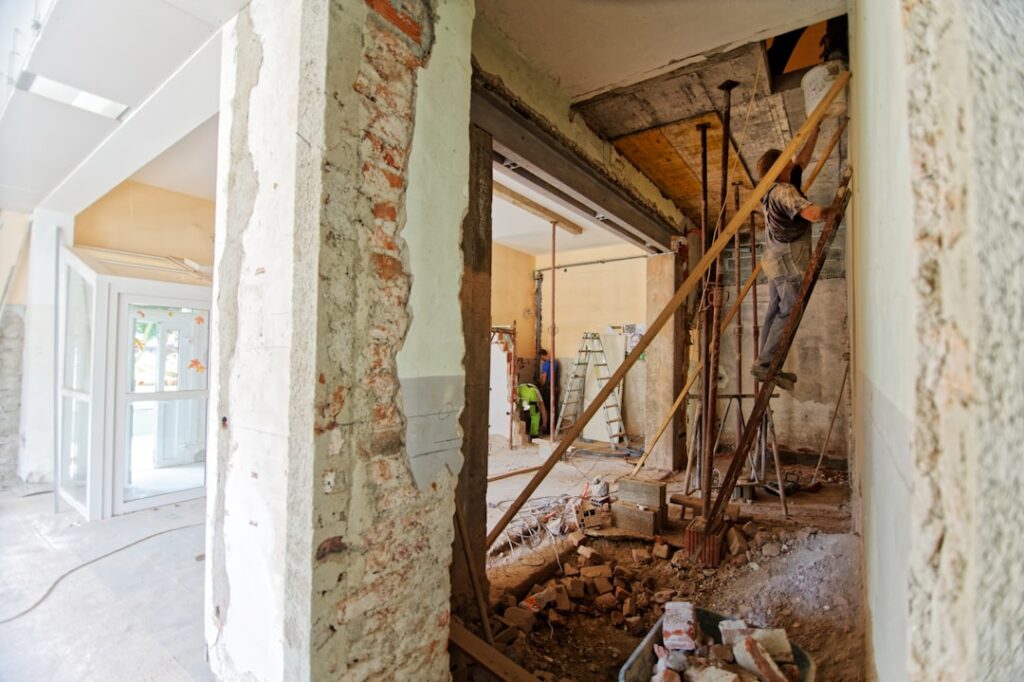
A bump-out for a bigger kitchen runs vastly different prices depending on whether you tap into existing utilities, build over a crawl space, or add a true second story. The honest kitchen addition cost for a 200-square-foot expansion lands between $35,000 and $90,000 in most U.S. markets, with high-cost coastal cities pushing into six figures. I have priced dozens of these projects in the past five years, and the budget always lives or dies on three line items: structural shell, cabinets, and the path your contractor takes for plumbing rough-in.
Part of our Kitchen Remodeling guide — explore the full guide →
Average Cost Per Square Foot
Pricing tracks closely with what kind of envelope you are building.
- Bump-out over existing foundation (under 6 feet deep): $250-$350 per square foot. Cantilevered floor joists eliminate foundation work.
- Slab-on-grade addition with shared utilities: $350-$500 per square foot. Includes new footings, foundation walls, and slab.
- Crawl space or basement-extended addition: $450-$650 per square foot. Most common configuration for kitchen expansions in the Northeast and Midwest.
- Second-story addition over existing kitchen: $500-$800 per square foot. Requires structural reinforcement of the lower level.
These figures include framing, sheathing, roofing, windows, exterior finish, drywall, paint, basic electrical, and HVAC tie-in. They do NOT include cabinets, countertops, appliances, plumbing fixtures, or flooring. Those are the expensive part.
Where the Money Goes
For a typical 200-square-foot kitchen addition costing $70,000, here is how the budget breaks down.
Structural shell consumes about 35 percent ($24,500). This covers excavation, foundation, framing, sheathing, roofing, siding, windows, and basic mechanicals run to the addition.
Cabinetry takes 20 percent ($14,000). Stock cabinets from IKEA or Lowes Diamond fit this budget at roughly $200-$350 per linear foot installed. Semi-custom from KraftMaid or Thomasville runs $400-$600 per linear foot. Custom is $800-$1,500 per linear foot.
Countertops account for 8 percent ($5,600) at $60-$120 per square foot installed for quartz, the most popular choice. Granite slabs from a yard cost similar. Quartzite and exotic marble push $150-$250 per square foot.
Appliances take 12 percent ($8,400). A mid-tier suite (GE Profile, KitchenAid, LG) lands here. Sub-Zero, Wolf, and Thermador push appliance costs to 20-30 percent of the budget alone.
Flooring eats 5 percent ($3,500). Engineered hardwood runs $9-$14 per square foot installed, porcelain tile $12-$18, and luxury vinyl plank $5-$9.
Plumbing and electrical upgrades absorb 10 percent ($7,000) for new circuits, code-compliant outlets every four feet on countertops, dedicated 20-amp small-appliance circuits, dishwasher and disposal hookup, and a potential gas line extension.
Permits, design fees, and contingency take the remaining 10 percent ($7,000). Always carry 10-15 percent contingency on additions. Always.
The Cabinet Tier Trap
The single most common budget blow-up is upgrading cabinets midway through the project. A homeowner approves stock white shaker cabinets at $230 per linear foot, then walks into the cabinet showroom and falls for inset construction with soft-close drawers and full-overlay doors. That semi-custom upgrade pushes the per-linear-foot cost from $230 to $550 overnight.
Decide on your cabinet tier before signing the contract. Visit three showrooms, open every drawer, and feel the weight of the doors. If you cannot live with stock construction, build the better cabinets into your starting budget.
Hidden Costs That Surprise Homeowners
Six line items rarely make the first estimate but show up on the final bill.
First, electrical service upgrades. A 100-amp panel may need to jump to 200 amps to accommodate a new dishwasher, range, microwave, refrigerator, and dedicated lighting. Budget $1,800-$3,500.
Second, HVAC modifications. Adding 200 square feet often exceeds the capacity of the existing system. A new mini-split for the addition runs $3,500-$6,000 installed.
Third, asbestos and lead abatement in homes built before 1978. Lead paint encapsulation is $8-$15 per square foot. Asbestos floor tile removal runs $5-$15 per square foot.
Fourth, sewer line capacity. Older 3-inch cast iron lines may not handle an additional dishwasher and disposal. A sewer scope ($250) before construction is cheap insurance.
Fifth, structural engineer fees. Any addition requires stamped drawings for permit approval, typically $800-$2,500.
Sixth, temporary kitchen setup. Budget $500-$1,500 for a hot plate, microwave, and mini-fridge in a different room, plus takeout meals for 8-12 weeks.
Regional Cost Differences
Geography swings kitchen addition cost dramatically. Building in San Francisco, Seattle, Boston, or New York adds 35-60 percent to national averages because of labor rates and stricter codes. The same 200-square-foot addition costing $70,000 in Indianapolis can hit $115,000 in Brooklyn.
Hurricane and tornado zones add reinforced framing, impact-rated windows, and wind-rated roofing. Add 8-15 percent to base shell costs.
Cold climates require deeper foundations (frost line in Minneapolis is 42 inches versus 6 inches in Houston) and better insulation. Foam-filled wall assemblies add $4-$8 per square foot but cut heating costs long-term.
ROI: Will You Get Your Money Back
Remodeling Magazine’s 2024 Cost vs. Value Report puts mid-range major kitchen remodels at 49.5 percent ROI nationally, and full additions slightly lower at 43-48 percent. That means a $70,000 addition typically recovers $30,000-$35,000 at resale.
However, additions that resolve functional pain points (a kitchen too small to seat the family, a pinched galley layout, no eat-in space) consistently pay back better than aspirational upgrades. Buyers will pay a premium for a working kitchen, not for Thermador appliances.
Where to Cut Costs Without Regret
Smart cost-cutting preserves the bones and trims the finishes.
Choose stock cabinets in a popular door style (white shaker, slab in maple) rather than custom. You can replace them in 10 years if you tire of them.
Pick a single-bowl quartz counter from a stock color group rather than an exotic slab. The visual impact is 90 percent the same at half the cost.
Run engineered hardwood from the existing kitchen into the addition rather than chasing a perfect match for solid hardwood. The visual continuity matters more than the species.
Skip the pot filler, the under-counter ice maker, and the wine fridge. They cost $2,500-$5,000 combined and add minimal resale value.
Financing the Project
Most homeowners use a home equity line of credit (HELOC) at prime plus 0.5 to 1.5 percent. On a $70,000 draw, expect monthly interest payments of $400-$550 during construction. After completion, refinance into a fixed second mortgage or roll into a cash-out refinance if rates favor it.
RenoFi loans and Lightstream personal loans offer alternative paths but at higher rates. For amounts over $40,000, a HELOC almost always wins on total interest paid.
Whatever path you choose, lock in pricing on cabinets and appliances before construction starts. Both categories have seen 8-15 percent annual price increases since 2021, and a six-month build cycle can turn a $14,000 cabinet line item into $16,000 without warning.