Painting your kitchen cabinets is the single most cost-effective way to transform a dated kitchen without the expense of new cabinetry. But getting that smooth, factory-like finish is harder than it looks, which is why many homeowners hire professionals. Good kitchen cabinet painters know how to prep, prime, and spray a durable finish that resists chips and looks flawless for years. This guide explains what pros charge, how the professional process works, what to look for when hiring, and whether the job is worth doing yourself.
Part of our Kitchen Remodeling guide — explore the full guide →
- Why Cabinet Painting Is a Specialty
- What Kitchen Cabinet Painters Charge
- The Professional Painting Process
- Spray vs. Brush and Roll
- The Best Paints for Cabinets
- How to Hire the Right Painter
- Questions to Ask Before Signing
- How Long the Job Takes
- DIY vs. Hiring a Pro
- Choosing the Right Color
- Preparing Your Kitchen for the Job
- Red Flags to Watch For
- Making the Finish Last
- Painting vs. Refacing vs. Replacing
- What Affects the Final Price
- Final Thoughts
Why Cabinet Painting Is a Specialty
Cabinets take more abuse than any painted surface in your home — grease, moisture, fingerprints, and constant opening and closing. Wall paint won’t hold up. Professional cabinet painting requires meticulous surface prep, the right primers and coatings, and usually spray application for a smooth finish. That’s why it’s a distinct specialty rather than something every house painter does well.
What Kitchen Cabinet Painters Charge
Cost depends on kitchen size, cabinet condition, and finish quality. Typical U.S. ranges:
- Average kitchen: roughly $3,000 to $8,000 for a professional job.
- Per door/drawer front: many pros price around $50 to $100 per door and drawer.
- Per linear foot: some quote $30 to $60 per linear foot of cabinetry.
That’s a fraction of the $15,000-plus cost of replacing cabinets, which is why painting is so popular. Spraying in a booth or off-site costs more but yields the smoothest result.
The Professional Painting Process
A quality job follows a disciplined sequence. Here’s what pros do:
- Label and remove all doors, drawers, and hardware so nothing is painted in place sloppily.
- Clean and degrease every surface — kitchen grease is the enemy of adhesion.
- Sand and scuff to give the primer something to grip.
- Fill and repair dents, dings, and grain as needed.
- Prime with a bonding primer, often a stain-blocking shellac or bonding primer for tricky surfaces.
- Apply two or more finish coats, sanding lightly between coats.
- Cure and reassemble, reinstalling doors and hardware.
Skipping the cleaning and priming steps is the number-one reason cheap paint jobs peel.
Spray vs. Brush and Roll
Application method largely determines the final look:
- Spraying produces the smoothest, most factory-like finish with no brush marks. Pros often spray doors off-site or in a controlled area.
- Brush and roll can look good with the right products and technique but rarely matches spray smoothness.
If a flawless finish matters to you, ask whether the painter sprays the doors. Most top cabinet specialists do.
The Best Paints for Cabinets
Product choice makes or breaks durability. Professionals favor:
- Waterborne alkyd and acrylic-alkyd enamels that level smooth and cure rock-hard.
- Two-part conversion varnishes and lacquers for the most durable, cabinet-shop-grade finish.
- Brands like Benjamin Moore Advance, Sherwin-Williams Emerald Urethane, and professional lacquers are common picks.
These coatings need proper cure time — a week or more to fully harden — so be gentle with cabinets right after the job.
How to Hire the Right Painter
Not every painter is a cabinet specialist. Vet them carefully:
- Ask for a portfolio of past cabinet jobs, ideally with close-up photos of the finish.
- Confirm the process — do they remove doors, degrease, prime, and spray?
- Check licensing and insurance to protect your home.
- Read reviews and ask for references you can call.
- Get a detailed written estimate listing prep, primer, number of coats, and product.
A low bid that skips prep steps will cost you more when it fails in a year.
Questions to Ask Before Signing
Before you commit, ask:
- What products and how many coats will you use?
- Do you spray the doors, and where?
- How long will my kitchen be out of commission?
- What’s your warranty on the finish?
- How do you handle grease removal and priming?
Clear answers signal a pro who understands cabinet-specific challenges.
How Long the Job Takes
A professional cabinet painting job typically takes 3 to 5 days, sometimes up to a week for large kitchens with heavy prep. Your kitchen will be partly usable, but doors and drawers will be off for several days. Off-site spraying may extend the timeline but delivers a cleaner result with less dust in your home.
DIY vs. Hiring a Pro
You can paint cabinets yourself, but be realistic:
- DIY pros: saves labor cost, satisfying, doable for patient homeowners.
- DIY cons: the prep is tedious, brush marks are hard to avoid without spray equipment, and mistakes show badly on such a visible surface.
- Hire out if: you want a flawless sprayed finish, have a large kitchen, or lack the time and space to do it right.
The finish quality gap between an experienced pro and a first-time DIYer is significant on cabinets.
Choosing the Right Color
Painters can apply any color, but some choices age better than others:
- White and off-white remain the most popular and timeless, brightening the kitchen and appealing to buyers.
- Soft grays and greiges offer a modern, neutral look.
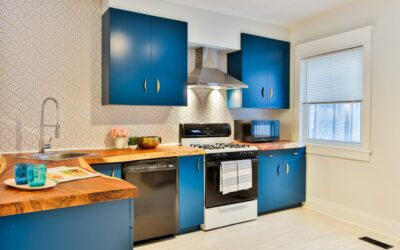
- Navy and deep green make a striking statement, especially on lower cabinets or an island.
- Two-tone schemes pair darker bases with lighter uppers for depth.
Test colors on a sample door in your kitchen’s light before committing, since lighting dramatically changes how a color reads.
Preparing Your Kitchen for the Job
You can help the project go smoothly with a little prep:
- Empty the cabinets so painters have full access.
- Clear countertops and remove small appliances.
- Plan for the kitchen to be partly out of service for several days.
- Discuss dust control and ventilation, especially if doors are sprayed on-site.
- Confirm where painters will set up their spray area.
Good preparation lets the crew focus on quality work rather than moving your belongings.
Red Flags to Watch For
Protect yourself from a bad job by watching for warning signs:
- A bid far below others, which usually means skipped prep steps.
- No mention of cleaning, sanding, or priming in the estimate.
- Reluctance to remove doors or show past cabinet work.
- Using standard wall paint instead of a durable cabinet enamel.
- No written warranty on the finish.
A reputable cabinet painter is transparent about products and process and stands behind the work.
Making the Finish Last
Whether you hire out or DIY, protect the investment:
- Let the finish cure fully before heavy use — often two to three weeks to reach maximum hardness.
- Clean with mild soap and water, never abrasive scrubbers.
- Wipe up grease and spills promptly.
- Add soft-close bumpers to reduce chipping at contact points.
Painting vs. Refacing vs. Replacing
Painting is one of three ways to update cabinets, and it helps to know when each makes sense:
- Painting is the most affordable and works when the boxes and doors are structurally sound and you like the layout. It transforms color but keeps the existing door style.
- Refacing replaces the doors and drawer fronts and veneers the boxes, changing both color and style at a mid-range cost.
- Replacing means all-new cabinets, needed only when the boxes are damaged or the layout must change, at the highest cost.
For most kitchens with good bones, painting delivers the biggest visual change for the least money.
What Affects the Final Price
Several factors move a cabinet painting quote up or down:
- Kitchen size and the number of doors and drawers.
- Cabinet condition — heavy grease, damage, or a glossy factory finish means more prep.
- Wood type — open-grain oak needs grain filling for a smooth painted look.
- Finish choice — premium enamels and lacquers cost more than basic paints.
- On-site vs. off-site spraying and local labor rates.
Understanding these variables helps you compare quotes fairly and see where the money goes.
Final Thoughts
Hiring skilled kitchen cabinet painters is one of the smartest ways to modernize a kitchen for a fraction of the cost of replacement. Expect to pay roughly $3,000 to $8,000 for a professional job, and insist on a process that includes thorough cleaning, sanding, bonding primer, quality enamel, and sprayed doors for a smooth finish. Vet painters by their cabinet-specific portfolio, process, and reviews rather than price alone. Done right, a painted cabinet finish looks factory-fresh and holds up for a decade, giving you a brand-new kitchen feel without the brand-new kitchen price.